

A new study published on Friday (5) revealed that only one NHS Trust offers training to its staff focused on how to intervene when they witness sexual harassment at work.
The research published in JRSM Open was based on responses from 199 NHS Trusts received by Dr Sarah Steele of the University of Cambridge and Jesus College, Cambridge, and Dr Ava Robertson, to their Freedom of Information request.
According to the study, 35 Trusts offer their staff Active Bystander Training (ABT) but only one of these has a specific module on sexual harassment. The module is optional for staff and outsourced to a private provider. However, no staff have yet completed the module.
The research found out that of the 163 Trusts without any ABT programmes, only 23 (13 per cent) have plans to implement it.
ABT has been identified as an effective intervention for addressing sexual harassment and other forms of discrimination in other settings, such as the military, higher education and government workplaces, authors said.
“Since 2017, when the #MeToo movement gained momentum around the world, sexual harassment in medicine has been extensively discussed, and recognised as both pervasive and harmful," the research paper noted.
“Most ABT programmes address undesirable behaviour and harassment in a general way only. This is deeply concerning considering the continued prevalence of sexual harassment in the healthcare sector and the staunch support of ABT by gender-based violence experts to reduce and prevent it.”
The study also found that only five Trusts produce their ABT training in-house, with 27 outsourcing to private providers, who do not allow wider sharing of training materials.
The authors urge NHS leaders and policymakers to acknowledge the concerns regarding training, which include, but are not restricted to, its delegation to external private providers.
“Without access to training materials for external evaluation, there is no means to assess the training adequacy and to share knowledge across NHS bodies. Policymakers should heed caution before winding out further training and recall that private companies have commercial interests to protect," they said.
The authors suggest that additional investigation is required to determine if broader implementation of ABT in the NHS is needed.
According to Dr Steele, the NHS is failing to take advantage of an effective training tool to address workplace harassment, sexual harassment, bullying and racism.
“We found low uptake of active bystander training among NHS Trusts in England, particularly outside of London, and very little of the training that was on offer focused on sexual harassment. This is deeply worrying, given the continued problem of sexual harassment in the healthcare sector," she pointed out.
“In the face of a lack of workplace training, I’d encourage individuals to look at courses, like the one we offer at Jesus College, to equip themselves with these essential skills.”






 Raageshwari LoombaMahesh Liloriya
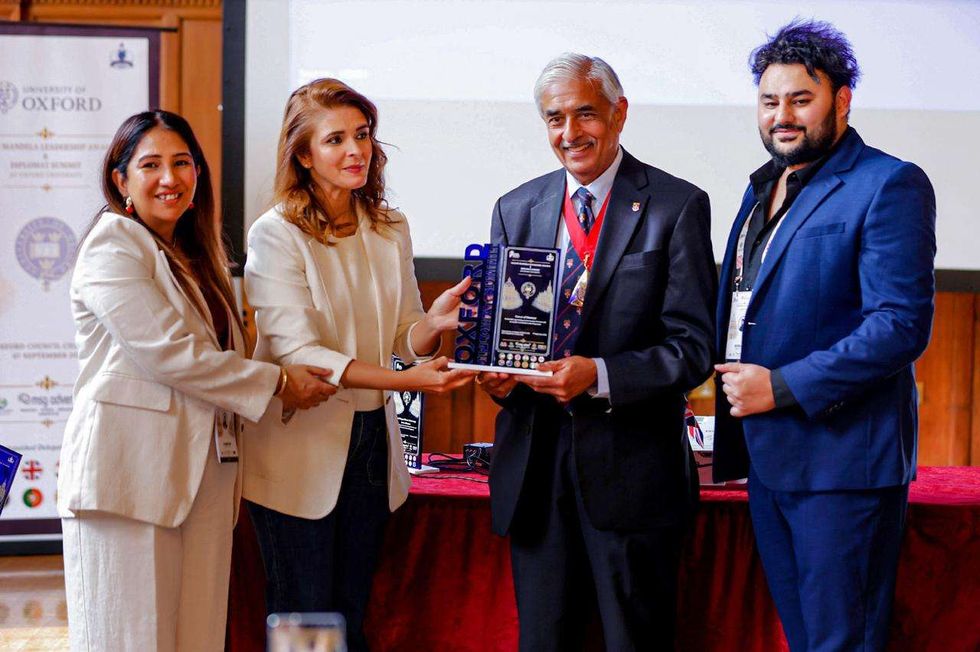 Raageshwari LoombaMahesh Liloriya
 WinnersMahesh Liloriya