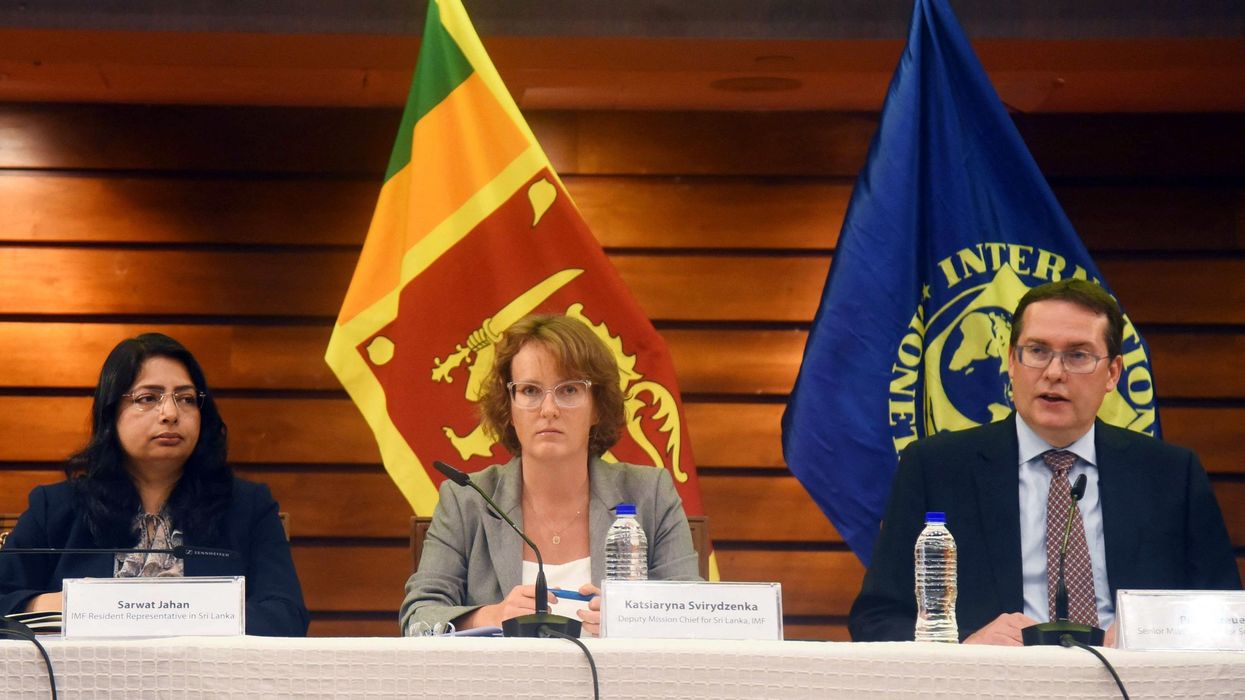

THE International Monetary Fund (IMF) did not reach a staff-level agreement with Sri Lanka in its first review under a $2.9 billion (£2.39bn) bailout package, due to a potential shortfall in government revenue generation, the fund said last Wednesday (27).
The IMF delegation head, Peter Breuer, said a second tranche of about $330 million (£272.8m) under a lending plan would only be released after the IMF reaches a stafflevel agreement, and there was no fixed timeline on when that would take place.
“Sri Lanka has made commendable progress in implementing difficult but muchneeded reforms. These efforts are bearing fruit as the economy is showing tentative signs of stabilisation,” the IMF said.
“The team will continue its discussions in the context of the first review, with the goal of reaching a staff-level agreement in the near term.”
The IMF delegation said despite early signs of stabilisation, full economic recovery is not yet assured and growth momentum remains subdued.
Colombo had expected that funding to be signed at the end of the latest talks.
In the past six months, Sri Lanka has seen its runaway inflation drop to 1.3 per cent in September, its currency appreciate by about 12 per cent and foreign exchange reserves improve. But the island nation has struggled to improve its revenue, with additional measures likely to be taken in the upcoming budget in mid-November.
Despite revenue mobilisation having improved relative to last year, the IMF said revenue was expected to fall short of initial projections by nearly 15 per cent by the end of the year.
“While partially due to economic factors, the onus of fiscal adjustment would fall on public expenditure if there were no efforts to recoup this shortfall. This could weaken the government’s ability to provide essential public services and undermine the path to debt sustainability,” it said.
The global lender said Sri Lanka would need to strengthen tax administration, remove tax exemptions and actively eliminate tax evasion to increase revenues and signal better governance.
Sri Lanka accepted offers to exchange about $10bn (£8.28bn) worth of defaulted local debt for new bonds, taking it a step towards meeting debt restructuring requirements ahead of the IMF review.
The IMF said it was still reviewing “financing assurances” from external creditors on restructuring Sri Lanka’s bilateral and private debt.
Sri Lanka has also held multiple rounds of talks with bondholders and bilateral creditors including Japan, China and India to reach an agreement to rework its foreign debt after suspending repayments in May last year. China, which accounts for 52 per cent of the island’s bilateral debt, has not made its position on restructuring public, but has agreed to support Colombo.
Last year’s economic crash sparked dire food, fuel and medicine shortages, as well as months of civil unrest that eventually toppled then-president Gotabaya Rajapaksa. His successor Ranil Wickremesinghe has raised taxes and removed energy subsidies.