Highlights:
- Kay Beauty and Kulfi now appear in Space NK, bringing South Asian beauty to the UK high street.
- Products cater to deeper skin tones, better undertones, and brown-skin needs.
- The UK’s South Asian community drives demand through social media and engagement.
- Launches represent identity, culture, and inclusion on prestigious retail shelves.
- Their presence encourages other brands to expand shade ranges and inclusivity.
You walk past Space NK on Oxford Street and stop. Not because it is Space NK (everyone knows it), but because the window finally looks like you. Bright packaging, names that feel like home, kajal front and centre. That small, ridiculous moment matters. It is not just product placement, it is proof that a group of brands, many started by women who grew up doing their mother’s makeup in bathrooms with too-small mirrors, have landed a place on Britain’s prestige beauty shelf. Kulfi and Kay Beauty are there now, on the store pages and in the displays. In September 2025, Space NK confirmed it was stocking Kay Beauty with a curated edit of nearly 200 products, marking its first expansion outside India.
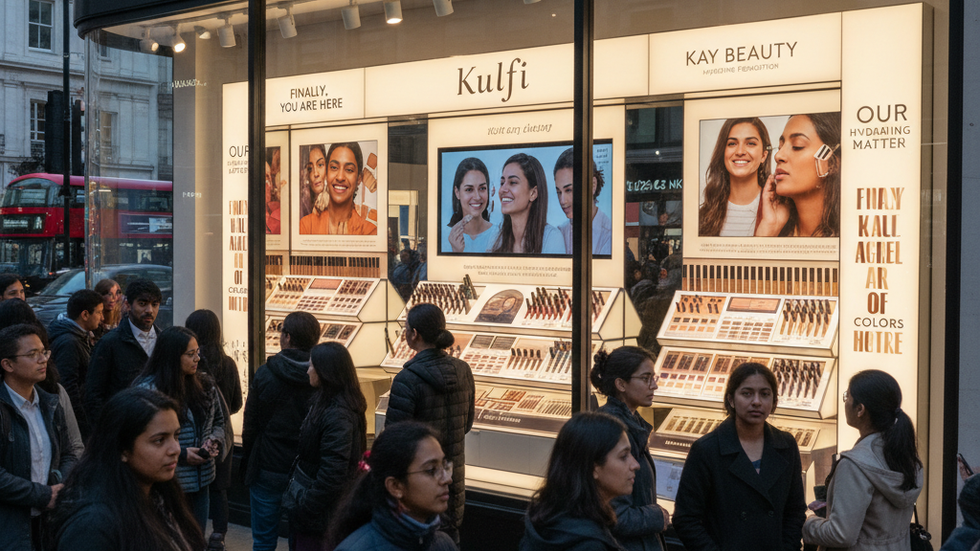 Diaspora demand drives South Asian beauty into UK high street stores AI Generated
The party you were not invited to
Why does that matter? Because for decades the beauty aisle told one story: a narrow palette, one standard of “match,” one voice deciding what counts as desirable. For a long time, walking into a UK beauty store felt like walking into a party you were not really invited to. The shades were often a sea of sameness, the models on the posters telling a story that did not include you. If you had deeper skin with warm, golden undertones, finding a concealer that did not make you look ashy was a mission. The kajal pencils? They were never quite black enough, never quite right.
But the demand was always there, simmering. The 2021 census recorded 5.5 million people from Asian ethnic groups in England and Wales, hardly a niche demographic. Brands saw the numbers; the UK was buzzing online, engaging like crazy. It was a no-brainer. And Space NK, to its credit, understood the commercial and cultural sense in it.
 South Asian beauty brands are reshaping the UK high streetiStock
More than novelty: function and feeling
Concealers that actually match deeper complexions, kajals that do not smudge in humidity, creams and lip products named and pitched for brown skin; Kulfi’s 21-shade concealer and kajal, Kay Beauty’s hydrating foundations and large SKU ranges, these are not cosmetic novelties. In fact, they respond to very basic product failings of legacy brands. When the product works, the cultural story stops being enough, because the consumers want function plus feeling.
Speaking about her brand’s vision, Katrina earlier said: “I felt that the beauty industry and the beauty advertising around us could be more inclusive… creating Kay Beauty wasn’t so much seeing a gap in the market, but rather a passion for building this community. We saw such an encouraging response when we launched in the GCC … And in the UK, with its vibrant South Asian community and evolved beauty market, I think Kay Beauty has the chance to connect in an exciting way,”.
These launches are driven by actual search traffic, sales potential and a diaspora that has been loudly voting with swatches on social media. The brands did not appear out of whimsy. They scaled because the demand existed: shade gaps, undertone complaints, people tired of being an afterthought.
A glittery amalgamation of identity
I read a piece by British Pakistani writer Sidra Imtiaz, and she nailed it. She talked about Kay Beauty feeling like a “glittery, sparkly amalgamation” of her identity, like the person she is at home, finally meeting the person she is on the British high street. That is the thing. This is about more than lipstick. It is about seeing a piece of your culture reflected back at you, not in a specialist shop tucked away, but right there in the flagship window on the busiest street in the country.
And yeah, you cannot help but compare it to the K-beauty wave that hit a few years back. That opened the door, sure. It taught UK shoppers that beauty philosophies from outside the West have value. But this is different. This is not about a trendy ten-step routine from Korea. This is about a diaspora saying, “We are here. Our beauty standards, our rituals, our colours, they matter.”
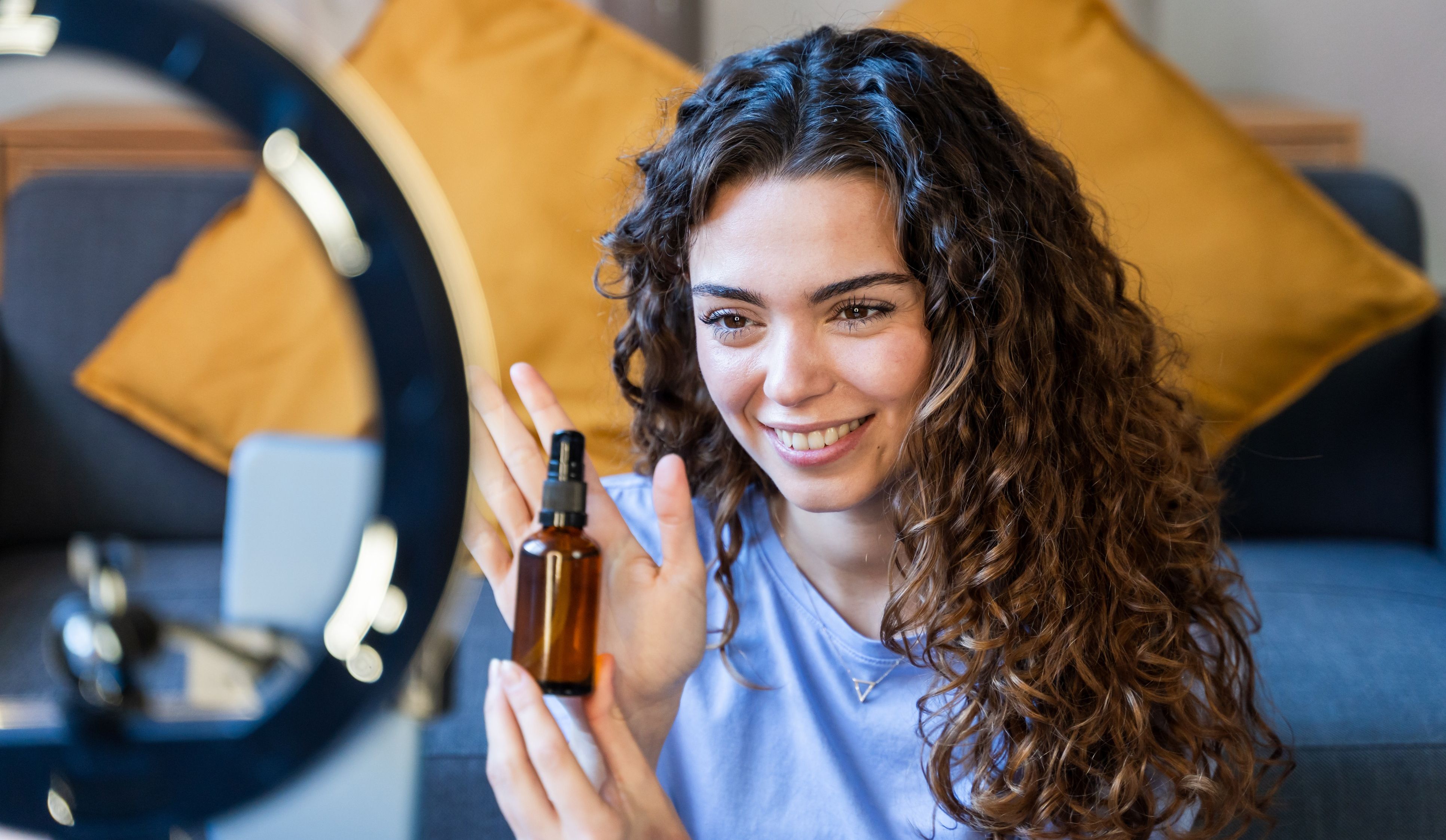 UK beauty finally caters to deeper tones with South Asian brandsiStock
A small revolution on the high street
Spotting a brand that reflects your identity in a store can make someone feel truly seen. That someone might be a teenager who never matched a shade right before; it might be a mother who finally finds kajal that does not ghost her skin tone. Visibility is small, then practical, then political. It is a subtle correction in how a culture sees itself on the high street.
So, what happens next? For now, retail analysts say the move is strategic: Space NK is positioning itself as a leader in inclusivity while responding to clear search and sales data from the South Asian diaspora. Will it last? It depends on product, price, and patience. But for now, the windows look different. And that, alone, is a small revolution.