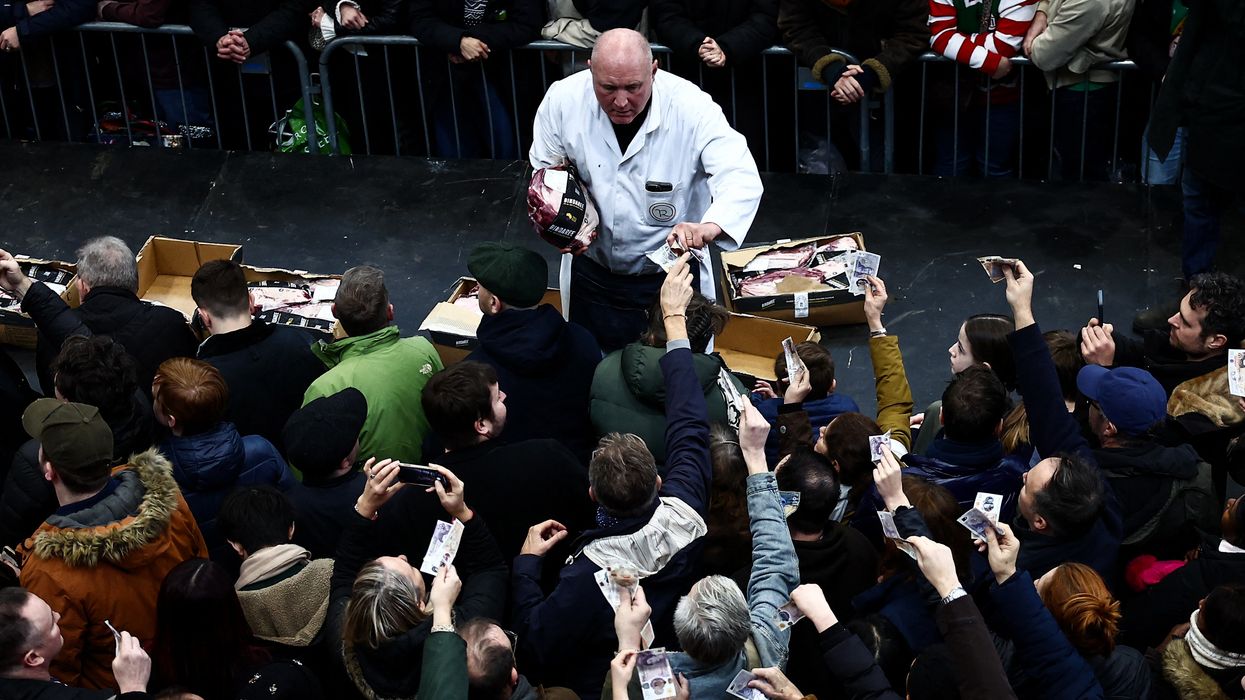

MEAT traders at London's historic Smithfield Market auctioned off cheap turkeys and other meats to eager bidders on Tuesday, continuing a long-standing Christmas tradition.
However, the future of this festive event is uncertain following recent decisions about the market’s closure.
Smithfield Market, located in the City of London financial district, has been a hub for meat and livestock trading for nearly 900 years. At its peak, it attracted sellers from across England and produce from countries such as Argentina and Australia.
Last month, City authorities decided to close the market, paving the way for redevelopment of the prime real estate. The market is permitted to operate at its current location until 2028, with most traders planning to move to a new site within London thereafter.
Every Christmas Eve for decades, crowds have gathered at Smithfield Market to buy surplus meat at discounted prices. Buyers exchange cash for cuts of red meat or poultry, often tossed into the crowd by butchers.
"The atmosphere is fantastic," said Greg Lawrence, chairman of the Smithfield Market Tenants. "To a lot of people, it's the beginning of Christmas. They come up here early, they go to breakfast, they come to the auction, they purchase their goods, then they go to the pub."
Hundreds of people, some wearing Santa hats or holding placards with meat orders, filled the Victorian market building. Punters waved banknotes to catch the attention of butchers, who threw turkeys or ribeye steaks into the cheering crowd.
While many attendees came for the bargains, others were drawn by the unique festive atmosphere.
"Everyone's so friendly, and everyone's rooting for everyone to get something for Christmas Day," said Sharon, who only shared her first name. "It's amazing."
(With inputs from Reuters)