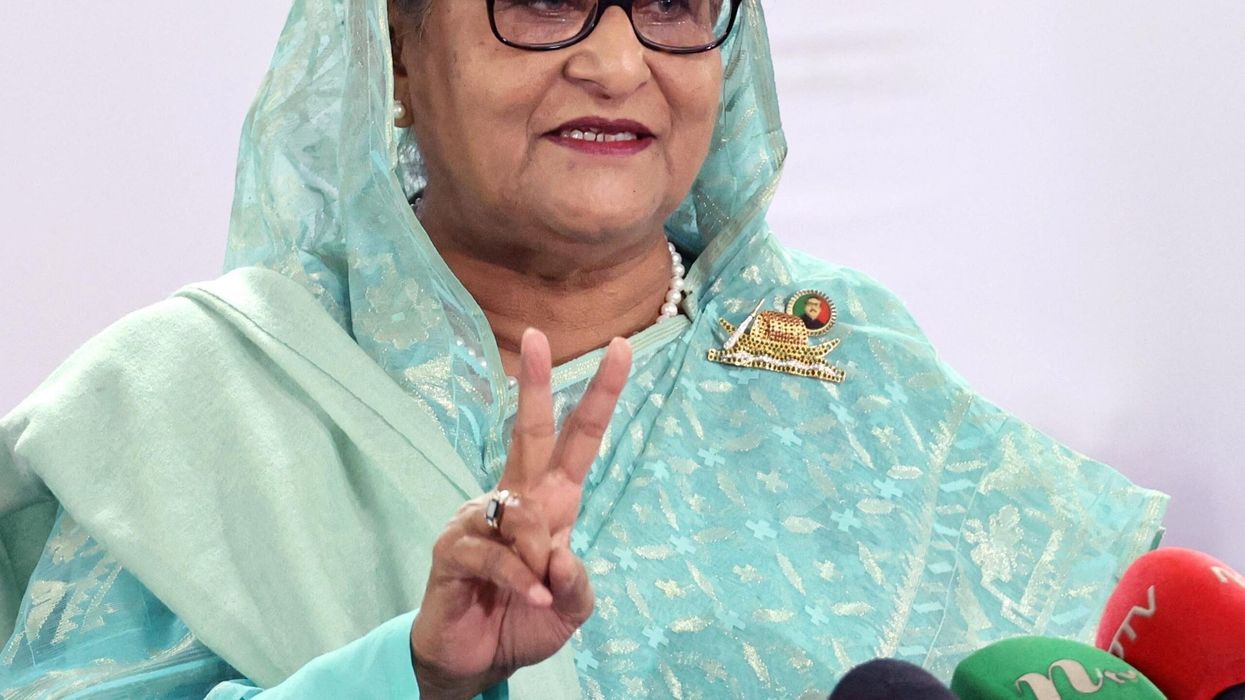

Bangladesh, prime minister Sheikh Hasina clinched her fourth consecutive term, securing an absolute majority for her party.
The election witnessed a low turnout and was boycotted by the main opposition, the country's poll body on Monday (8).
Her Awami League party has 165 seats out of 224 seats in Sunday’s election with the outcome of the rest of the seats still unannounced, according to unofficial results released the Election Commission said.
The main opposition Bangladesh Nationalist Party (BNP), who participated in the 2018 polls but stayed away in 2014, boycotted the election after Hasina refused their demands to resign and allow a neutral authority to run the election.
The BNP called a two-day strike nationwide through Sunday, asking people to shun the election.
Hasina has accused the opposition of instigating anti-government protests that have rocked Dhaka since late October and killed at least 14 people.
Bangladeshis largely stayed away from Sunday's general election, which was marred by violence.
Turnout was about 40% when polls closed, said chief election commissioner Kazi Habibul Awal, compared with over 80% in the last election in 2018.
Polls were held for 299 directly elected parliamentary seats with close to 120 million voters choosing from nearly 2,000 contestants.
Election to one seat will be held at a later date after an independent contestant died ahead of the vote due to natural causes.
Hasina, 76, has been credited with turning around Bangladesh's economy and the key garment industry. But critics accuse her of authoritarianism, human rights violations, crackdowns on free speech and suppression of dissent.
The economy has also slowed sharply since the Russia-Ukraine war pushed up prices of fuel and food imports, forcing Bangladesh to turn last year to the International Monetary Fund for a bailout of $4.7 billion.
(Reuters)