
MICROSOFT CEO Satya Nadella on Wednesday (17) said the American tech giant is “doubling down” on its investments in Britain as US president Donald Trump began his state visit with the launch of a US-UK Tech Prosperity Deal.
The agreement focuses on advancing fast-growing technologies such as artificial intelligence (AI), quantum computing, and nuclear innovation.
Trump spent the night at the US ambassador’s residence, Winfield House in central London, before receiving a royal welcome at Windsor Castle. He also spoke by phone with prime minister Keir Starmer ahead of their formal talks on Thursday (18).
The visit opened with a series of investment pledges described as a “generational step change”, committing joint resources and expertise into emerging technologies across both nations.
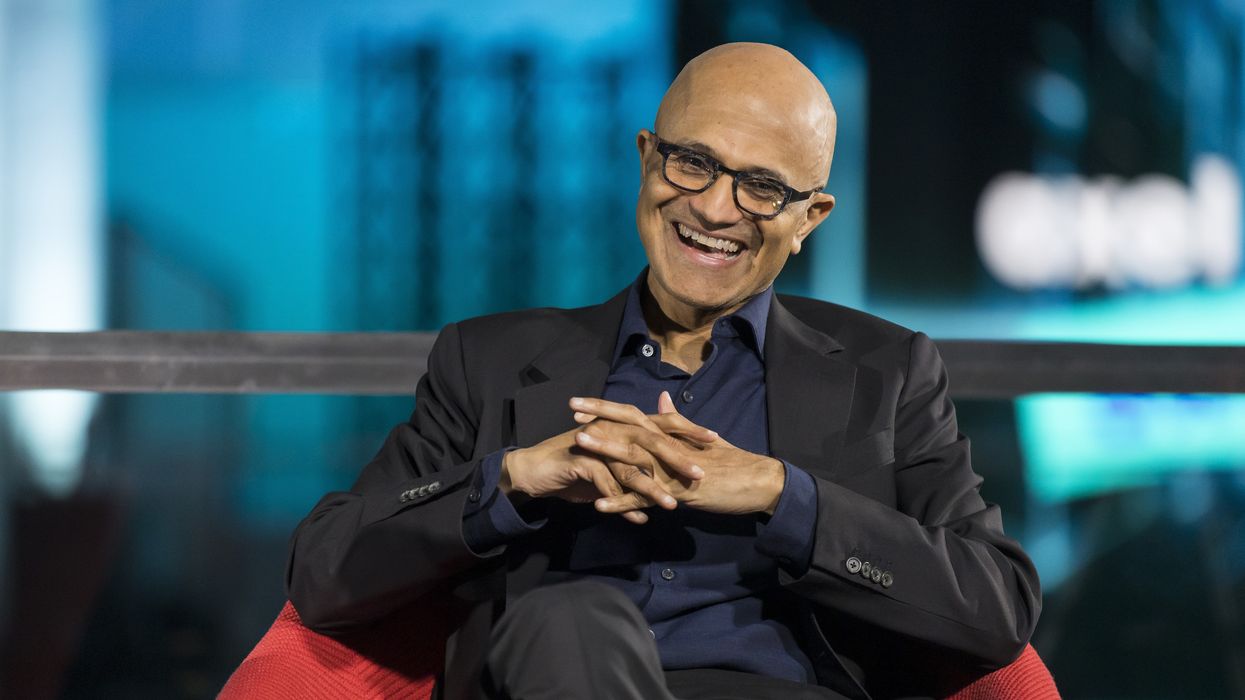
“We’re committed to creating new opportunity for people and businesses on both sides of the Atlantic, and to ensuring America remains a trusted and reliable tech partner for the UK,” Nadella, the Indian American Microsoft chief, said in a statement.
“That is why we are doubling down on our investment in the UK, investing more than $30 billion over four years, including building the country’s largest supercomputer,” he added.
Alongside Microsoft, NVIDIA, Google, OpenAI, and CoreWeave are among the US technology companies pledging a combined £31bn to strengthen the UK’s AI infrastructure, including data centres and computer chips.
Starmer welcomed the deal, saying: “This Tech Prosperity Deal marks a generational step change in our relationship with the US, shaping the futures of millions of people on both sides of the Atlantic, and delivering growth, security and opportunity up and down the country.
“By teaming up with world-class companies from both the UK and US, we’re laying the foundations for a future where together we are world leaders in the technology of tomorrow, creating highly skilled jobs, putting more money in people’s pockets and ensuring this partnership benefits every corner of the UK.”
The deal will support new AI models for breakthroughs in medicine, including cancer and rare disease treatment, as well as shared priorities such as fusion energy.
UK technology secretary Liz Kendall described the pact as “a vote of confidence in Britain’s booming AI sector – building on British success stories such as Arm, Wayve and Google DeepMind – that will boost growth and deliver tens of thousands of skilled jobs.”
As part of the agreement, a new AI Growth Zone will host early deployment of OpenAI’s Stargate UK project at Cobalt Park.
Sam Altman, CEO of OpenAI, said: “The UK has been a longstanding pioneer of AI, and is now home to world-class researchers, millions of ChatGPT users, and a government that quickly recognised the potential of this technology. Stargate UK builds on this foundation to help accelerate scientific breakthroughs, improve productivity, and drive economic growth.”
The Tech Prosperity Deal set the stage for Trump’s state welcome at Windsor Castle, featuring a gilded carriage procession, guard of honour, and a State Banquet hosted by King Charles.
(PTI)