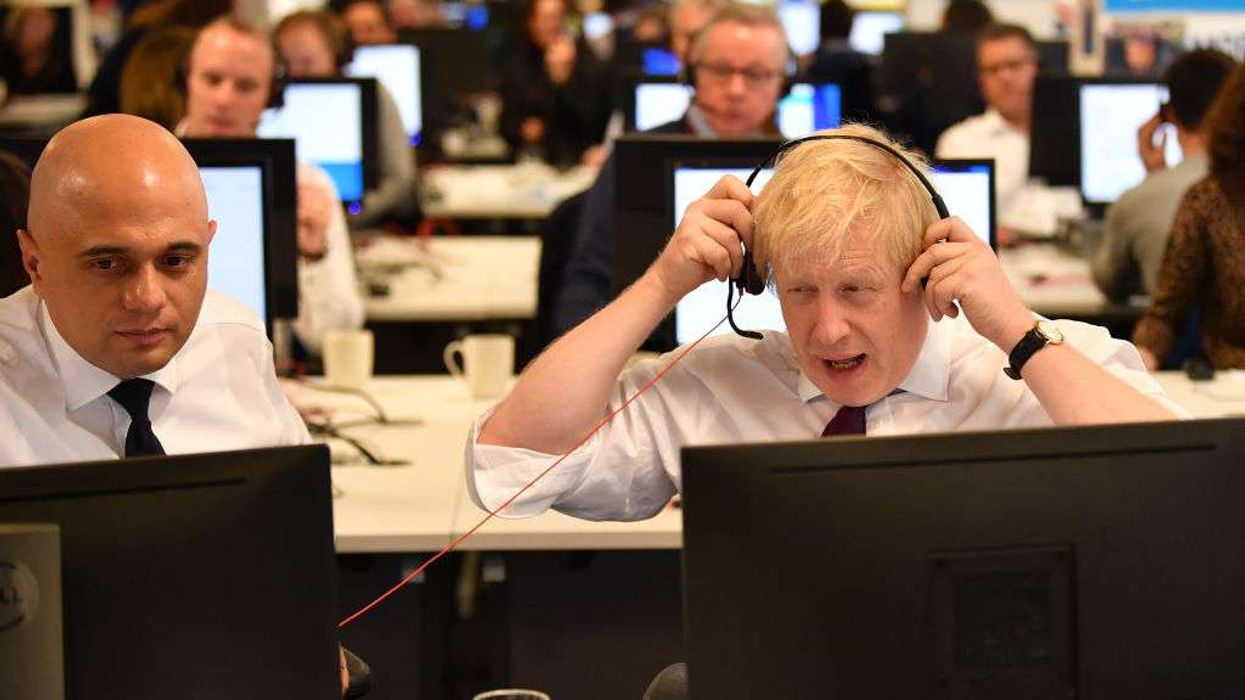

SAJID JAVID has revealed he called former prime minister Boris Johnson a "puppet" controlled by Dominic Cummings during a confrontation that led to his departure as chancellor.
The former cabinet minister, speaking to the Institute for Government, described the dramatic exchange before he walked out of the Treasury in February 2020 rather than allowing chief adviser Cummings to take control of his team, reported the Guardian.
Javid was told he had to sack his special advisers and work with replacements chosen by Cummings, the former minister revealed.
"I'm not going to be a puppet," Javid said he decided. He then confronted the prime minister directly.
"I did say to the prime minister at the time, 'You realise you're the actual puppet here, right? Dominic Cummings is running rings around you, and you can't even see it,'" he recalled.
Johnson rejected the accusation, according to Javid. "He denied it and said 'That's not the case. You don't understand him. You've got him wrong. You guys should become friends and this and that.'"
The former chancellor, who ran six government departments over eight years, returned to cabinet as health secretary in 2021 but quit again the following year on the same day as Rishi Sunak. That mass resignation triggered the collapse of Johnson's government.
Javid said his second departure came after he lost trust in the prime minister over the Partygate scandal. He said people "very, very close" to Johnson told him the allegations about lockdown-breaking gatherings in Downing Street were "bullshit".
"But it all turned out to be true and I felt I was misled a lot," he said. "I thought, if the centre, broadly speaking led by one man, is so willing to mislead his cabinet ministers, then you can't function."
Comparing the three prime ministers he worked under, Javid described Johnson as "the least well briefed" and said he "took the least interest in most things" compared with David Cameron and Theresa May.
He called Cameron "the most effective" of the three. May, he said, was well prepared but struggled to make decisions, adding: "She would let her ministers argue with each other and still not come to a decision."
Javid, who served as an MP from 2010 until standing down last year, also spoke about the pressures of ministerial life. He said staff would schedule back-to-back meetings without allowing time to travel between locations or even eat.
"You actually need to eat," he said. "A well-nourished minister is probably a better-performing minister."