

WOMEN and young people of south Asian heritage in the UK face a much higher chance of developing multimorbidity at a younger age, a new study has found.
Multimorbidity refers to the presence of two or more long-term health conditions in a person.
Bangladeshis and Pakistanis, along with those living in poorer areas are more likely to develop a mental health condition and a physical illness together, often years before doctors normally start screening for such problems, the survey showed.
Researchers from Queen Mary University of London found that a healthy 30-year-old Bangladeshi woman has roughly a one-in-two chance of developing either a mental health condition or a cardiometabolic condition, illnesses linked to the heart and metabolism, such as high blood pressure, diabetes or kidney disease, by the time she turns 40. She also has around a one-in-eight chance of developing both together.
Findings of the study were published in the July edition of PLOS Medicine journal. It was based on the Genes & Health (G&H) study, a long-running population health study of British Bangladeshi and Pakistani volunteers.
Dr Sunil Kumar, co-chair of the BAPIO Institute of Health and Wellbeing, said the results confirmed patterns doctors have long suspected, but rarely had UK data to prove.
He told Eastern Eye, “This finding matches what many of us in clinical practice have suspected for years. The Genes and Health cohort gives real numbers to a pattern I see regularly in British Bangladeshi and Pakistani patients: mental health and cardiometabolic conditions arriving close together, often in a person’s 20s or 30s, well before the age most screening programmes kick in.”
 Dr Sunil Kumar Eastern Eye
He said the order in which illnesses appeared should change how doctors follow up with patients. “If a cardiometabolic condition shows up first, the risk of a serious cardiovascular or renal event later is higher, than if depression or anxiety ap pears first. That has direct implications for how we triage follow-up care. A 32-year-old British Bangladeshi woman with new-onset hypertension needs a different level of mental health vigilance than the standard pathway currently gives her,” he said.
Researchers examined the health re cords of 23,554 British Bangladeshi and Pakistani volunteers taking part in Genes & Health, one of the world’s largest community-based genetics studies, based largely in east London. Participants were followed for a median of 10.2 years, using records that stretched from April 1997 to November 2024.
Scientists tracked two groups of conditions. Internalising conditions cover de pression, anxiety and somatoform disorders, a category of illness in which a per son experiences genuine physical symptoms, such as pain or fatigue, that stem from psychological distress rather than a diagnosable physical disease. Cardiometabolic conditions cover hypertension, type 2 diabetes, obesity, chronic kidney disease and dyslipidaemia, a term for abnormal levels of fats such as cholesterol in the blood.
During the study period, 25.3 per cent developed an internalising condition and 42 per cent developed a cardiometabolic condition, and a combination of both was seen in 13.4 per cent of the group. Major cardiovascular or kidney complications, such as heart attack, stroke or kidney failure, struck 6.5 per cent, while 0.4 per cent died of unrelated causes.
Dr Kumar linked the findings to what is known as lifestyle medicine, a field that treats diet, sleep, stress, physical activity and social connection as clinical factors, rather than side advice. “For a population where cardiometabolic and mental health conditions are already entangled by someone’s early 30s, waiting for the NHS Health Check at 40 misses the window where lifestyle intervention has the most leverage,” he said.
He added that causes behind the trend were harder to pin down. “Diet, occupational stress, inter-generational trauma, delayed help-seeking due to stigma, and genetic predisposition to insulin resistance are all plausible contributors, and they interact differently across generations within the same community,” Kumar said.
“The practical takeaway for the NHS is straightforward, even if the underlying causes aren’t: health checks for south Asian patients should start earlier than the current 40-plus threshold, they should screen for mental health alongside cardiometabolic markers, and lifestyle factors need to sit inside that screening, rather than as an afterthought once a diagnosis has already been made,” he said.
Women in the study were less likely than men to stay free of illness altogether and were more likely to develop a mental health condition first, researchers found.
Men, in contrast, faced a higher risk of a major heart or kidney event, overall.
Bangladeshi participants fared worse than Pakistani participants across nearly every measure tracked, including rates of combined illness and serious cardiovascular events.
Researchers said this distinction had been missed by earlier UK studies that grouped all south Asian communities together under a single label. Smoking was more common among Bangla deshi participants than Pakistani participants, a factor researchers adjusted for in their analysis, while flagging it as a possible contributor to some of the ethnic gap.
Also, people living in the most deprived neighbour hoods were far more likely to develop either type of condition, and they also go on to develop both together, compared with those in less deprived areas.
Dr Saraswati Hosdurga, consultant community paediatrician, said, “The body mass index (BMI) should be interpreted differently for Asian populations because they face a higher risk of cardio metabolic disease and multimorbidity at lower BMI levels than those reflected in the standard WHO classification. While the WHO defines a normal BMI as 18.5 24.9 kg/m², for Asians the healthy range is 18.5–22.9 kg/m². A BMI of 23 kg/m² or above is associated with an increased risk of health problems, largely because Asians tend to have a higher proportion of visceral fat even at lower BMI levels.”
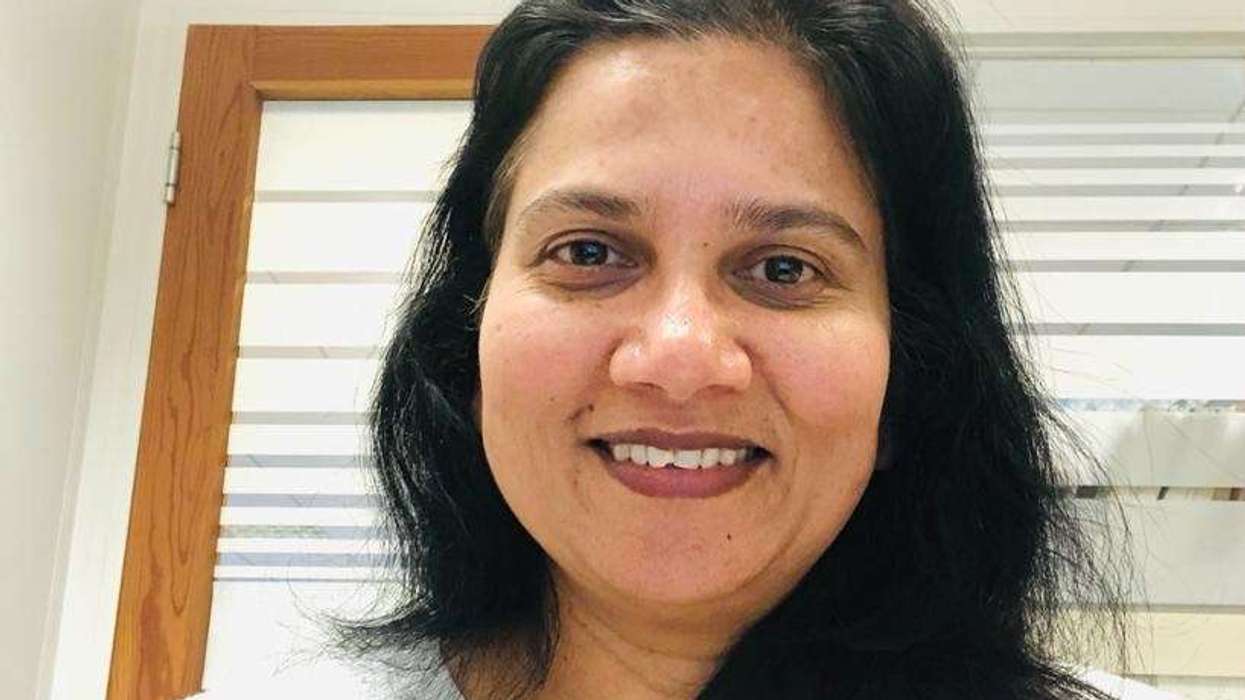 Dr Saraswati HosdurgaEastern Eye
She added,” Women often shoulder multiple, less visible pressures as they balance family responsibilities, careers and caregiving, frequently with little or no external support. Limited time for selfcare, poor dietary habits, and inadequate sleep can all contribute to poorer health outcomes. Recognising these risk factors early and adopting preventive lifestyle measures can make a significant difference to long-term health.”
The order of illness also mattered for long-term risk, researchers found. People who developed a physical, cardiometabolic condition first, followed later by a mental health condition had a higher 10-year risk of a serious cardiovascular or kidney event than those whose mental health condition appeared first. The difference was clearest among women who developed combined illness at age 40.
“People who develop depression or anxiety after being diagnosed with a physical illness may be struggling with the burden of managing that illness, which can also make them less likely to take medicines that protect against heart and kidney complications. By contrast, people whose mental health condition is diagnosed first may end up receiving more joined-up care that addresses both issues together, since NHS guidance already encourages screening for depression and anxiety at the time of a type 2 diabetes diagnosis,” researchers said.
Scientists also built a new genetic tool, called a polygenic risk score, which estimates a person’s inherited likelihood of developing this combined illness by combining the effects of many small genetic variations linked to depression, blood pressure, diabetes, body weight and cholesterol.
People with a higher score were more likely to follow the riskier, physical-ill ness-first pathway, researchers found, though they cautioned the tool was built mostly using genetic data from European populations and may not work as accurately for south Asian communities.
They described its current value as “modest” and said it should be seen as a possible future addition to standard health checks rather than a replacement for them.
The nationwide NHS Health Check in England and Wales is currently offered starting at age 40. However, because ill ness hits this demographic much earlier, researchers argued that routine screening should be moved forward to catch early onset multimorbidity.
“Detection and intervention strategies for physical and mental health multimorbidity should be targeted early in the lifecourse, for those at highest risk,” the authors said. They suggested offering health checks to people at higher risk in their 20s and 30s.