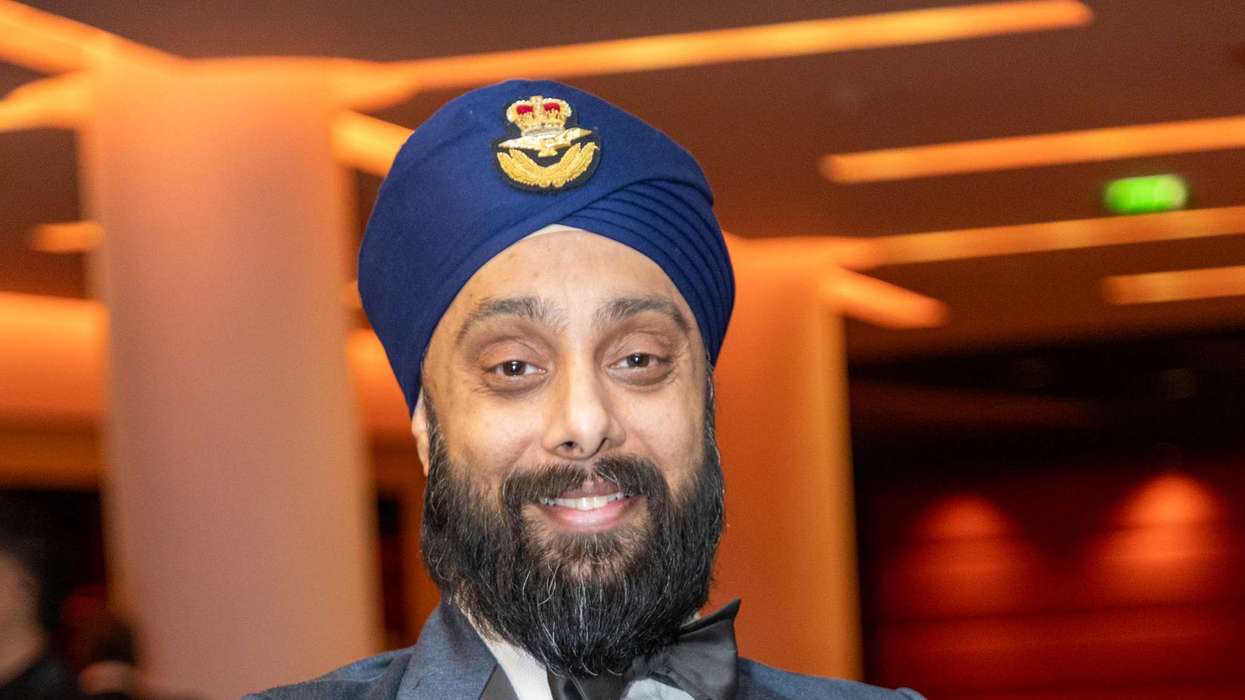
WING COMMANDER Princejit’s rather innocuous sounding designation, ‘Air Operations Systems Officer’, does little to illustrate what his role entails in the Royal Air Force.
In plain terms, he plans and oversees flying missions and airfield operations, using command, control and communications systems to manage aircraft, equipment and people across operations.
Over his career, he has directed and supported military helicopter operations in the Falkland Islands and Afghanistan (Op HERRICK), co-ordinated C-130J air transport missions worldwide, supported combat air operations across Iraq and Syria (Op SHADER), and run day-to-day airfield operations at RAF Lyneham and Northolt in separate UK postings.
These are roles he relished because they sit at the heart of getting the RAF’s capabilities where they are needed most.
Today as Chief of Staff Global Enablement at RAF High Wycombe, Princejit works in a small headquarters team that underpins the RAF’s ability to operate worldwide by aligning strategy, resources and activity.
His role is to translate senior leaders’ intent into coherent action, manage priorities and ensure the global enablement team anticipates, rather than reacts.
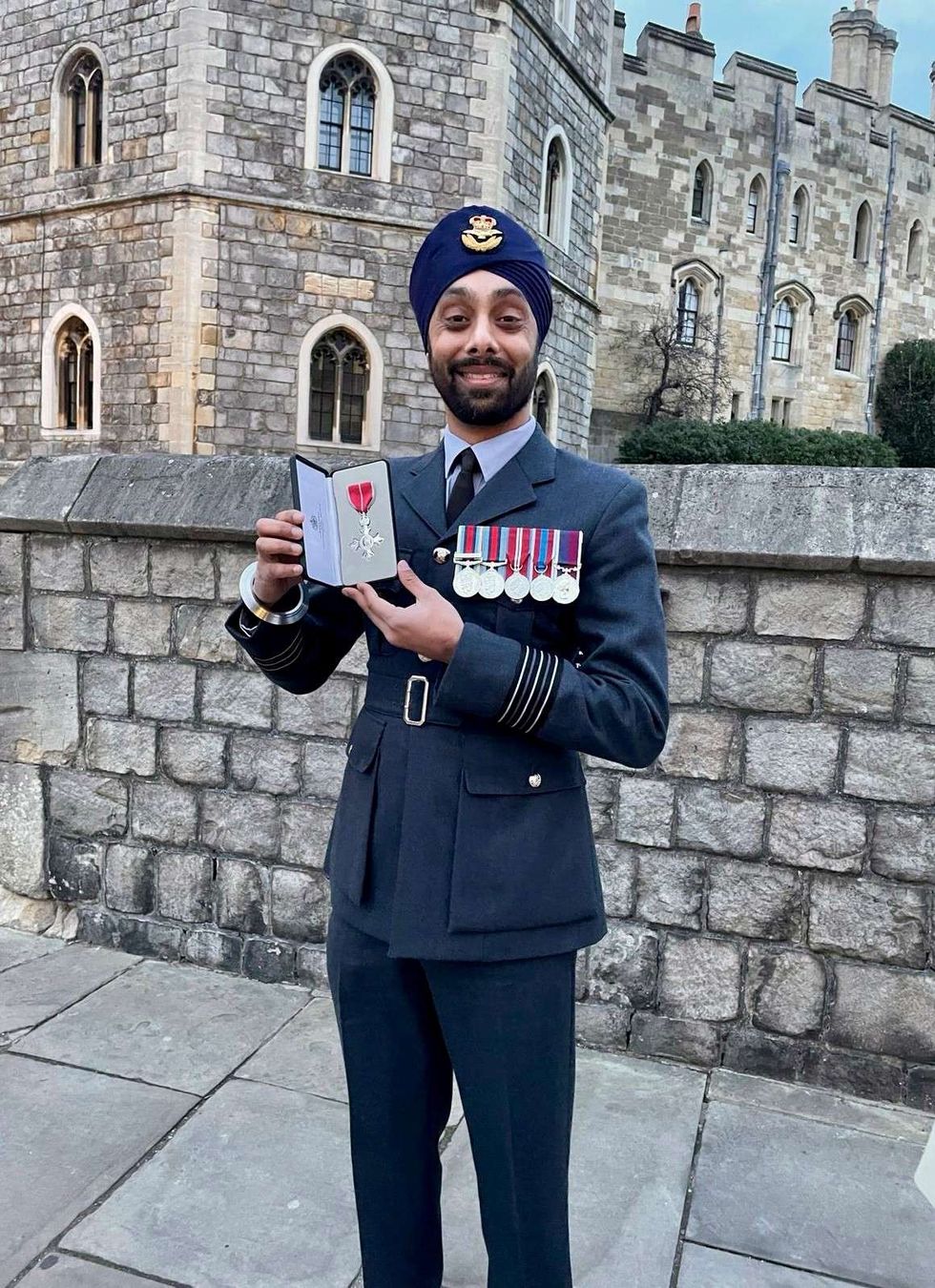 The MBE in 2023RAF
Princejit said, “It’s a fantastic role as I get to delve into specialist capabilities and see our people deliver at the forefront of operations.”
In an interview earlier this year with Eastern Eye, he said, “Global enablement is an umbrella term for six core pillars that make air operations possible. We provide secure communications and reach back to the UK, as well as logistical and engineering support such as deployable storage facilities for fuel and munitions and even 3D printing of aircraft spare parts. There’s also air battlespace control to coordinate aircraft onto task and RAF Regiment and RAF Police capabilities to protect our personnel and platforms wherever we operate and delivering aeromedical evacuation to bring our people home for treatment.”
Princejit grew up in Birmingham to Sikh parents who migrated from Kenya and India. A love of speed and flying took hold early, nurtured by the Air Cadets (for young people aged between 12 and 17 years) through a gliding scholarship.
While studying automotive design at Coventry University, he joined the University of Birmingham Air Squadron, where students develop themselves beyond academics. There he continued flying with the Grob Tutor, and threw himself into adventurous training, including trekking through the Grand Canyon and surfing in Newquay.
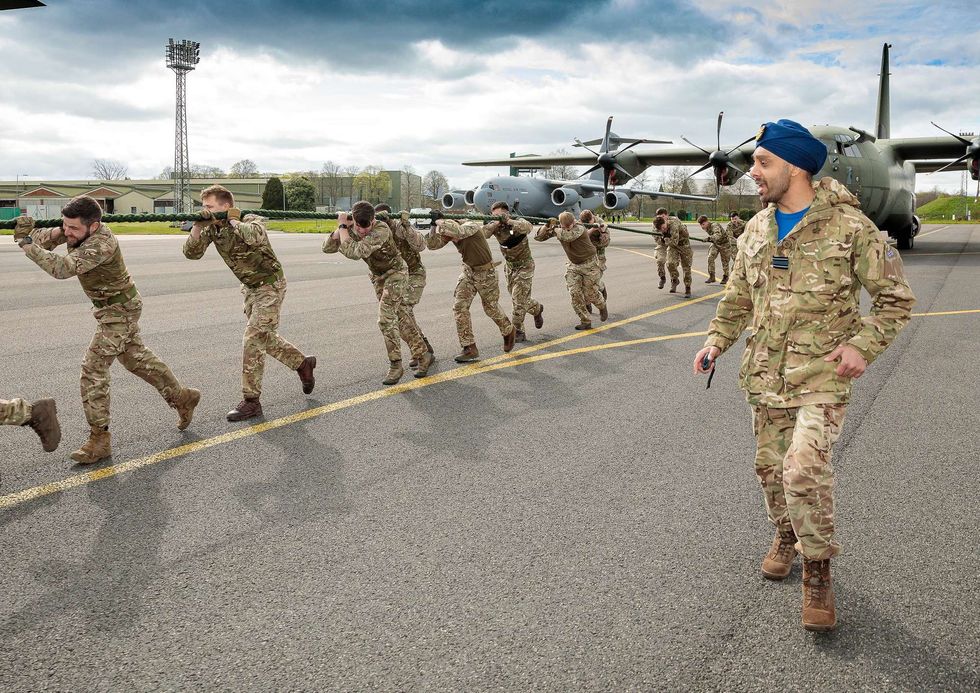 Personnel taking part in a charity C130J pullRAF
On graduation, Princejit chose the RAF as a career as “it felt like the right fit for who I was and who I wanted to become”.
“The leadership development, the teamwork, the day-to-day variety, and professional development all resonated with me,” he said.
His parents were initially, and understandably, concerned given the UK’s operations in Afghanistan and Iraq at the time, but they came to support his decision as they saw his passion and the opportunities the RAF offered.
Wearing the uniform carries “an incredible sense of responsibility,” Princejit said.
“When I wear the uniform, I feel the same sense of purpose I do when I tie my turban. I’m representing more than just myself. Both carry a standard I try to live up to. Doing the very best I can as part of a team so that, together, we deliver the right outcome.
“The RAF’s uniform carries over a century of tradition and the core values of respect, integrity, service and excellence. Wearing it’s a powerful reminder of responsibility, but also a source of deep pride” Princejit said the RAF gave him far more than a career; it provided opportunities to grow in ways he never expected.
Along - side operational duties, he learned to ski, scuba dive and parachute, chaired a station football team and travelled widely.
In 2012, he helped establish the Armed Forces Sikh Network and served on two committees. Another highlight was being selected for the Advanced Command and Staff Course, delivered with King’s College London at the UK Defence Academy.
“It gave me depth in strategic thinking, defence planning and international relations,” Princejit said. “You gain a deeper understanding of why we conduct operations – whether humanitarian missions or combat operations – and how those decisions connect strategically across defence.”
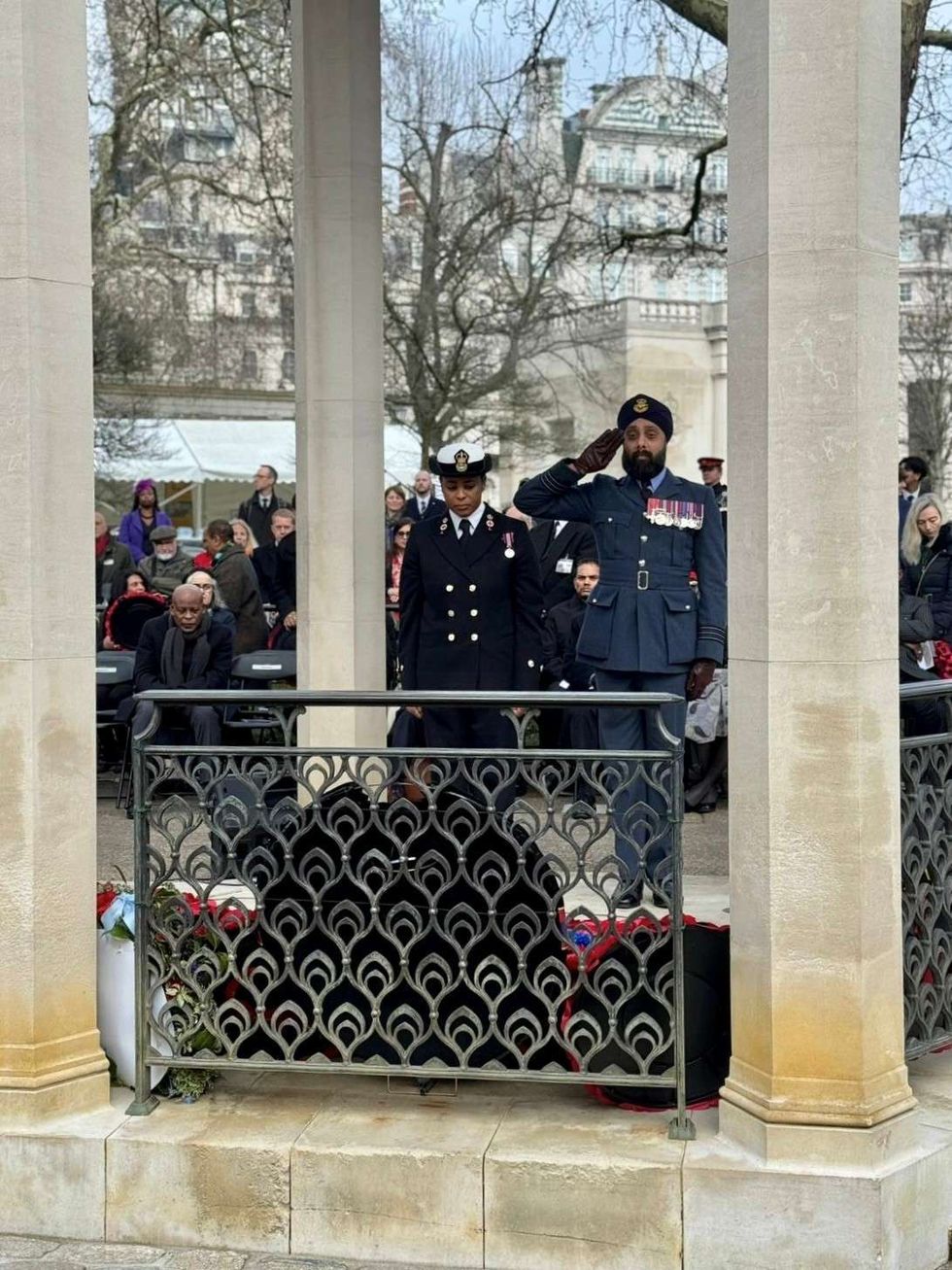 At the Commonwealth Memorial Gates in LondonRAF
His thesis examined the use of the AI in conflict and how technological changes may shape future warfare.
“Warfare is deeply rooted in human behaviour, but it is also a discipline that must be studied. It is conceptual, yet grounded entirely in real-world consequences. So the question becomes: what are we doing today, what might future conflict look like, and how must we prepare as a military to meet those challenges?” Princejit said.
“The course was an open exploration of the nature of war and today’s evolving landscape. Hugely fascinating, and one of those rare opportunities to think deeply about the future.”
Princejit is also chair of the Royal Air Force Ethnic Minorities Network, and as one of the most senior Asian officers in the service, he hopes younger members of ethnic minority groups will consider a career in the military.
He recognises that some may feel hesitant, unsure whether they will belong, or whether the military is a place where their ideas, perspectives and identity will be valued.
Understanding those concerns, he encourages an open conversation to challenge perceptions. “It’s important to share experience and insight from serving personnel so that informed decisions can be made. It is more than a career, it’s a way of life. It doesn’t necessarily stop at five o’clock in the evening, but there’s beauty in it, as well,” he said.
“If you want something that’s incredibly rewarding and be part of a professional community committed to something bigger than itself, then don’t dismiss the armed forces.”
In June 2023, Princejit was recognised in the King’s birthday honours list with an MBE for developing a tool to track aircrew competence.
He said, “One of the squadrons operated the C130J aircraft which had a broad range capabilities, from landing in remote locations, where there isn’t a runway, to delivering various types of cargo and equipment via parachute.
“The aircrew, therefore, had to be trained and maintain the skills needed to operate the aircraft, accordingly. The tool allowed the squadron to effectively track those skill sets. In doing so, it brought flight safety and supervision closer together as we were able to view a broader set of data in a very accessible manner.”
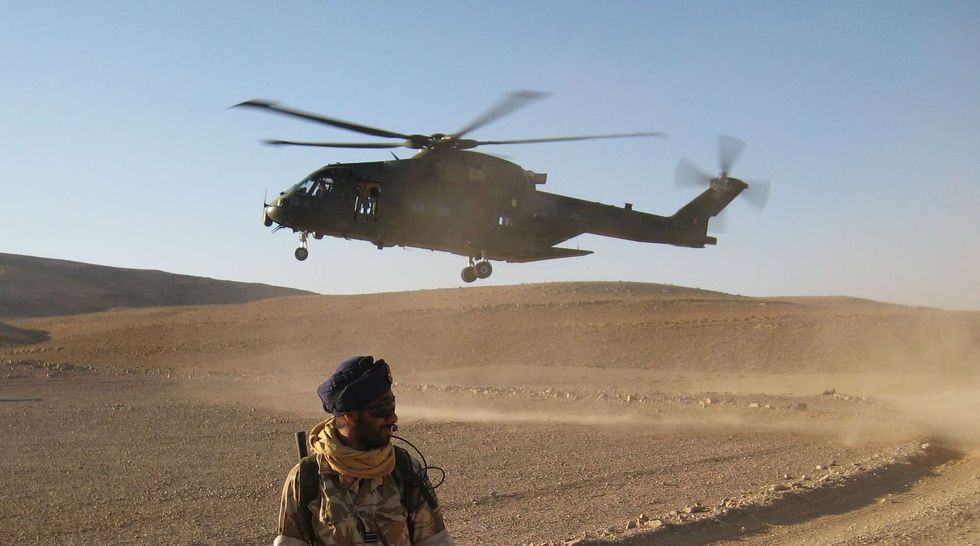 On exercise in Jordan as part of predeployment training to AfghanistanRAF
Princejit told Eastern Eye, “Ultimately, we invest a lot in training and developing our people. We want to make sure everything is operating at the best level – individuals as a team with the aircraft to succeed on mission.”
The MBE was not about personal recognition, but about what it represented: that the RAF rewards creativity, fresh perspectives and the courage to challenge how things have always been done.
He said, “It showed me, and I hope it shows others, that your background is not a barrier. In fact, your unique perspective may be exactly what defence needs.”
Seventeen years after joining, purpose and representation are twin forces that fuel his motivation.
“My sense of purpose comes down to the jobs I am doing. The operational activity we see globally is quite a powerful motivator for me,” he said.
“Representation is also a huge motivator, because there are not many Sikhs in the service.” “It’s important that we break down barriers and develop understanding, because we’re constantly building a team that works together to deliver incredible outcomes” he said. “The Royal Air Force is open to everyone. The range of professions we have, pilots to engineers, medics, HR, logisticians, air operations, the breadth of roles is enormous”
His advice to those finishing education or seeking a new career is simple. Be curious. Explore what the armed forces offers and which profession suits you best.
“You might find a purpose, community and opportunities you never expected.”