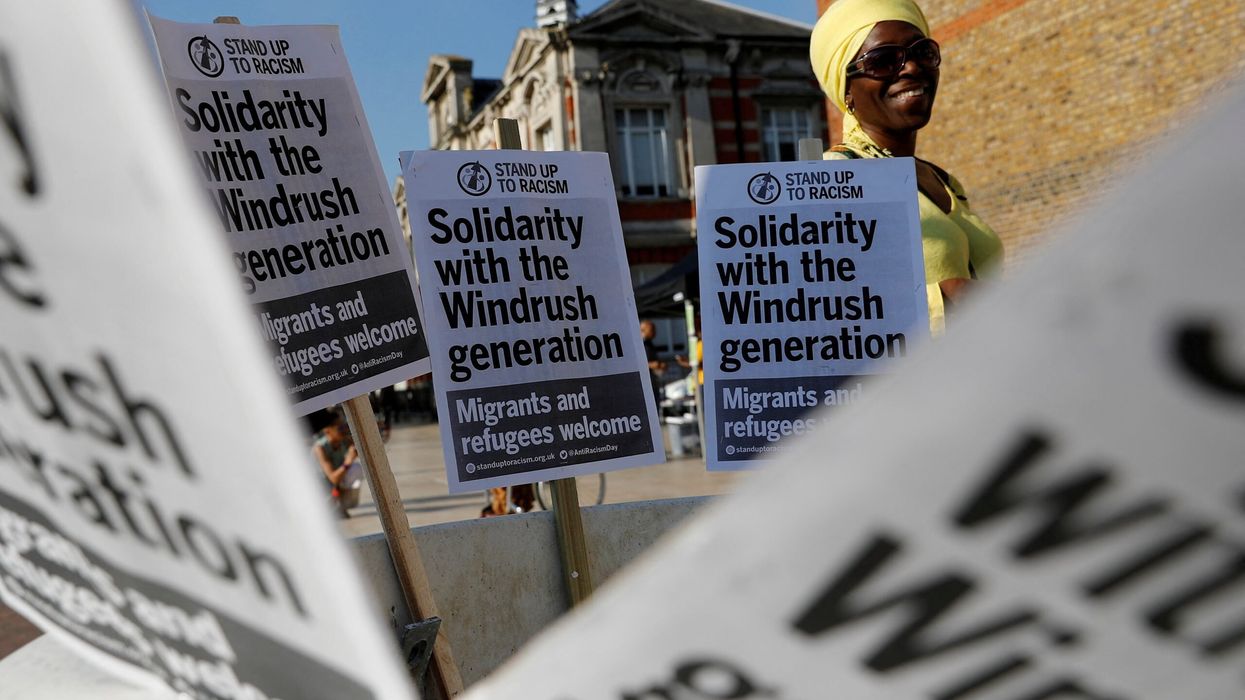

WRONGFUL detention and deportation of Caribbean migrants was the result of decades of immigration laws that aimed to reduce the country’s non-white population, according to a long-suppressed official report released on Thursday.
The report highlighted the Windrush scandal, where thousands of Caribbean migrants were mistreated, damaging the authority of former prime minister Theresa May. May had overseen immigration policy during her time as home secretary, where efforts to crack down on illegal immigration were intensified.
Hundreds of thousands of Caribbean migrants came to Britain between 1948 and 1971 to help fill post-war labour shortages, arriving on ships such as the Empire Windrush.
In 2018, the UK government issued an apology for the treatment of the "Windrush generation" after tighter immigration policies led to many being denied rights despite living in Britain for decades. Some were even deported wrongly.
The previous Conservative government had refused to publish the report, "The Historical Roots of the Windrush Scandal," in 2022, rejecting requests under the Freedom of Information Act. The Labour government has now released it.
The report states that between 1950 and 1981, immigration and citizenship laws were designed to limit the number of Black people living and working in the UK. "Major immigration legislation in 1962, 1968, and 1971 aimed to reduce the proportion of non-white people living in the UK," it said, calling the Windrush scandal a case of "deep-rooted racism."
This research, commissioned by the Home Office as part of a government review in 2020, used information from the National Archives, oral history interviews, and discussions with Home Office staff.
The report does not make any recommendations but noted that the British empire "profoundly shaped" the lives of Black and other ethnic minority people in the UK.
In 2018, the British government said it would compensate some of the Caribbean migrants affected by the scandal.
"Gradually, the politics of race and immigration became intertwined," the report said, adding that even after the abolition of slavery in 1833, the idea that Black people were not entitled to equal status with white people within the British Empire persisted.
(With inputs from Reuters)