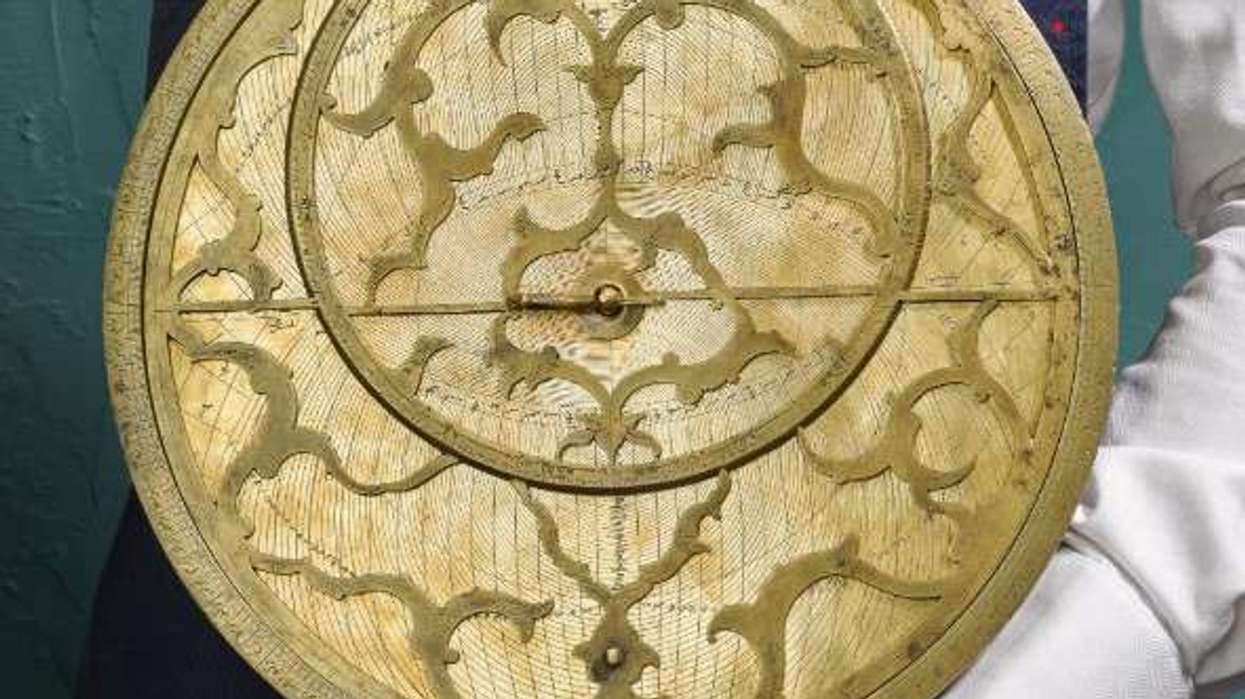
CERTAIN portions of the personal diaries and letters involving the last Viceroy of India, Lord Mountbatten, his wife Edwina and India's first Prime Minister Jawaharlal Nehru, will remain redacted, a UK tribunal has ruled.
Judge Sophie Buckley presided over the UK First-Tier Tribunal (Information Rights) appeal to decide whether some redacted sections of diaries and correspondence dating back to the 1930s can be fully released for open public access.
A three-member tribunal concluded recently that Southampton University did not “hold” any correspondence entitled “letters from Lady Mountbatten to Jawaharlal Nehru, the first Prime Minister of the newly independent India (33 files, 1948-60), along with copies of his letters to her” as part of its Broadlands Archive and was only "physically safeguarding the papers" on its premises.
“The information was not owned by the university, and its use was restricted both in contract and in practice to physically safeguarding the papers. This is akin to the papers being held by an expert storage company,” the tribunal decision read.
“Matters have moved on considerably since the decision notices… and the vast majority of the Mountbatten Papers have now been made public,” it noted.
Historian Andrew Lownie, who launched a four-year-long battle for the release of the papers for his book, The Mountbattens: The Lives and Loves of Dickie and Edwina Mountbatten, described the ruling as a victory that came “at a very high cost”.
He believes his fight was on the “crucial principles of censorship and freedom of information”.
“It has been a pyrrhic victory. Over 35,000 pages, 99 per cent of an important historical collection, has been released which will be important to future scholars and it has been a victory for free speech, academic freedom, access to archives and against government censorship,” said Lownie.
“My legal challenge has cost me an enormous amount financially – some £300,000, my savings for my old age and an inheritance for my children,” he said.
The author-historian, whose new book Traitor King: The Scandalous Exile of the Duke and Duchess of Windsor, is out next month, said even the redacted material in the diaries and letters is likely to be “innocent”.
“This has simply been a face-saving exercise, but the withheld Edwina-Nehru correspondence bought at the same time with the same monies will shed fresh light on their relationship, when it began and how it shaped Independence and Partition,” he said.
“There is a huge public interest in that correspondence being released and campaigners should be lobbying Southampton University to exercise their £100 option [to acquire the ownership rights],” he said.
The papers cover an important period of British-Indian history, including when India's Partition was being overseen by Mountbatten and involves personal diaries and letters of both Lord Louis and wife Lady Edwina Mountbatten.
The Cabinet Office maintained that most of the information from those papers was already in the public domain and any withheld aspects “would compromise the UK's relations with other states", with reference to India and Pakistan.
In 2011, the University of Southampton bought Broadlands Archive from the Mountbatten family using public funds of more than £2.8 million with the intention of making the papers widely available.
However, the university then referred some of the correspondence to the Cabinet Office.
In 2019, the Information Commissioner's Office (ICO) found in favour of Lownie and ordered the release of the entire Broadlands Archive.
In response, the University of Southampton explained at the time that the correspondence between Lady Mountbatten and Nehru remained in private ownership and is “confidential, but the University has a future interest in it”.
It could have applied to purchase those letters, but reportedly chose not to.
The 2019 decision of the ICO was appealed, which was heard in the First-Tier Tribunal in November last year and has now been concluded.
In the lead up to the hearing, the Cabinet Office narrowed the number of exemptions they were seeking to impose so that most of the letters and diaries were available by then.
“This is a victory after four years of campaigning, but there is still a legal bill of £50,000 and so the crowfunding has to go on,” noted Lownie, in his Crowdjustice.com fundraiser appeal.
The author said he raised more than £63,000 in pledges from the website to fund the legal costs of the appeal.
The diaries of Mountbatten, a great-grandson of Queen Victoria, an uncle to the late Duke of Edinburgh and great-uncle to Prince Charles, also contain personal correspondence within the royal family – another factor cited behind some redactions.
In May last year, Southampton University said it was publishing online “previously unavailable papers” from the Broadlands Archives collection and that further material would be made available during the course of the year. It is claimed a majority of the material from the diaries is now in the public domain.
“The Broadlands Archives collection is one of the University Library's foremost collections of manuscripts... this substantial collection dates from the sixteenth century to the present. The material provides a preeminent resource for British politics in the nineteenth and twentieth centuries,” the university said.
Site Navigation
Search
Latest Stories
Start your day right!
Get latest updates and insights delivered to your inbox.
Related News
News
Teachers, nurses warn of strikes over 2.8 per cent pay rise proposal
EasternEye
11 December 2024
More For You

Roxana Panozo Alba finishes her shift in central London as office workers begin their day. She cleans offices overnight while others head to work. (Photo credit: AFP via Getty Images)
Migrant workers fill UK night shifts as local numbers fall
Dec 26, 2025
“We are ghosts on the night shift,” said Leandro Cristovao from Angola to AFP, who has worked nights at a south London market for seven years.
Britain’s nighttime workforce, estimated at about nine million people, has increasingly depended on migrants as fewer UK-born workers take up night jobs over the past decade.
“You have a lot of night work carried out by migrant night workers in — somewhat unfairly named — low-skilled sectors,” said Julius-Cezar Macarie, a sociology professor at University College Cork, to AFP.
“Their work is very, very essential, because they maintain this... 24-hour society,” said Macarie, whose “Nightwork Footprint” project studies night work and its visibility.
Official data from 2022 shows that people not born in the UK are twice as likely to work nights as those born in the country. In the health and care sector, more than a third of night workers are migrants.
As the UK government tightens rules on overseas workers, migrants working nights spoke to AFP about their experiences.
The office cleaner
Roxana Panozo Alba finishes her shift in central London as office workers begin their day. She cleans offices overnight while others head to work.
The 46-year-old works with a team, most of whom are migrants, cleaning offices from 10 pm to 7 am. She is paid the London Living Wage of £13.85 ($18.47) an hour.
Alba, originally from Bolivia and now a Spanish citizen through marriage, moved to the UK with her husband after losing work opportunities in Spain.
She has worked nights for eight years so she can spend time with her children during the day and because she does not speak English.
“Working at night is not good, it damages your health,” she said.
“You have to sleep (in the day), but you can’t. The slightest noise and you can’t get to sleep.”
The care workers
Omatule Ameh, 39, works overnight supporting children with learning disabilities in southeast England. He moved from Nigeria in 2023 on a care worker visa.
During the day, he looks after his own children while his wife works. He said he sometimes sleeps for only three hours.
“You find that emotionally, mentally, it’s taking a gradual toll on you,” said Ameh, who earns about £12.20 an hour.
Judith Munyonga, 44, from Zimbabwe works four night shifts a week in Hertfordshire, caring for patients with spinal cord injuries.
“I’ll try to play music in one of my headphones to keep myself awake. When it’s dark, I tell you, it’s not easy,” she said.
Both said government moves to end the social care visa route and changes to residency rules were “worrying”.
Last month, the government said some care workers would need to wait 15 years, up from five, before applying for residency.
“It’s like changing the rules in the middle of a game,” said Ameh.
The government has also ended the provision allowing care workers to bring family members to the UK.
“It’s sad,” Munyonga said. “You are here to care for some family, (for them) to live a normal life. And yours is out there.”
Ameh said he is taking management courses to “move up the ladder”.
The chef
Sandeep works nights at a 24-hour London cafe, finishing a 12-hour shift at 7 am.
The 21-year-old from Nepal has worked there for two years. He began as a student and stayed on after graduating when he could not find a job in technology.
“It’s really hard to get a job at the moment,” he said, adding he had “no option” but to work nights.
He moved to the UK in 2023 because “there’s nothing back there for youngsters like us.”
If he cannot find higher-paid work, he will have to leave the UK when his visa expires under new salary rules.
“They gave me the hope... now what’s the point of telling me to go back to your country?” he said.
“Everyone here is an immigrant,” he added, pointing to his colleagues.
“If we couldn’t do it, I think the boss has to shut down the place for night shift.”
The warehouse manager
Cristovao packs produce overnight for delivery to restaurants, schools and hotels.
When he started night work, he said he struggled to sleep during the day.
“I almost became like a ghost,” he said.
His employer, Martin Dykes, said the business faced challenges after Brexit and is concerned about tighter visa rules.
“My friends in the business, we wouldn’t (be able to) do it. Restaurants wouldn’t survive,” said Dykes.
“But we are here,” Cristovao said.
“While they are sleeping, we are here,” he added.
(With inputs from AFP)
Keep ReadingShow less
Most Popular
Current Issue
×
Terms and Conditions
By clicking the 'Subscribe’, you agree to receive our newsletter, marketing communications and industry
partners/sponsors sharing promotional product information via email and print communication from Garavi Gujarat
Publications Ltd and subsidiaries. You have the right to withdraw your consent at any time by clicking the
unsubscribe link in our emails. We will use your email address to personalize our communications and send you
relevant offers. Your data will be stored up to 30 days after unsubscribing.
Contact us at data@amg.biz to see how we manage and store your data.
© Copyright 2025 Garavi Gujarat Publications Ltd & Asian Media Group USA Inc