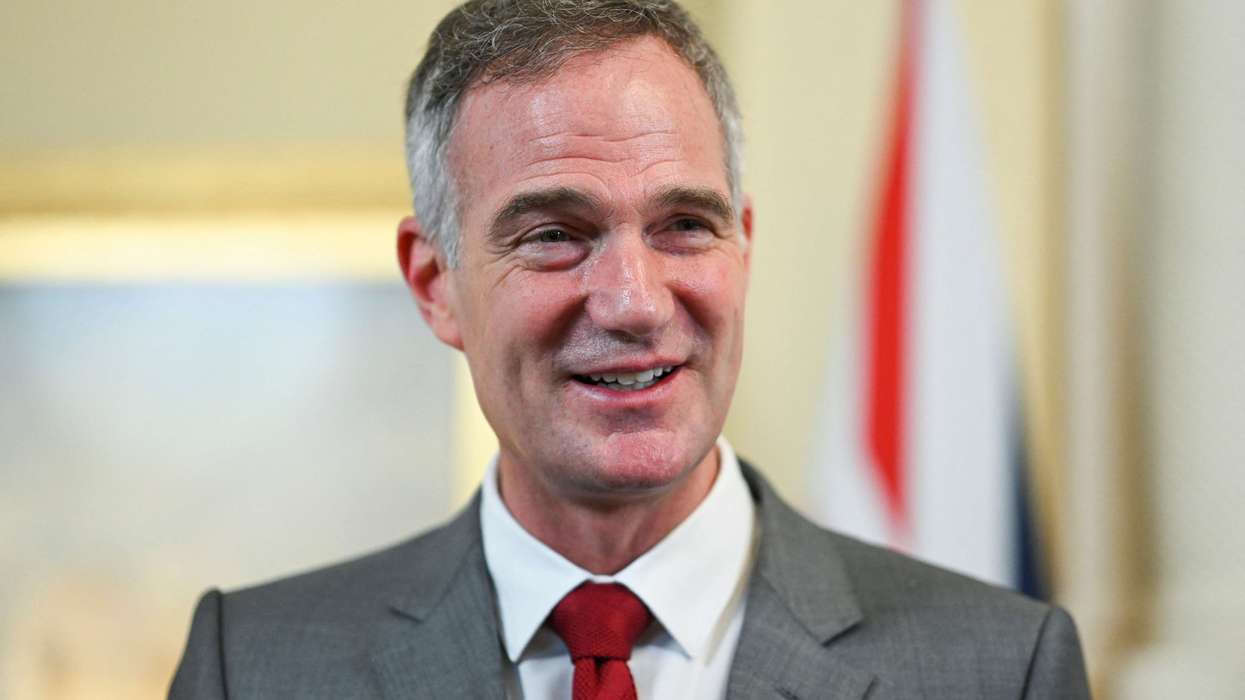

- Peter Kyle says the government must take greater risks to help British startups scale.
- The UK is expanding funding through the British Business Bank and National Wealth Fund.
- Critics warn that public investment must remain disciplined and free from political influence.
The UK government's latest push to support technology startups is about more than cutting red tape or attracting investment. It is also reopening a long-running debate about how active the state should be in shaping the country's economic future.
Business secretary Peter Kyle has signalled that ministers are prepared to take a more interventionist approach to backing high-growth companies, arguing that Britain needs to be more ambitious if it wants to build and retain the next generation of global business champions.
Peter Kyle said Britain needed to take greater risks to support high-growth companies while speaking at The Wall Street Journal CEO Council Summit in London. The comments come as ministers look for ways to stop promising British startups from seeking funding, listings or acquisitions overseas.
The strategy is already taking shape through state-backed investment vehicles such as the British Business Bank (BBB) and the National Wealth Fund (NWF), both of which have received additional Treasury support.
Chasing Britain's next big success story
At the centre of the government's thinking is a familiar problem. Britain has become highly successful at creating startups, particularly in sectors such as artificial intelligence, fintech and quantum computing. Yet many of its most promising companies eventually scale elsewhere.
Kyle's ambition was laid bare this week when the government launched a new "concierge service" designed to help fast-growing companies navigate Whitehall and access support more easily. The initiative was described as part of his quest to nurture Britain's first trillion-dollar company.
That is a lofty target.
A trillion dollars is equivalent to roughly £750 billion, more than three times the value of HSBC, currently the largest company listed on the London Stock Exchange. Even Arm Holdings, the British chip designer widely regarded as one of the UK's technology success stories, is worth around £280 billion and is listed in New York rather than London.
Kyle has argued that the UK cannot afford to remain passive while other countries actively support strategic industries and emerging technologies.
"The years of standing back and watching British industry decline are over," he reportedly wrote on social media. He added that he was championing a more activist and interventionist industrial policy focused on driving economic growth.
How much risk is too much?
The government's approach, however, is already attracting scrutiny.
Kyle reportedly told the Sunday Times that the public sector would begin taking more risks to support British innovation as it scales, adding that he wanted the country to be "aggressively ambitious".
Supporters see the comments as recognition that building globally competitive technology firms often requires patient capital, long-term planning and a willingness to back emerging industries before they become commercially proven.
Recent investments appear to reflect that approach. The British Business Bank has backed companies including autonomous driving startup Wayve, cryptocurrency platform Kraken and Oxford Quantum Circuits, a quantum computing business that recently received a £100 million investment.
Yet critics argue there is an important distinction between being ambitious and behaving like a venture capital firm with taxpayers' money.
Some observers have questioned whether ministers risk creating the impression that politicians are selecting commercial winners and losers. The official structure is designed to avoid exactly that scenario. While the government provides funding, investment decisions are intended to be made independently by professionals operating under commercial principles.
The British Business Bank itself has repeatedly emphasised that public capital should be deployed with the same discipline and investment standards expected in the private sector.
The wider significance of Kyle's comments may lie less in individual investments and more in what they reveal about Labour's economic philosophy.
Alongside direct funding, ministers are looking at ways to simplify regulation, improve access to skilled international workers and make it easier for fast-growing businesses to work with government.
Taken together, the measures suggest a shift away from the traditional view that government should simply create favourable market conditions and then step aside.
Instead, ministers appear increasingly willing to use public institutions and investment vehicles to influence how strategic sectors develop.
Whether that approach produces Britain's next major technology success story remains uncertain.
What is clear is that the government is becoming more comfortable playing a direct role in the race to build globally competitive companies, a role that could bring significant rewards if successful, but which will inevitably face questions whenever public money is put at risk.