
The body which appoints judges has lost its battle to force an investigative journalist to pay it more than £14,000 in legal costs in a vicious dispute over a freedom of information request.
Two judges at the First-tier Tribunal refused the Judicial Appointments Commission’s (JAC) application in full, and ruled the journalist, Barnie Choudhury, had acted reasonably in pursuing contempt of court proceedings.
The tribunal also decided that costs should not be used as punishment, even when the journalist’s language may have been considered ‘intemperate’ and ‘unreasonable’.
“We bear in mind that the costs regime is not intended to be a punitive measure for the tribunal to impose, and having carefully considered all of the relevant circumstances present in this case, we do not consider that it is appropriate or proportionate to make an order for costs against the respondent (Choudhury) in this instance,” wrote Judge James Armstrong-Holmes in his judgement. “We therefore decline to exercise our discretion to make an order for costs.
“The application is refused.”
It said that belief gave him a lawful route to look for a way to enforce that legal decision.
“Being of that mind, the only available means for him to seek enforcement of that order was to make an application to certify an offence to the Upper Tribunal.
“We do not consider that it was unreasonable for the respondent to have made that application.
“His firm belief was that the JAC was still withholding information from him.”
“Unfortunate oversight”
Armstrong-Holmes praised Choudhury for taking “a pragmatic approach to matters, determining to withdraw his application” once he realised he had enough information to continue writing articles about the judiciary.
Without his doing so, the judge said the JAC would have “incurred further expense”.
But the commission argued the journalist should be punished for failing to read a key email until later in the proceedings.
The tribunal rejected that argument and said the delay amounted to an unfortunate oversight rather than misconduct.
“He was on holiday at the time of receiving that correspondence, and it was acted upon once he had properly read and considered its contents, albeit when it was brought to his attention again by the filing of the JAC’s evidence and submissions in response to the application.
“We consider that the pragmatic withdrawal of the application was both sensible and should not be discouraged by the tribunal in such circumstances.”
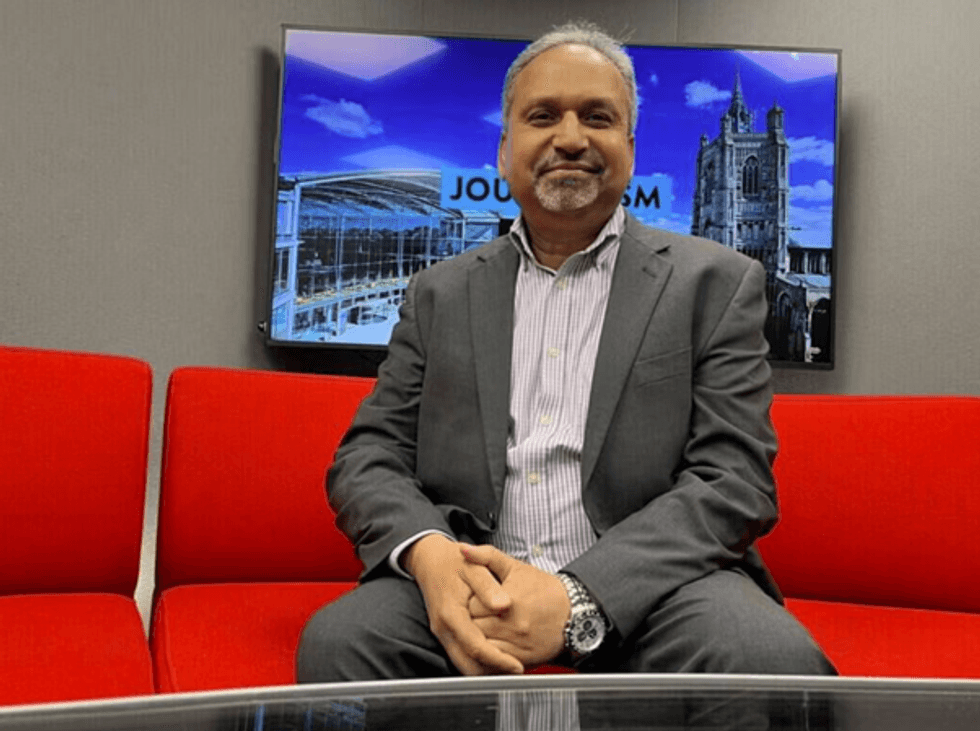 Barnie Choudhury Pic credit: Barnie Choudhury
No costs
The JAC also argued Choudhury’s conduct forced it to incur substantial legal costs in preparing evidence and submissions.
The judges rejected the JAC’s argument about what caused the costs.
Armstrong-Holmes decided the journalist’s emails and tone did not trigger the legal work the JAC carried out.
“Although the JAC has incurred costs in responding to the respondent’s application to certify an offence to the Upper Tribunal, those costs did not arise as a result of the manner in which the respondent conducted himself in correspondence with the JAC.
“Those costs arose in complying with the tribunal’s direction to file evidence and submissions by 4th September 2025, and for the reasons set out above, we did not find that the respondent’s behaviour was unreasonable in relation to the application itself, the maintaining of his application following the further exchange of correspondence, or the oversight in failing to read and consider the correspondence of 9th July 2025 when it was received.
“We did not therefore find that the respondent acted unreasonably in this regard.”
Journalists and media organisations have welcomed the ruling.
The National Union of Journalist, of which Choudhury has been a member for almost 40 years, attended the hearing.
Union officials listened intently to the case because of its implications for press freedoms.
NUJ general secretary Laura Davison said, “This attempt to recover substantial costs from a freedom of information applicant risked introducing a significant new jeopardy for journalists – particularly those without a major news platform to meet their costs.
“The court’s sensible decision to turn down this application should dissuade other public bodies from pursuing such a course.
“NUJ member Barnie Choudhury took enormous personal risks pursuing his inquiries into the Judicial Appointments Commission.”
According to experts, Choudhury would have faced a legal bill running into six figures had it not been for Birmingham-based solicitors Neil Davies and Partners.
They instructed his counsel, Alexander Hutton KC and Jacob Meagher, who spent hours working for free.
Meanwhile the JAC used taxpayers’ money to pursue a journalist whose job is to monitor, without fear or favour, public bodies.
“Scrutiny is not misconduct,” Dawn Alford, chief executive of the Society of Editors, told Eastern Eye. “The public relies on journalists to ask difficult questions and challenge those in positions of authority, and that role should be protected and respected.
“This decision reinforces an important principle – transparency and accountability are in the public interest, and journalists must be free to pursue legitimate investigations without fear of undue consequences.
“Open justice and freedom of information are vital safeguards in a democracy, helping to ensure that public institutions remain accountable to the people they serve.”
Judges’ criticism
The tribunal did admonish Choudhury’s conduct in the dispute.
It found allegations of dishonesty, misconduct and racism were not supported by evidence.
It ruled such claims were serious and would have caused distress to those targeted.
“The allegations are serious in nature, alleging dishonesty, impropriety, misconduct and racism on the part of the JAC.
“It is undoubtedly the case that the repeated allegations of impropriety, misconduct and racism, which were directed towards JAC staff and those acting on its behalf, would have caused distress and/or harassment.”
But some south Asian judges who did not want to be named, because they cannot talk to journalists without permission, rejected this argument.
They said that the government's own official figures concerning the appointments system showed credible evidence of institutional, systemic and structural biases.
They contended it was consistent with institutional racism under Macpherson’s definition, and the selection system was often unfair to candidates of colour.
“This is a wearily familiar script,” said one judge. “The moment anyone dares criticise the Judicial Appointments Commission, its officials reach not for an answer but for a posture of injury, telling you how hard they work, casting themselves as the wounded party.
“Then, with public money, they deploy the most powerful weapon a state body has against a private individual, a costs application of exactly the kind brought here, calculated to make one critic think twice and the next think harder still.
“Barnie Choudhury was entitled to every word he used.
“The judgment is, in most respects, correct, clear and concise, but on the single question of his language, it cannot stand, because to brand robust, plain-spoken criticism of a public authority as ‘unreasonable conduct’ misunderstands what public service is for.
“Public servants are not delicate ornaments to be shielded from sharp words.
“They are paid, out of the public purse, to be accountable, and a public body must tolerate a far higher degree of criticism than a private citizen.
“If officials fail to do their jobs properly, they must expect to be told so, bluntly, publicly, and without apology.
“Strong language aimed at an authority that has fallen short is not harassment, it is democracy doing its job.”
Reasonableness
The tribunal said a reasonable person would not have made some of the allegations used in correspondence and submissions.
But it stressed that even where conduct is found unreasonable, costs were still discretionary.
It ultimately decided such an order would be disproportionate.
“When considering the seriousness and nature of the allegations directed towards the JAC, and the circumstances of this case in the whole, including the fact that the respondent’s engagement with his legal representative was ad hoc, we do not consider that a reasonable person in the respondent’s position would have conducted themselves in the manner he did.
“We therefore have no hesitation in finding that he acted unreasonably in the conduct of the proceedings when applying the objective standard to the facts of the case.
“However, whilst that high threshold has been met, the tribunal must go on to consider whether in light of the unreasonable conduct found it should make an order for costs.”
It took her six years to win her legal war.
She is now president of the GMB judicial branch, the union which represents judges.
“We have many members among front line judiciary who do not see themselves represented proportionately in leadership roles,” she told Eastern Eye.
“Professor Choudhury has been tireless in listening to dozens of similar accounts of improper practices in judicial appointments.
“Some of these have been litigated, and what has emerged at those hearings has deepened concern.
“He has not shirked calling these out, pointing to incidents in which judges and court users and officials seem to encounter different treatment because of race.
“We acknowledge that some efforts have been made recently to take complaints about unfair treatment by judges themselves more seriously.
“It is still unfortunately the case that this doesn't apply equally across the judicial hierarchy with rank being the prime indicator of whether complaints are properly pursued and with the inner circle protecting its members.
“The complaints process itself has been improperly used by judicial leadership.”
Eastern Eye approached the JAC for comment.