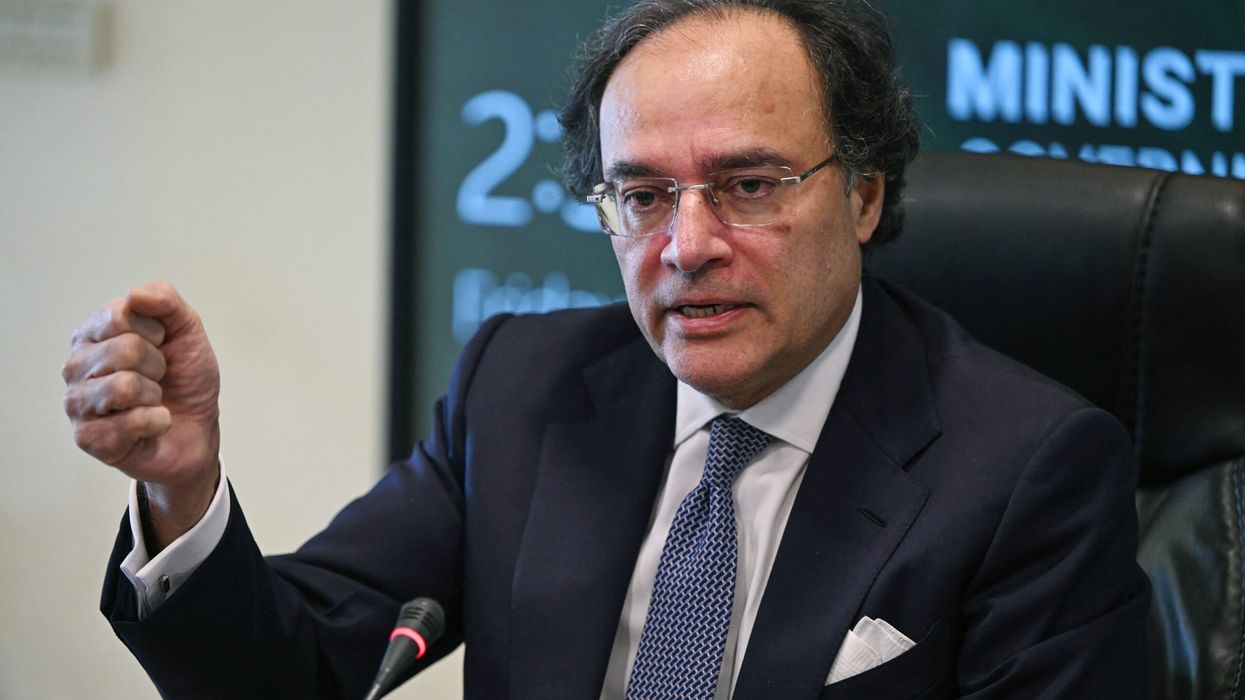

Pakistan is gearing up to seek a fresh financial boost from the International Monetary Fund (IMF), emphasising on climate finance.
According to a report by The News International, the government aims to secure a medium-term Extended Fund Facility (EFF) during the upcoming Annual Spring Meetings of Bretton Woods Institutions next week.
“With the augmentation of the next bailout package through climate finance, Pakistan is all set to make a formal request to IMF during the upcoming annual spring meetings,” the report said, quoting top official sources.
Finance Minister Muhammad Aurangzeb will lead Pakistan's delegation at the meetings scheduled from April 15 to 20 in Washington DC.
The decision to seek the EFF follows a recent staff-level agreement between Pakistan and the IMF on the second and final review of Pakistan's stabilisation program. This agreement is part of the IMF's USD 3 billion (£2.39 billion) standby arrangement approved last year.
Prime Minister Shehbaz Sharif hinted at this move earlier, mentioning plans for "another program" with the IMF. The upcoming bailout package might include climate finance augmentation, aiming for a size ranging between USD 6 billion (£4.72 billion) to USD 8 billion (£6.39 billion).
“We are going to present our argument before the IMF management that Pakistan faced severe consequences of climate degradation and deserved support from the international community and donor agencies,” the report quoted sources as saying.
Pakistan intends to highlight the impacts of climate degradation, arguing for international support during the discussions. The IMF's Resilience and Sustainability Facility (RSF) might offer a suitable instrument, providing long-term financing for countries addressing climate change and pandemic risks.
Meanwhile, concerns regarding Pakistan's public debt sustainability persist. However, based on previous IMF reviews, the country's debt has been deemed sustainable within certain limits.
Pakistan's total public debt is projected to rise to Rs 120 trillion (£1.2 trillion) over the medium term as projected by the IMF over the next three to five-year period.
Pakistan has also approved the Public Investment Management Assessment (PIMA) framework, including Climate-PIMA under the guidelines of the IMF's technical report.
Earlier this month, the World Bank's biannual Pakistan Development Outlook report painted a grim economic picture, indicating that the country is set to miss almost all major macroeconomic targets cautioning that over 10 million more people are at risk of descending into poverty.
The Washington-based lender's apprehension came from a sluggish economic growth rate of 1.8 per cent, coupled with soaring inflation, a staggering 26 per cent in the current fiscal year.
(PTI)