
Highlights:
- Police used water cannon during a second night of unrest in Northern Ireland.
- A Sudanese refugee appeared in court charged over the Belfast stabbing.
- Businesses, schools and public transport shut amid fears of further disorder.
- UK authorities blamed far-right activists for fuelling tensions online.
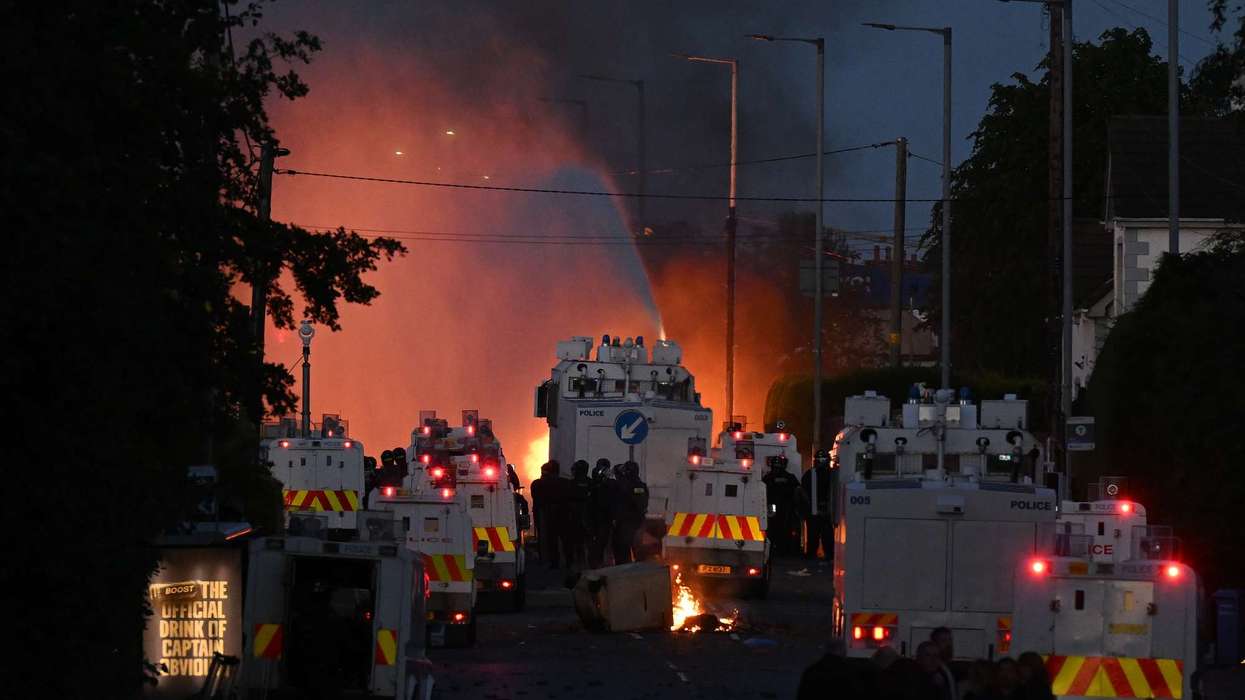
Police increased their presence on the streets, although areas that had seen major disorder 24 hours earlier remained largely quiet. In one area, dozens of men confronted officers, throwing rocks and bottles and setting fires in the road.
"Crowds have gathered & missiles are being thrown at officers who have now deployed the water cannon in an attempt to maintain public order," police said in a statement.
Belfast city centre was largely deserted by late afternoon, with restaurants and businesses closed, schools shut and public transport suspended amid fears of a repeat of Tuesday night's riots.
Earlier on Wednesday, a Sudanese man appeared in court charged over the knife attack that sparked the unrest, which also spread to the Scottish city of Glasgow.
Belfast erupts in unrest after refugee charged over knife attack
In Belfast on Tuesday, masked rioters set vehicles and buildings on fire and forced families to leave their homes.
Prime minister Keir Starmer condemned the scenes as "shocking and completely unacceptable".
The family of Stephen Ogilvie, who was injured in Monday night's stabbing, appealed for calm and warned against using the "terrible tragedy" to "divide people or fuel hostility".
The family said Ogilvie was in a stable condition despite losing an eye, adding: "We have been left feeling disgusted by the scenes that unfolded yesterday across Northern Ireland in the wake of what happened".
Tensions were already high across the UK. Skirmishes took place in southern England last week over police handling of the murder of a white student by a British Sikh man.
Anselme Shima, originally from the Democratic Republic of Congo and living in Northern Ireland since 2013, described the situation as "terrifying".
Another local resident, 28, who asked not to be named, said she had helped evacuate her neighbours.
"It's just sad, this is a really close knit community," she told AFP.
Court appearance
At Belfast Magistrates' Court on Wednesday morning, Hadi Alodid, a 30-year-old refugee from Sudan, appeared briefly to face attempted murder and other charges linked to Monday's stabbing.
He was remanded in custody and the case was adjourned until July 8.
Footage of the stabbing, which showed several people intervening, including one carrying a hurling stick, sparked condemnation as well as anger.
Numerous accounts linked to so-called "patriots" shared the footage and urged people to "protest against mass immigration into their communities".
In Glasgow, three people were arrested while two police officers and three members of the public were injured, according to Scotland's police force. Worshippers at Glasgow's largest mosque were reportedly locked inside as tensions rose.
As calls for further protests circulated on Wednesday, Northern Ireland police chief Jon Boutcher said his force was seeking to deploy an additional 200 officers.
Officers had to take a family, including a two-month-old baby, to safety during Tuesday's violence, which Boutcher described as "a huge act of self-harm by mindless idiots".
Twenty-seven people were left homeless "because people went door-to-door to try and target foreign nationals", UK minister Ruth Anderson said.
'Bad faith actors'
Anna Turley, chairwoman of the ruling Labour Party, said online platforms were "playing a role in driving" the unrest. She suggested X owner Elon Musk was among the "bad faith actors" inflaming tensions.
Musk had reposted a message by anti-immigration activist Stephen Yaxley-Lennon, also known as Tommy Robinson, adding: "Only by protesting REPEATEDLY and LOUDLY will there be any change!!"
According to the UK interior ministry, Alodid is a Sudanese refugee with a residence permit valid until 2028.
Immigration remains a major political issue in Britain and has helped fuel support for the Reform UK party led by Nigel Farage.
Britain has seen regular anti-immigration protests in recent years, with some turning violent.
(With inputs from agencies)