
THOUSANDS have either died or are missing in last week’s flash floods that devastated Nepal and Tibet.
Tibet, I learnt about through interviewing the Dalai Lama.
Nepal was more personal. I remember in Kathmandu, thick fog swirls round the valley in the morning, but by noon, everything is visible in the bright sunshine.
What first took me to Nepal was friendship with a Nepalese student at university. Chiran Samser Thapa became chief secretary to King Mahendra at the royal palace. The plane from Delhi weaved in between the mountains to land at Kathmandu. Chiran showed me the palace. As part of the rituals for his coronation, King Mahendra had to bathe in milk.
I also read one of Satyajit Ray’s evocative short stories featuring the Bengali detective Pradosh Chandra Mitter (better known by his nickname, Feluda). It was called Joto Kando Kathmandutey (in English, The Criminals of Kathmandu).
At the Sunday Times, I was responsible for coverage of a number of countries, including Nepal. I would be in regular contact with our stringers in Nepal. One Nepalese ambassador in London became a friend.
What is one to make of what has happened in Nepal and Tibet?
The Telegraph in Kolkata commented: “Indians form the largest share of the dead.”
It went on: “The Narendra Modi government has been fleet-footed in its response and has committed support and humanitarian assistance. There are worries on the domestic front as well, given that Bihar and eastern Uttar Pradesh are located downstream from Nepal. An interconnected river system in spate does not obey borders.”
It added: “Glacial events – often the trigger for such mayhem – are of many types and are by no means novel in this part of the world. Sikkim had suffered a glacial lake outburst flood three years ago, as did Chamoli in 2021… This should draw attention to the risks confronting the region that falls within the Himalayan arc, since many glacial lakes are located across this stretch. Greater investments need to be made when it comes to tracking glacial lakes and installing early warning mechanisms. Could a transnational template be conceived of involving the cooperation of adversely affected nations?
“Land use patterns inimical to the local ecology need to change. Perhaps the biggest challenge would be to minimise ‘development’ work in the fragile Himalayan region given the geostrategic imperatives. But as climate change intensifies, such disasters are only expected to become more frequent. Rogue development construction activities cannot be the way forward.”
As to the cause, the New York Times reported: “Scientists piecing together satellite imagery and seismological data said on Thursday that a high-altitude landslide coinciding with a glacial collapse likely caused the deadly flash flooding in Nepal and Tibet. Glaciologists and geologists had already determined that an enormous chunk of a glacier had snapped off on Wednesday morning (last week). On Thursday, a group of scientists analysing the events preceding the flooding said that newly available images, captured at a time with less cloud cover, show that an enormous chunk of the mountainous bedrock beneath that glacier had also given way.”
Kristen Cook, a geomorphologist at the Université Grenoble Alpes in France, told the paper: “The rock that the glacier was sitting on collapsed.” The combined force of the collapse sent millions of metric tonnes of rock and ice into the valley below, she added. This landslide was comparable to 1,000 Empire State Buildings crashing down into the river valley simultaneously.
Warming temperatures caused by climate change may have destabilised the rock face, scientists said, but they added that it was too early to determine a precise cause.
The landslide and glacial collapse took place on the north face of Langtang Lirung, a Nepalese mountain near the border with Tibet, at an elevation of around 17,000 feet, according to the scientists.
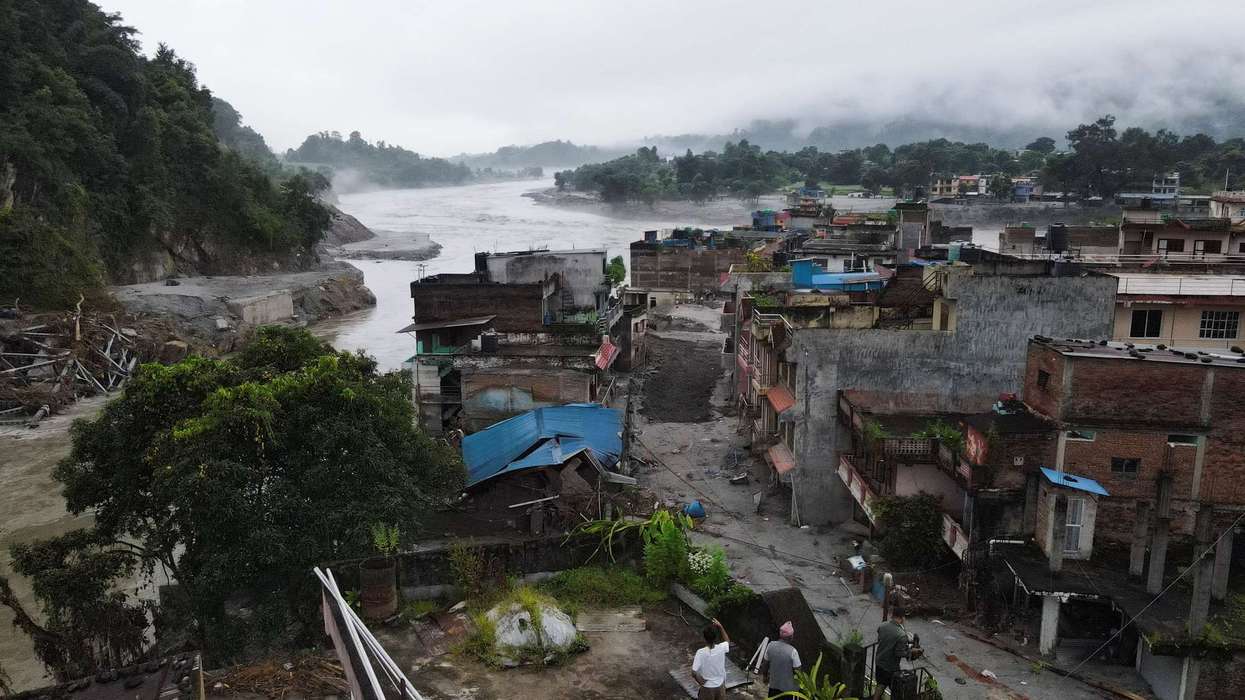
They are slowly building a more detailed picture of the chain of events that led to last Wednesday’s flooding. Torrents swept through the Himalayan valleys between Nepal and the Tibet region of China, devastating villages and killing hundreds.
Thousands are missing. Bodies swept away by the Bhotekoshi and Trishuli rivers have been recovered far downstream from the places where people disappeared. Morgues have exceeded capacity in various districts, forcing authorities to establish temporary storage facilities.
Most of the bodies remain unidentified, with authorities collecting fingerprints, photographs and DNA samples before burial so that families can later establish the identities of their missing relatives.
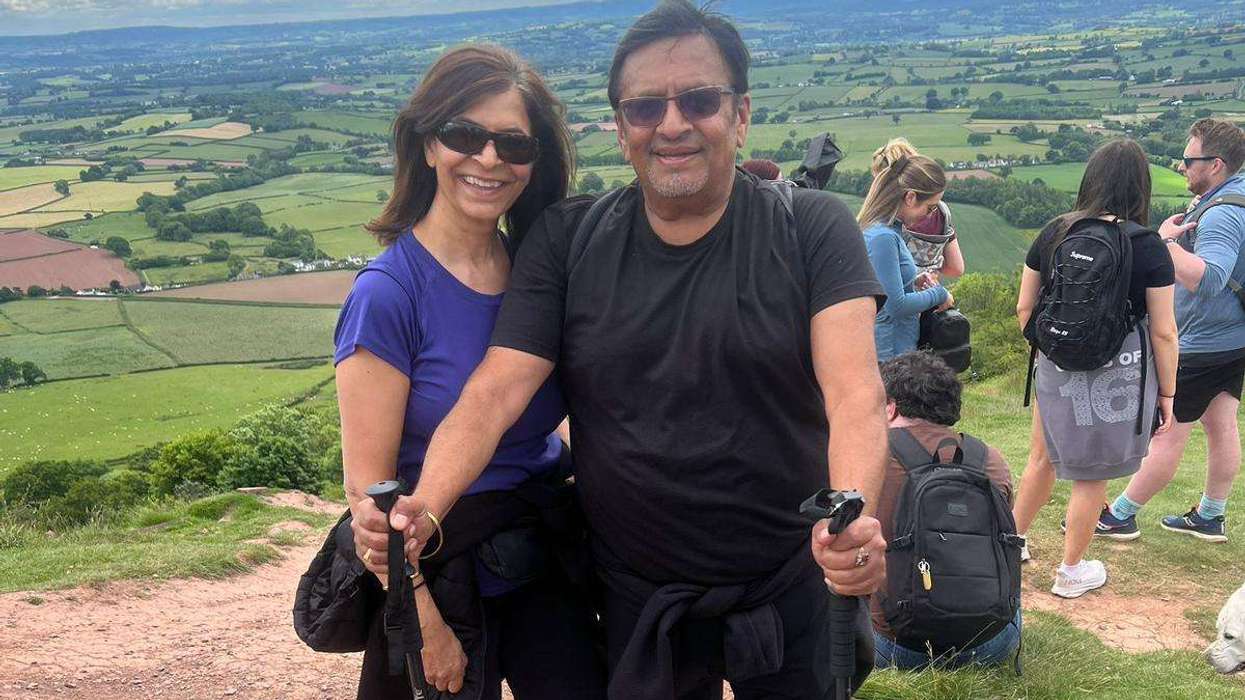
It is likely the fate of many, including some Indians from the UK, will never be established. And relatives regularly go to holy places in the Himalayas to disperse the ashes of near and dear family members.