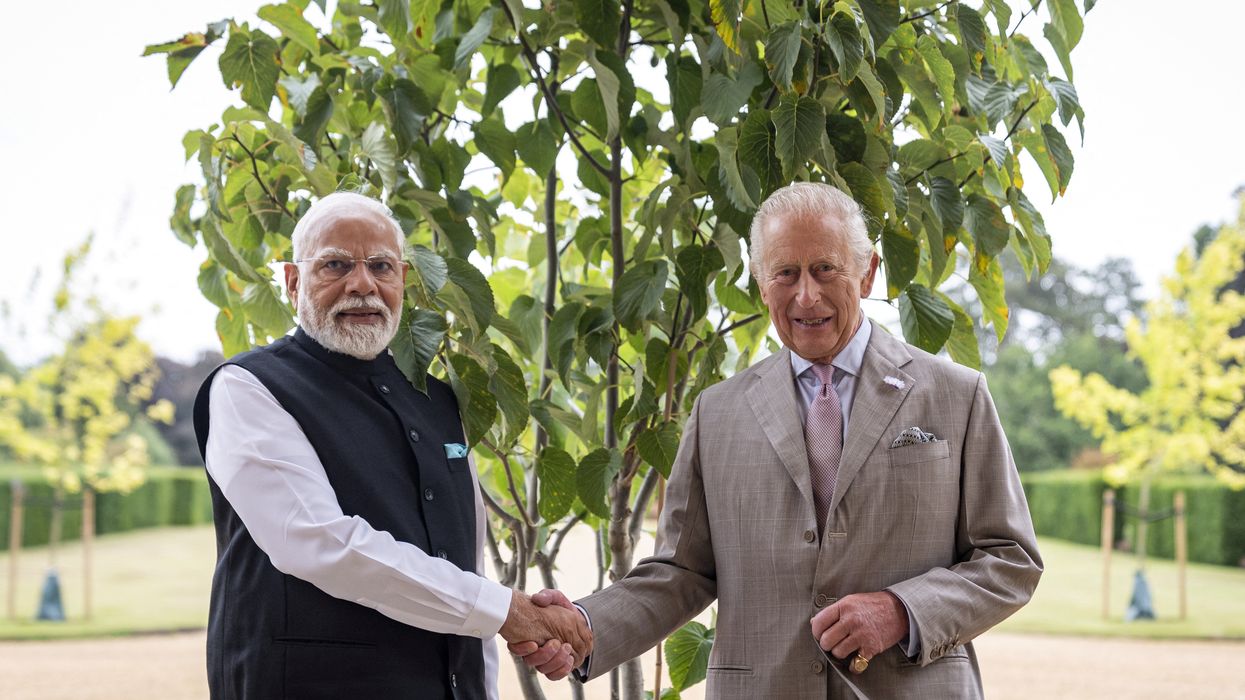

INDIA's prime minister Narendra Modi wrapped up a landmark visit to the United Kingdom on Thursday (24), which saw the signing of the long-awaited India-UK free trade agreement (FTA) and a symbolic meeting with King Charles III focused on environment, health and shared traditions.
In the meeting at Sandringham Estate in Norfolk, Modi presented the King a sapling from his environmental campaign Ek Ped Maa Ke Naam (One Tree for Mother), an initiative that encourages planting a tree in honour of one’s mother.
“Had a very good meeting with His Majesty King Charles III,” Modi posted on social media platform X. “We discussed India-UK relations, especially trade, investment, yoga, ayurveda, and sustainability.”
The tree sapling, a Davidia involucrata ‘Sonoma’ – known as the handkerchief tree – will be planted at Sandringham during the autumn. The ornamental tree is admired for its striking white bracts that resemble doves or fluttering cloths and is known to flower early compared to other varieties.
Buckingham Palace confirmed the meeting, saying: “During their time together, His Majesty was given a tree to be planted this autumn, inspired by the environmental initiative launched by the prime minister, which encourages people to plant a tree in tribute to their mothers.”
King Charles and Modi are known to share common ground on environmental issues and holistic health, with topics such as yoga and ayurveda forming part of the discussion.
The meeting with the King followed a busy day at Chequers, the British prime minister’s country residence, where Modi and UK prime minister Keir Starmer signed the FTA, marking a new chapter in bilateral trade ties.
“At Chequers, Starmer and I saw an exhibition highlighting the strong economic linkages between India and the UK. With the signing of FTA, these linkages will rise manifold,” Modi said.
He also met business leaders and emphasised how the deal would open up new opportunities in trade and investment. “The signing of the deal marks a pivotal step in strengthening our economic partnership,” he said.
Beyond diplomacy, the prime minister joined an interaction with young cricketers from Buckinghamshire Street Cricket Hubs. He spoke about sport as a bridge between nations and presented a bat signed by India’s T20 World Cup-winning team.
“Great to see sport fostering people-to-people ties between our nations,” he noted, while also expressing appreciation for the Premier League and the popularity of UK football clubs among Indian youth.
"A landmark visit to UK concludes, elevating India-Great Britain trade and economic ties to new heights,” India's external affairs spokesperson Randhir Jaiswal posted on X.
(PTI)