
Highlights:
- Meta launches new AI-enabled smart glasses in partnership with Ray-Ban and Oakley.
- Devices include the Meta Ray-Ban Display with a full-colour lens and a neural wristband for gesture control.
- Oakley Meta Vanguard glasses and updated Ray-Ban Meta glasses also revealed.
- Prices range from £280 to £586, with sales starting this month.
- Announcement comes amid scrutiny over Meta’s safety practices and its heavy investment in AI infrastructure.
Meta launches latest AI-driven wearables
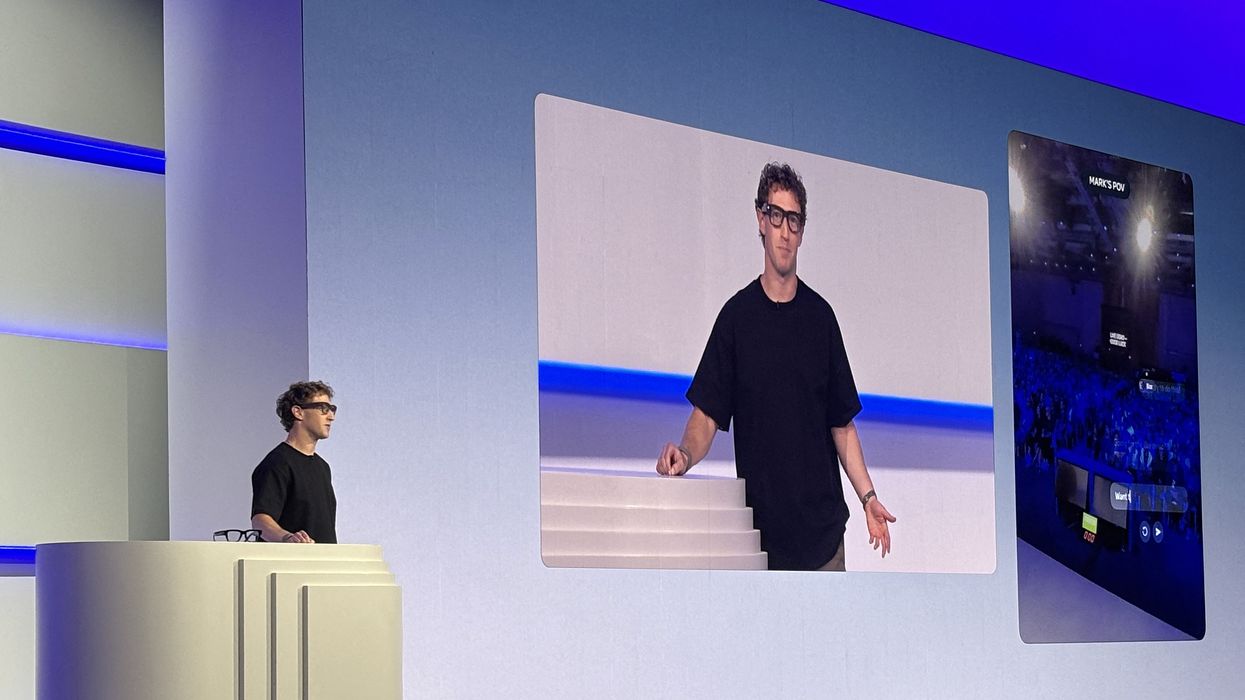
Meta has unveiled its latest range of smart glasses powered by artificial intelligence at its annual Meta Connect conference. Chief executive Mark Zuckerberg introduced the devices, developed in collaboration with Ray-Ban and Oakley, describing the technology as a “huge scientific breakthrough.”
The flagship product, the Meta Ray-Ban Display, features a high-resolution screen in one lens, a 12-megapixel camera, and the ability to make video calls and display messages. A new neural wristband allows users to perform tasks such as sending messages using small hand gestures.
Expanded line-up of smart glasses
Alongside the Display, Meta announced the Oakley Meta Vanguard glasses, targeted at sports enthusiasts and priced at $499 (£366), as well as the second generation of the Ray-Ban Meta glasses, costing $379 (£280). The Display will sell for $799 (£586), making it significantly more expensive than Meta’s existing models.
Since entering the market in 2023, Meta is understood to have sold around two million pairs of smart glasses, although the company does not release official sales figures.
Analysts remain cautious
Industry experts suggest the new products may face an uphill challenge compared with previous launches.
“Unlike VR headsets, glasses are an everyday, non-cumbersome form factor,” said Forrester research director Mike Proulx. “The onus is on Meta to convince the majority of people who don’t own AI glasses that the benefits outweigh the cost.”
Leo Gebbie of CCS Insight added that the Ray-Ban glasses have been popular due to being “easy to use, inconspicuous and relatively affordable,” but expressed scepticism over whether the more advanced Display model would achieve the same success.
Heavy investment in AI
The launch comes as Meta continues to expand its artificial intelligence operations. In July, Mr Zuckerberg said the company would spend hundreds of billions of dollars on AI infrastructure, including vast data centres in the United States, one of which is expected to span an area almost the size of Manhattan.
The company is also competing to recruit top AI talent as it develops what it calls “superintelligence,” technology designed to out-think humans.
Protests and safety concerns
The announcements coincided with protests outside Meta’s New York headquarters. Parents and activists demanded stronger safeguards for children on platforms such as Facebook, Instagram and WhatsApp, highlighting concerns over online harms.
Two former Meta safety researchers also testified before the US Senate last week, alleging the company discouraged studies that could show evidence of risks to children from its virtual reality products. Meta rejected the claims, describing them as “nonsense.”