Skip to content
Search

Latest Stories

Spotify’s new badge confirms an artist is human but does not verify their music

The streaming platform is rolling out a green verified checkmark for artist profiles, but critics say it does not go far enough

Spotify’s new badge confirms an artist is human but does not verify their music

The platform noted that it will prioritise artists with real cultural contributions, not “content farms” made for passive listening

Spotify

Highlights

  • Spotify’s “Verified by Spotify” badge confirms human artists, not AI music.
  • Over 99 per cent of frequently searched artists will be verified at launch.
  • Critics say it may disadvantage independent, non-touring artists.
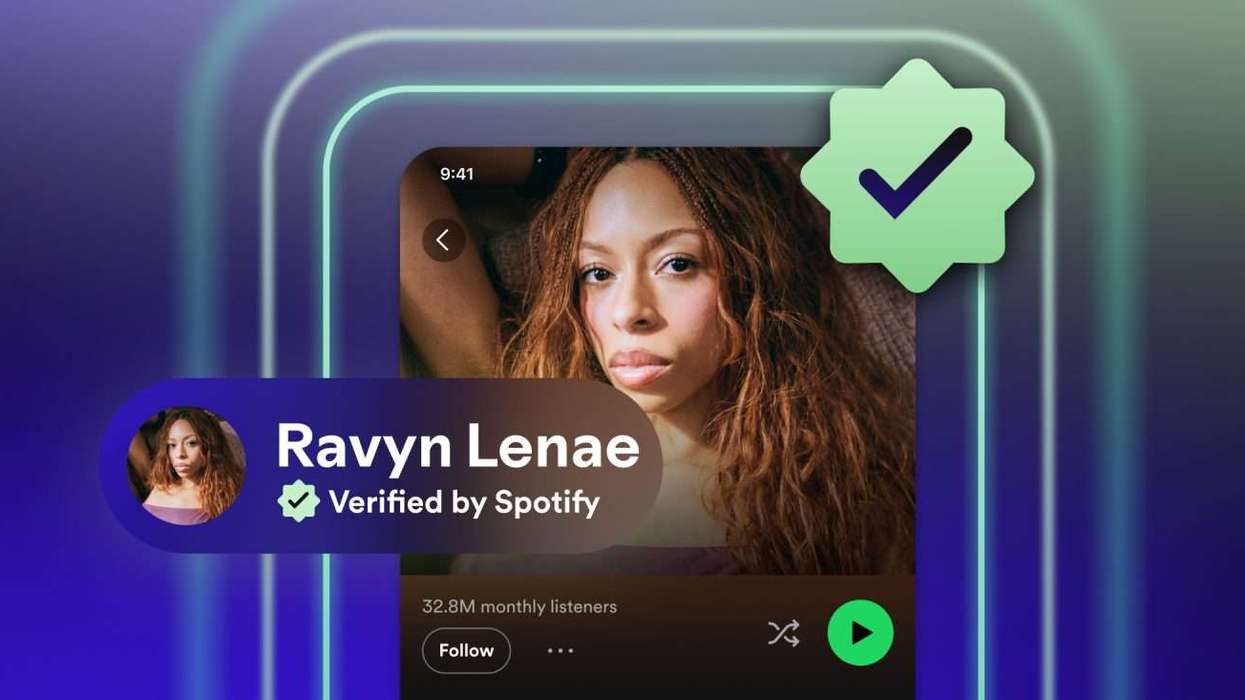
Spotify is giving human artists a green checkmark on their profiles, but the badge will not tell listeners whether the music itself was made using artificial intelligence.
The "Verified by Spotify" label will appear next to artist names in search results and on profile pages for those who meet the platform's authenticity standards.
These include consistent listener activity, linked social media accounts, and real-world signals such as concert dates or merchandise listings.

Spotify said more than 99 per cent of artists that listeners actively search for will receive the badge at launch, covering hundreds of thousands of acts across genres and geographies.

The platform noted that it would focus on artists who have genuinely contributed to music culture rather than accounts it called "content farms" designed around passive background listening.


The badge has already drawn criticism from those who say it does not solve the actual problem.

Ed Newton-Rex, a creators' rights campaigner and former AI executive, told BBC that the system risks penalising real human artists who simply do not have touring history or merchandise to their name.

He argued Spotify should instead automatically label any music that has been AI-generated, as some other streaming platforms already do.

Nick Collins, a music professor at the University of Durham, told BBC that the move was understandable but warned that checking the music itself would be far more complicated.

"AI usage is not a binary position between entirely authentically handmade and fully AI generated but can have lots of in-between cases," he added.

The announcement follows years of user complaints about AI content flooding the platform.

The most notable case involved The Velvet Sundown, a band that accumulated 850,000 monthly listeners before being revealed as a synthetic music project backed by artificial intelligence.


More For You

ChatGPT goblin references

The problem first came to light after the launch of GPT-5.1 in November

Getty Images

What caused ChatGPT to start using goblin references in its responses?

Highlights

  • Goblin mentions in ChatGPT rose 175 per cent after GPT-5.1 launched in November.
  • The "Nerdy" personality drove 66.7 per cent of all goblin references.
  • OpenAI has retired the personality and removed creature words from training data.
OpenAI has explained how an attempt to make ChatGPT more fun and personable accidentally gave it a fixation on goblins, gremlins, and other creatures.
The company published a detailed blog post laying out exactly how the problem started, how it spread, and what was done to fix it.

The issue traces back to a feature called the Nerdy personality, one of several personality options OpenAI built to let ChatGPT communicate in different styles.

This particular one was designed to make the AI sound enthusiastic, witty, and playful, like a knowledgeable friend who enjoys making complex ideas accessible.

Keep ReadingShow less