
REFORM and the Green party are expected to make gains across the country while prime minister Sir Keir Starmer faces his biggest moment of peril after what are predicted to be bruising local elections when millions of people across England, Wales and Scotland go to the polls on May 7.
Across England, 5,014 council seats are up for election across 136 local authorities, including all London boroughs.
In London, recent surveys have indicated both parties are likely to win in traditional Labour and Conservative-led boroughs as local and national issues weigh on the minds of voters.
With no end in sight to the Middle East conflict, families are bracing for rising inflation and a cost-of-living crisis exacerbated by rising fuel and food bills.
“Any contender will want Starmer to take all of the responsibility for what everybody assumes is going to be a cataclysmic set of results,” political scientist Steven Fielding said.
The prime minister has insisted he will not resign over the revelations over the appointment of Peter Mandelson as ambassador to the US.
However, he will face more heat from party members when the results are announced next week.
A YouGov poll suggested that Labour, which currently controls 21 of the capital’s 32 boroughs, will only have the largest vote share in 15 of them after the May election.
“The polls scare me, the polls worry me because they don’t reflect my experience of what the councils are doing,” London mayor Sir Sadiq Khan told the Standard in an interview last week.
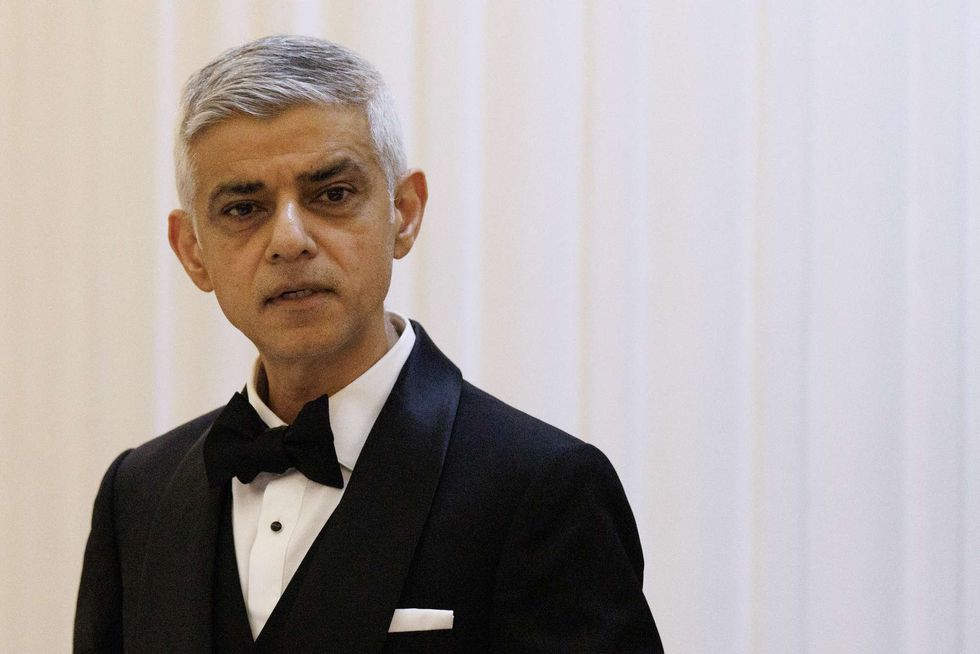 Mayor of London Sadiq KhanGetty Images
He acknowledged voters may be angry and frustrated by policy u-turns and controversies in relation to the Labour government, but urged them to consider how renters and employees in the capital had improved and stronger rights than before.
A Labour council “working with a Labour mayor and a Labour government” can do more than a party that uses the town hall “to protest”, Sir Sadiq was quoted as saying.
Analysis from pollsters More in Common claimed the Greens are heavily favoured to win some inner London boroughs, such as Hackney and Lewisham, while Reform will leapfrog the Conservatives in outer London areas such as Bexley, Bromley and Havering.
Luke Tryl of More in Common told reporters on April 20,: “The Greens will be going after inner London boroughs, the Tories will want to win back their flagship boroughs and we expect Reform to make their biggest gains in the south east of London.
“The Greens could do very well, taking advantage of the disaffected progressive vote. We expect to see significant change in Hackney, where Labour have dominated for a long period of time.
“The capital isn’t one of Reform’s strongest areas, but they could cost the Conservatives in places like Bexley and Bromley, and do well in Havering, as well as in the Labour stronghold of Barking and Dagenham.
“For the Liberal Democrats, they dominate the ‘golden corner’ in the south west – their best prospects come from replicating their general election success in places like Wimbledon and Merton.
“Traditionally, the Liberal Democrats have also done better in places like Southwark and Haringey; they won’t want to leave those parts to the Greens.
“For the Conservatives, their hope might be on a difficult night, the narrative slightly changes if they are able to win places like Westminster and Wandsworth [that were lost in 2022]. Their best prospects also come in Barnet.”
In Newham, the Green party and independents could cause an upset to the ruling Labour.
Councillor Areeq Chowdhury, who defected from Labour in 2024 and is now standing as the Green Party’s candidate for mayor of the borough, said, “People are really underestimating the likelihood of a Green victory in this election”.
“Labour, I think, are just going to be focused on stemming the loss,” he said, citing local “failures” by the Labour-run council as well as national issues such as Israel’s war on Gaza.
“It’s things like the fly-tipping, where it’s a really obvious and visible sign of the council not doing its job, because it’s just rubbish everywhere across Newham.
“Nationally, I think there are issues like Palestine, which is a big one. Keir Starmer’s hesitation to call for a ceasefire, and the view of Labour’s complicity in what’s happening in Palestine, has cut through quite a lot on Newham.
Outside London, the elections in Birmingham – which will see all 101 council seats be contested – are being described as the most significant and unpredictable in years.
Birmingham City Council is one of the biggest local authorities in Europe and responsible for a vast array of services, such as bins, housing, libraries, road maintenance and social care.
The May elections also come at a pivotal time for the Labour-run council, which has been hit by the shockwaves of a financial crisis and an ongoing bin strike.
The build-up to May 7 saw tense exchanges at a hustings, frustration over rubbish woes, visits to the region from high-profile politicians and forecasts of no party having overall control.
On Monday (27), West Midlands mayor Richard Parker welcomed a potential deal to bring an end to the Birmingham bin strike and end a “difficult period for the city”.
The city council announced a deal was agreed with Unite the union to bring an end to the dispute which has been ongoing for more than a year.
Parker said it is vital the agreement is honoured in full once the local elections are out of the way at the end of next week.
In addition to the bins strike, other issues that may sway voters in Birmingham, which has a substantial Muslim population, are Palestine, austerity and the rise of support for Reform.
Tony Travers, of the London School of Economics, last week told the Telegraph Birmingham’s “patchwork” result could be a “microcosm” of how Britain would look in 2029.
“It is a city that could show us what Britain as a whole could look like at the next general election. How will politics work when parties on the centre-Left and the centre-Right view each other with great suspicion?” he added.
At a hustings event last week, independent candidates described how residents were let down by the large national parties. Shakeel Afsar, from the Independent Candidate Alliance, said, “Mainstream parties have done nothing but let us down, whether it’s the Conservatives or Labour party.
“We have a time for change, we have a time to bring back politics to grassroot movements – to bring the power back to the people within the communities.”
“Birmingham didn’t end up here by accident,” independent candidate Nosheen Khalid added.
“Birmingham ended up here with the same parties, same excuses and same failures – and now those same parties are asking for a second chance.”
In Greater Manchester, for the first time, most areas will have four or five political parties to choose from instead of two or three.
For the first time, Reform UK and the Green Party have fielded candidates in almost every single ward in Greater Manchester.
“Something remarkable is happening in British politics. The two‑party system that has dominated Westminster for generations has collapsed,” said Rachel Millward, the deputy leader of the Green Party. “This May, the Green Party is standing more candidates in local elections than at any point in our history.”
Dan Barker, Reform’s Manor candidate for Trafford and former mayoral candidate, said people were “sick of the mess” left behind by mainstream parties.
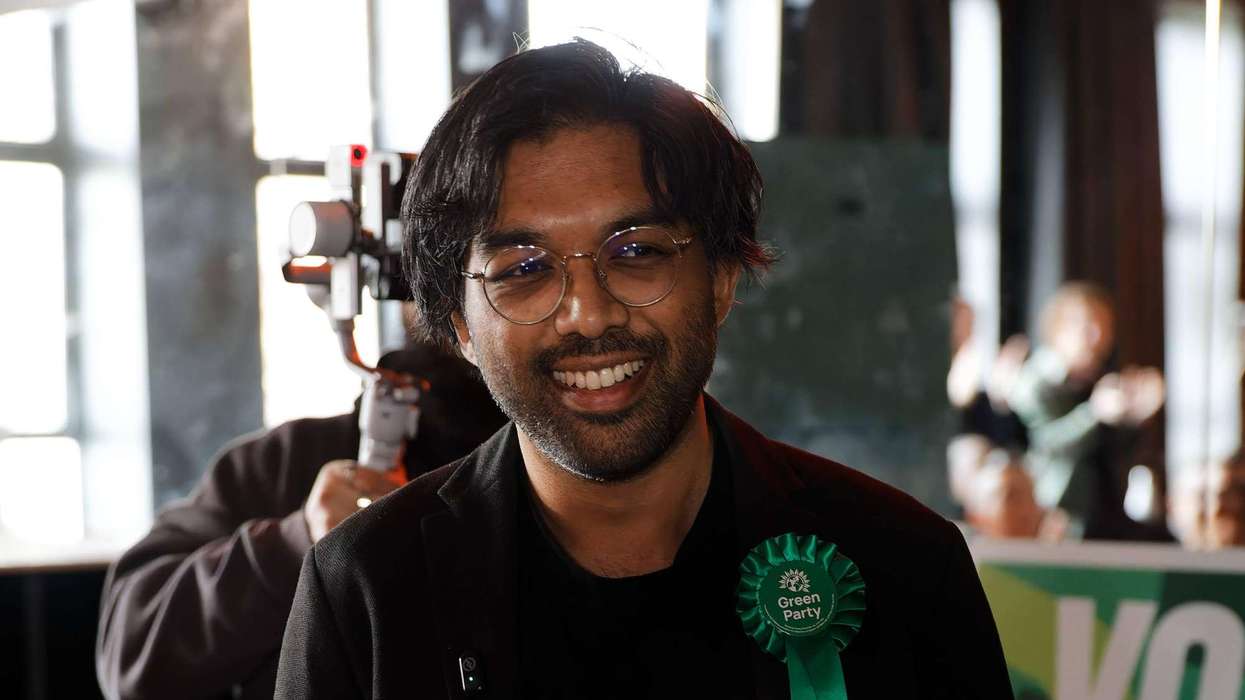 Areeq ChowdhuryNew Ham Green Party
“We are standing a candidate in every ward across Greater Manchester this coming May 7th to give voters a real choice for change and to challenge Labour for control of the councils,” he added.
“This is local politics catching up with the fragmentation of politics at a national level,” explained Professor Andy Westwood, a local government expert who works at Manchester Uni’s Productivity Institute.
“The national polls are moving to a five-way almost equal split. With the Greens winning the Gorton and Denton byelection and a strong showing from Reform, you’d expect both of them to really up their game [for this local election].
“That fragmentation of politics is also happening at a hyperlocal level. In some parts of Greater Manchester we’ve seen that gain pace at several rounds of local elections – places like Oldham, Rochdale, and Bolton, where you’ve seen hyperlocal parties standing and winning seats. Both of those movements will increase the number of candidates. And make it much harder to predict what’s going to happen come May.”
He added, “For those who do go to the polls, their vote may well be more meaningful. Their choice is likely to matter.
“Traditionally, local election turnout is pretty low, and that means main parties, and now some of the fringe parties, can get over the threshold for election more easily.”
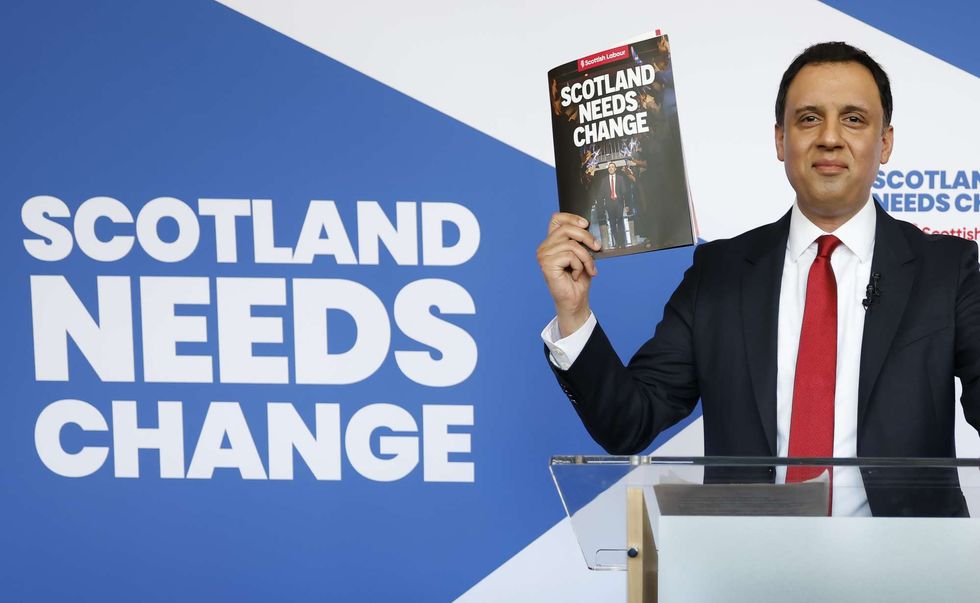 Scottish Labour leader Anas Sarwar at his party’s manifesto launchGetty Images
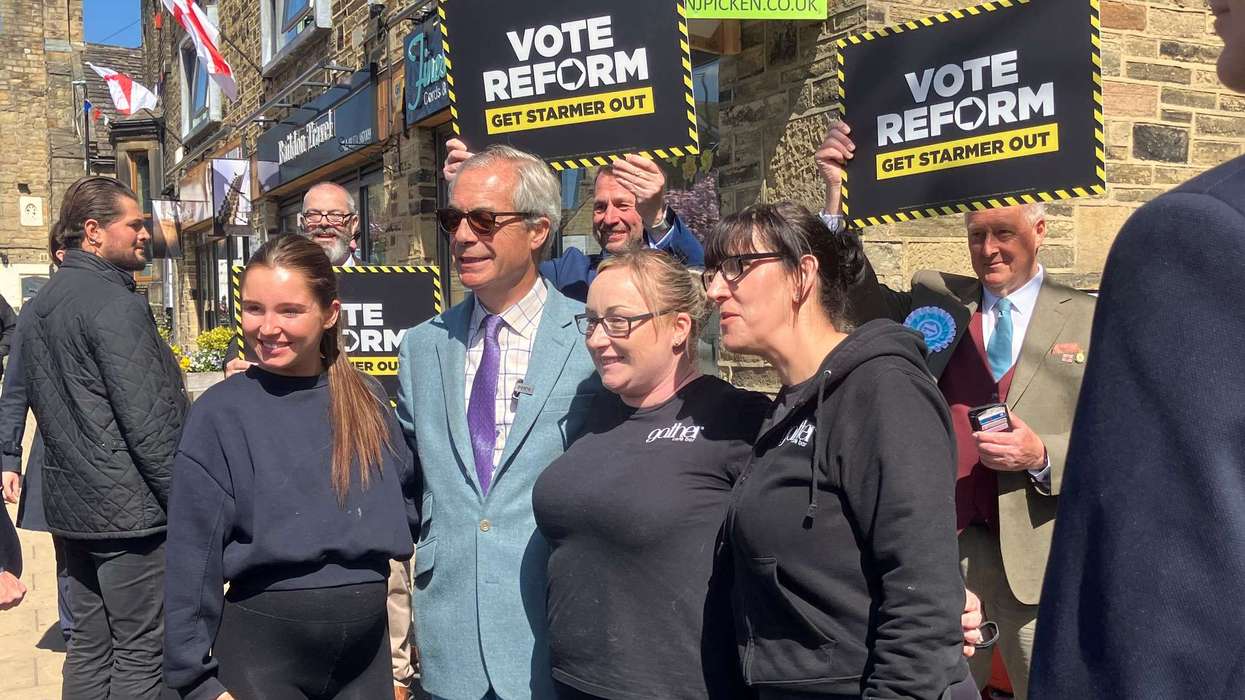
During a visit to Baildon last week, Reform leader Nigel Farage claimed support for the Conservatives in the north has “fallen off a cliff”.
Farage made the comment as he visited the town, one of the main Tory strongholds in the Bradford District, ahead of a speech in Barnsley.
He said the party was deliberately targeting areas that had once been seen as solidly Tory.
“Obviously we’ve been targeting the big towns in the North of England, Yorkshire in particular,” the Reform leader said.
“But we’ve deliberately come here today. We’re looking at the leafy bits, the green bits. The sort of areas that even five years ago you’d expect Conservatives to win all three seats, it would be a non-contest.
“My take is that in the North of England support for the Tory Party is falling off a cliff.”
In more rural areas once safe Tory seats are no longer guaranteed to the party, Farage said, adding: “We’re beginning to do really well in these Tory areas.”
Current polls show no party will have overall control in Bradford, meaning any party wanting to run the council would likely need to join forces with other parties.
Asked whether Reform would be willing to cross party lines to form a majority, Farage said: “It’s not easy for us to work with other parties because we are the outsiders in every sense.
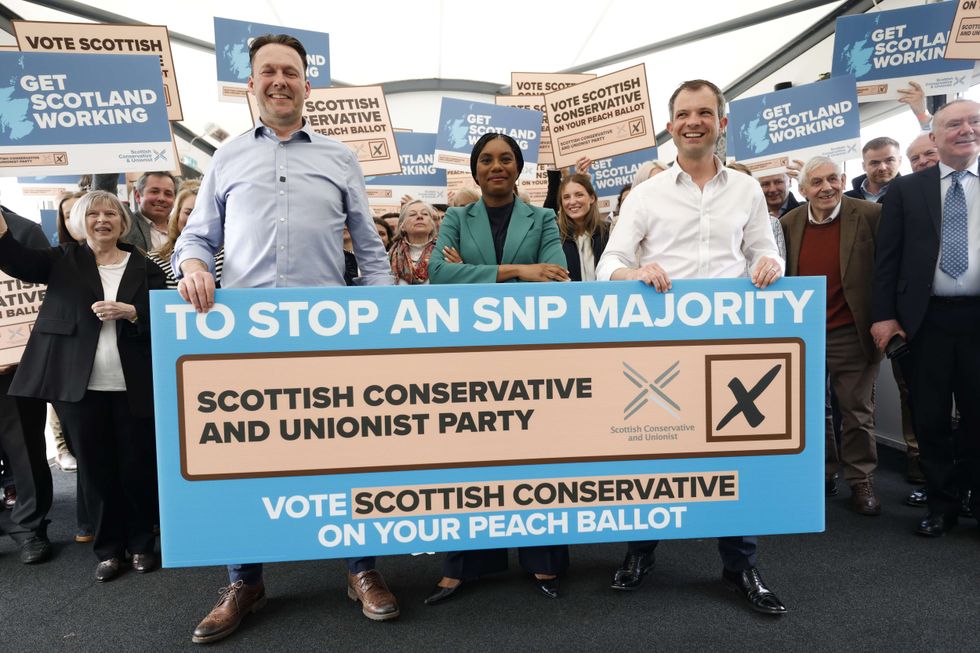 Conservative leaders Russell Findlay, Kemi Badenoch and Andrew Bowie at a rally at the GlasshouseGetty Images
“Let’s not pre-judge. I think the polling in Bradford is so split all over the place that it’s impossible to see what the outcome is going to be. So do you know what we’re going to do? We’re going to run to the line.”
In Westminster, the prime minister’s team has insisted he would fight any attempt to oust him, and the lack of an obvious successor could mean Starmer may live to fight another day.
Any contender would need the backing of 81 Labour MPs to mount a challenge.
Patrick Diamond, a former No. 10 aide, said, “He still has advantages on his side, notably the size of his parliamentary majority and the difficulty of engineering a leadership contest in the Labour party.
“Only rarely in history has the party directly removed its leaders.”