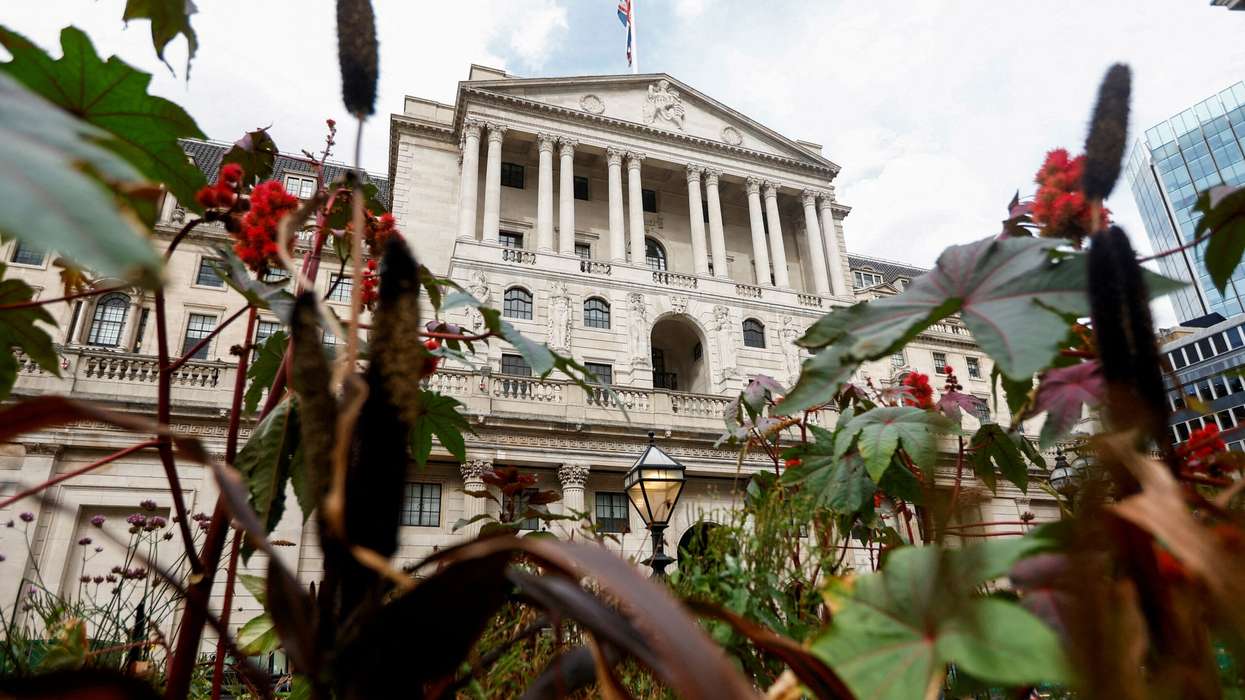

THE BANK OF ENGLAND on Thursday kept its benchmark interest rate at 3.75 per cent and said rates could rise if the Middle East war continues to push up inflation.
The central bank also lowered its growth forecasts for the UK for 2026 and 2027, citing the impact of higher energy costs on the economy.
Governor Andrew Bailey said the interest rate was at a "reasonable place given the situation of the economy and the unpredictability of events in the Middle East".
"Whatever happens, our job is to make sure that inflation gets back to the two per cent target after the initial impact of the war on energy prices has passed," he added.
The bank now expects gross domestic product growth of 0.7 or 0.8 per cent this year and 0.8 or 1.0 per cent in 2027.
It had earlier forecast growth of 0.9 per cent this year and 1.5 per cent in 2027.
The Bank of England also set out three forward-looking scenarios for the UK economy.
Each scenario indicated that interest rates may need to rise. In the worst-case scenario, inflation could reach 6.2 per cent in the first quarter of 2027.
This would require oil prices to remain near $130 a barrel for a sustained period, alongside further increases in gas prices.
Policymakers, including Bailey, voted 8-1 to keep the rate unchanged, with one member voting to raise it by 0.25 percentage points.
The decision comes as the European Central Bank is expected to keep rates unchanged while assessing inflation and growth.
The Federal Reserve held rates steady on Wednesday, marking its third consecutive pause, as it waits to assess the impact of the war.
The Bank of England last reduced its rate by 0.25 percentage points to 3.75 per cent at its December policy meeting.