
- Meta is appealing Ofcom’s decision to classify WhatsApp and Instagram under the Act’s Category 1 regime.
- The company is already pursuing another legal challenge over Ofcom’s fees and potential fines.
- Ofcom says it is operating in a “highly litigious environment” as several technology companies challenge aspects of the new regime.
Meta has opened another legal front against Britain’s media regulator Ofcom, challenging the way the country’s Online Safety Act is being applied to two of its biggest platforms.
Lawyers for Meta have served notice of an appeal against Ofcom’s decision to place Instagram and WhatsApp under the Category 1 classification, which brings additional duties under the Act.
The obligations include greater transparency and accountability, more user controls, measures aimed at protecting users from fraudulent advertising and additional requirements around illegal content. Ofcom’s current register lists Instagram as a Category 1 service, while WhatsApp is separately subject to regulatory obligations under the Act.
Meta says it is not challenging the Online Safety Act itself, but specific aspects of how Ofcom is interpreting and implementing it.
“Like many others in the industry, including TikTok, Roblox, X and Quora, we are challenging specific aspects of implementation,” a Meta spokesperson said.
“These are not challenges to the law itself, but how Ofcom has interpreted it.”
The latest case follows another legal challenge launched by Meta in May over the way Ofcom calculates fees under the online safety regime. Meta argues that using its qualifying worldwide revenue to calculate those charges is disproportionate and does not properly reflect its UK services.
Why Meta and Ofcom keep ending up in court
Meta is not alone in challenging Ofcom.
TikTok and X are also disputing aspects of the information the regulator is seeking from technology companies, while Roblox and Quora are among the services challenging categorisation decisions. Ofcom says Meta, X and TikTok are challenging its efforts to gather information, while Meta is separately challenging its ability to set fees and maximum fines.
The scale of the legal push has led Ofcom to describe the environment as unusually difficult.
Oliver Griffiths, Ofcom’s group director for online safety, told a House of Lords committee that the regulator was operating in a “highly litigious environment”.
“We absolutely are looking to drive change in the best way we can,” he said. “But, if we run unnecessary risks, we are going to get absolutely clobbered legally by deep-pocketed individuals and firms.”
The stakes are significant. Under the Online Safety Act, Ofcom can impose fines of up to 10 per cent of a company’s qualifying worldwide revenue or £18 million, whichever is higher, for certain breaches. Ofcom’s operating costs for the regime are also recovered through fees charged to qualifying providers.
Meta has argued that basing the fees and potential penalties on worldwide revenue places a disproportionate burden on the biggest technology companies.
Ofcom has rejected that broader interpretation of its powers and said it will defend its decisions.
An Ofcom spokesperson said: “Parliament has charged us with the job of regulating an industry that has been unregulated and unaccountable for more than 20 years.”
The regulator added that it would “robustly defend our reasoning and decisions” in the various legal challenges.
The bigger question for Britain’s internet rules
The legal disputes come as Ofcom moves towards the next stage of implementing the Online Safety Act.
The regulator published its register of categorised services in July and is consulting on additional duties for Category 1 platforms, including rules covering user empowerment, identity verification, complaints, terms of service, journalistic content and fraudulent advertising. The consultation is due to close on October 2.
The timing matters because the government is also signalling that online regulation will continue to evolve.
Lisa Nandy, the secretary of state for culture, media and sport, has said the government will need to update internet laws more frequently as technology changes.
“I think we’re going to have to start getting used to the idea, actually, that government is going to be far quicker, far more interventionist,” she said on the Sky News Electoral Dysfunction podcast.
The Online Safety Act is already being implemented in stages, with further duties and regulatory measures coming into force over time. Ofcom’s roadmap shows additional requirements for categorised services continuing into late 2026 and beyond.
For Meta, the argument is about making sure the rules are applied proportionately and within the limits of the legislation. For Ofcom, the legal challenges are part of the process of establishing how a new regulatory regime should work in practice.
The question now is how quickly those disputes can be resolved while Britain tries to build a tougher system of online regulation around some of the world's largest technology platforms.




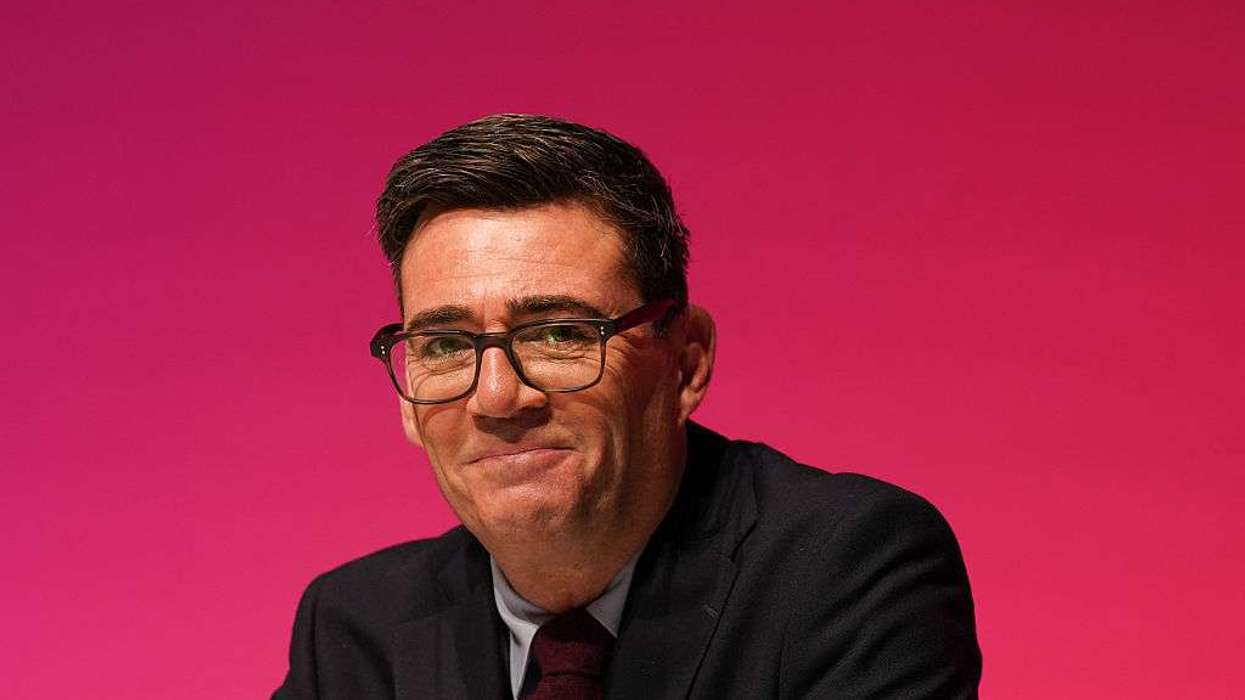 Andy Burnham attends the opening speeches on the first day of the Labour Party Conference at Liverpool Experience Campus on September 27, 2026 in Liverpool, England. (Photo by Ian Forsyth/Getty Images)

