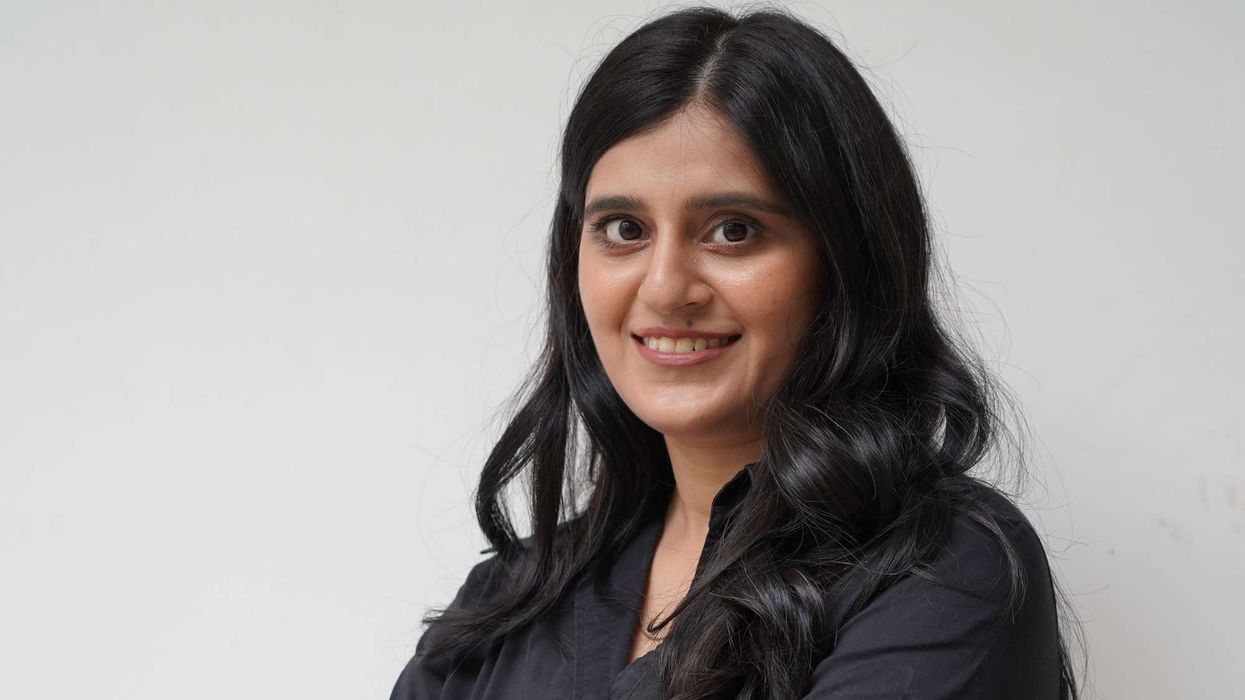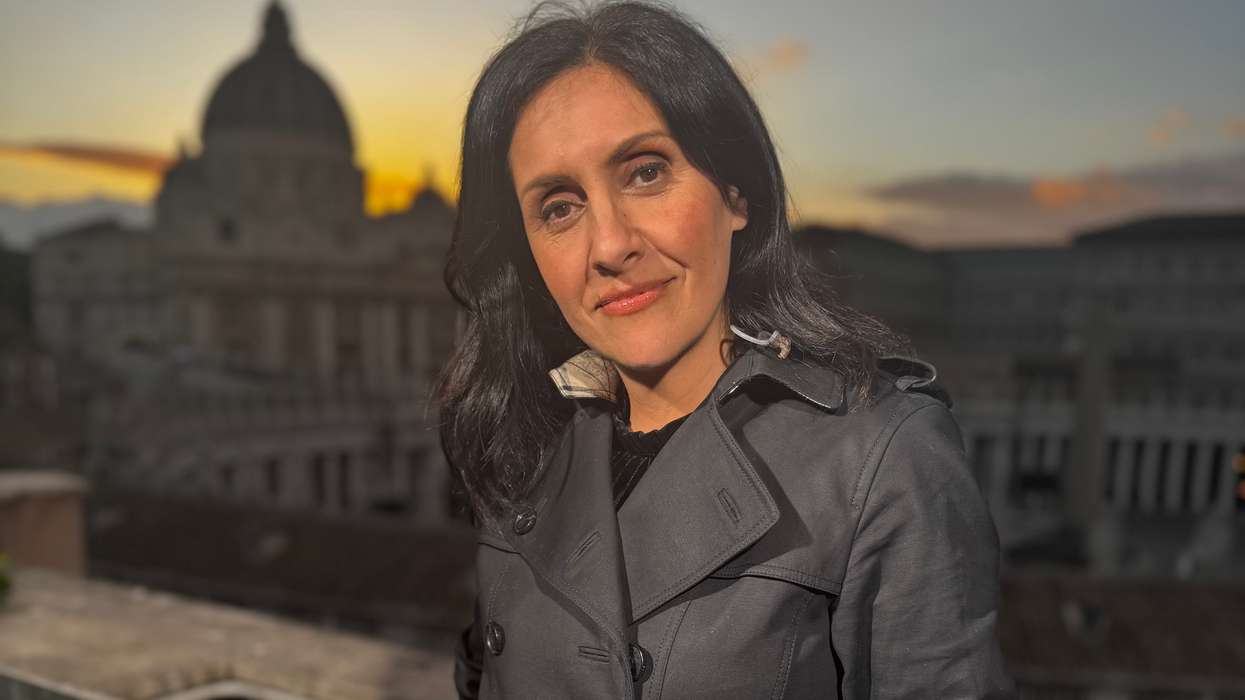

To millions of BBC viewers, Maryam Moshiri is a familiar presence on their television screens, delivering some of the biggest international stories. Away from the cameras, however, the presenter has been navigating a very different kind of story.
Moshiri, 49, who presents The World Today, was diagnosed with polycythaemia vera (PV) in November 2024 after a routine blood test revealed her red blood cell count was unusually high.
The diagnosis came as a shock, because she felt completely well.
“I had no symptoms at all. It was from a routine blood test that this was detected,” she told Eastern Eye.
PV is a rare form of chronic blood cancer in which the bone marrow produces too many red blood cells. It is commonly linked to a mutation in the JAK2 gene.
Around 8,810 people in the UK are living with the condition, according to Blood Cancer UK.
For Moshiri, there had been little reason to suspect anything was wrong.
“When I was first told to have blood tests, I wasn’t worried because I didn’t really have any symptoms. I thought, ‘It can’t happen to me’,” she said.
Even after receiving the diagnosis, she struggled to understand what it meant for her future. “It was a shock to realise that while I could have treatment, this was a cancer that was incurable.”
There is currently no cure for PV, although treatment can help manage the condition and reduce the risk of serious complications.
Moshiri initially took daily aspirin and underwent regular venesections, a procedure used to remove blood and bring down her red blood cell levels.
The treatment helped medically, but came with another challenge exhaustion.
“The treatments were working, but they left me feeling really weak with severe fatigue, like someone had taken your batteries out,” she says.
For someone whose job involves appearing live on television and covering breaking news, that fatigue was particularly difficult.
Moshiri continued presenting major stories, including the death of Pope Francis, the arrest of Prince Andrew, as he was known then and the Iran war.
Live broadcasting could temporarily mask how tired she was feeling.
“When you do live news you get a rush of adrenaline,” she says. “But I was doing long days under pressure while dealing with chronic tiredness. Back home I would zonk out on the sofa for hours to recover.”
Her experience also challenged her own understanding of what cancer could look like.
“There is this idea that you have chemotherapy and then you are cancer-free,” she says.
“But, for many people like me, it is a chronic condition. You have to live with it, the treatments and the side effects around your everyday life, and that’s hard.”
As her symptoms and treatment side effects became increasingly difficult to manage, Moshiri began looking more deeply into the condition and discovered that she could be considered for interferon treatment which consists of regular injections. But the treatment brought its own problems.
“I had constant headaches, insomnia and horrendous itching that felt like it came from inside my body,” she recalled.
“I was itching until I was bleeding through my clothes. I have scars all over my stomach.”
By summer 2025, she says, she had reached one of the lowest points since her diagnosis.
Her iron levels had fallen, and she was struggling with the effects of treatment while trying to keep up with work and family responsibilities.
“I remember going to my GP and crying,” she says.
“I was trying to work, look after three children, and support my elderly parents, including my dad who had dementia.”
In November 2025, Moshiri changed treatment and began taking Pegasys, a weekly injection.
Although fatigue remained an issue, she said the new treatment was more manageable and brought fewer side effects.
That improvement has meant being able to enjoy some of the everyday experiences she had previously found difficult.
“During the worst times I wasn’t there for my kids, and I couldn’t exercise,” she says.
“Because there are fewer side effects with this new treatment, I was able to kick a ball about on our recent holiday and do yoga ordinary but important moments.”
For a mother of three, those ordinary moments have become particularly meaningful.
Moshiri and her husband Jonathan have three children Iris, 13, Vivienne, 11, and Caspian, nine.
At first, she kept the diagnosis from them. But as the illness began affecting what she could do at home, she eventually had to explain why she was often unable to play football with them or why she needed to spend hours recovering on the sofa. Telling her daughters was especially difficult.
“When I told my daughters I had chronic cancer, they asked, ‘Are you going to die, mummy?’ It was awful.”
She also chose not to tell her mother immediately, waiting around a year while her father was unwell. Her mother has since become an important source of support, although Moshiri said she remains understandably worried.
“She is constantly worried about me. You never stop worrying as a mum,” she said.
“Since finding out, she has been worried but also very supportive of me helping me with the kids sometimes and cooking us Iranian rice.”
Her husband and wider family have also supported her as she has adjusted to life with the condition.
There remains uncertainty about the future, but Moshiri said she is trying to focus on looking after herself and making the most of her life.
“I’m hopeful but also, yes, I worry,” she said.
“It’s a chronic condition, and I’m more susceptible to things like heart attacks and DVT. I want to make sure I live as healthy a life as possible.”
Coming from a family with a medical background, she said health concerns were taken seriously.
But her own experience has taught her that serious conditions do not necessarily announce themselves through obvious symptoms. She also explained how her mum has never suffered from any serious illness and thought that would be the case for her and to now be living with this condition is hard to digest, but she remains positive.
Moshiri is sharing her experience as part of Blood Cancer Awareness Month and is supporting Blood Cancer UK’s Here for This campaign.
The campaign focuses on the moments that people living with blood cancer can miss because of treatment or hospital appointments, as well as the experiences they hope to get back to.
Blood Cancer UK said Moshiri’s decision to speak publicly about her diagnosis can help challenge common misunderstandings about blood cancer, particularly the assumption that cancer is always something that can simply be treated and then left behind.
“We’re hugely grateful to Maryam for working with Blood Cancer UK and using her platform to raise awareness,” the charity said.
“Blood cancer is still widely misunderstood, and by sharing her experience she is helping more people understand that for many, blood cancer can be a lifelong condition.”
For Moshiri, the contrast between her public life and private reality is perhaps the most striking part of her story.
By speaking openly about her diagnosis, Moshiri hopes others living with blood cancer will feel less isolated and more willing to seek support.
“I don’t want people to suffer in silence, so I am sharing my story so people feel less alone and get help from charities like Blood Cancer UK,” she said.
“I want people to know there is hope, with new treatments and progress being made all the time.”