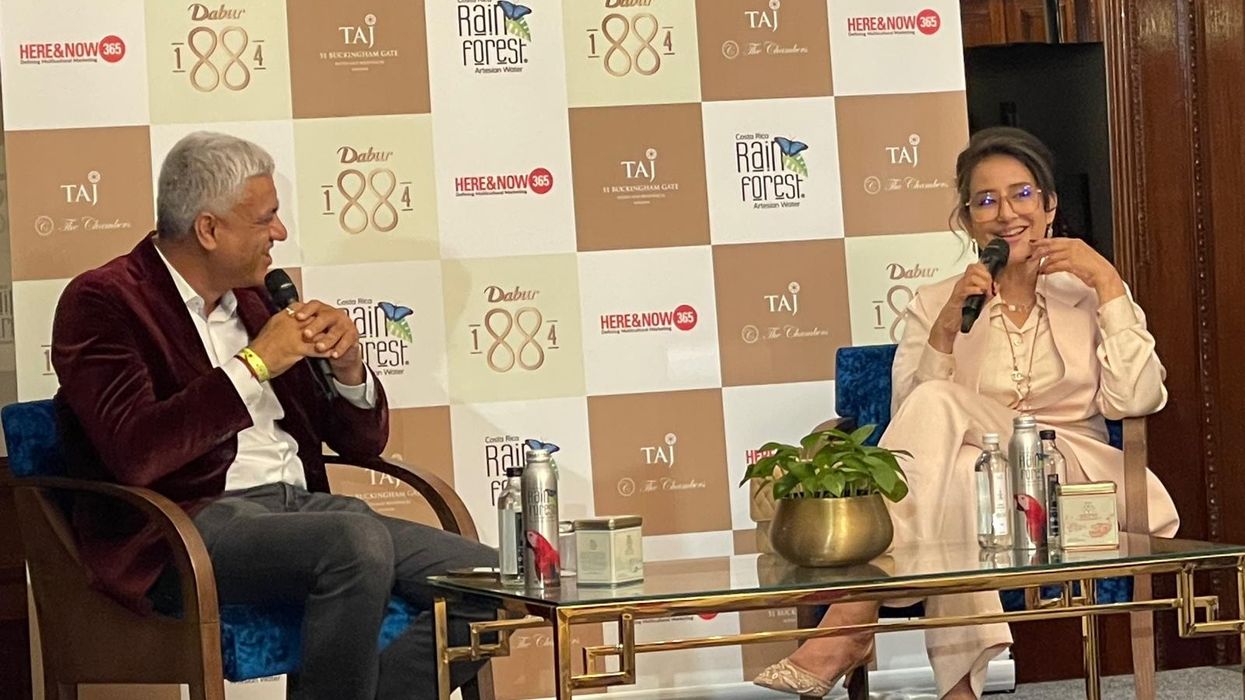

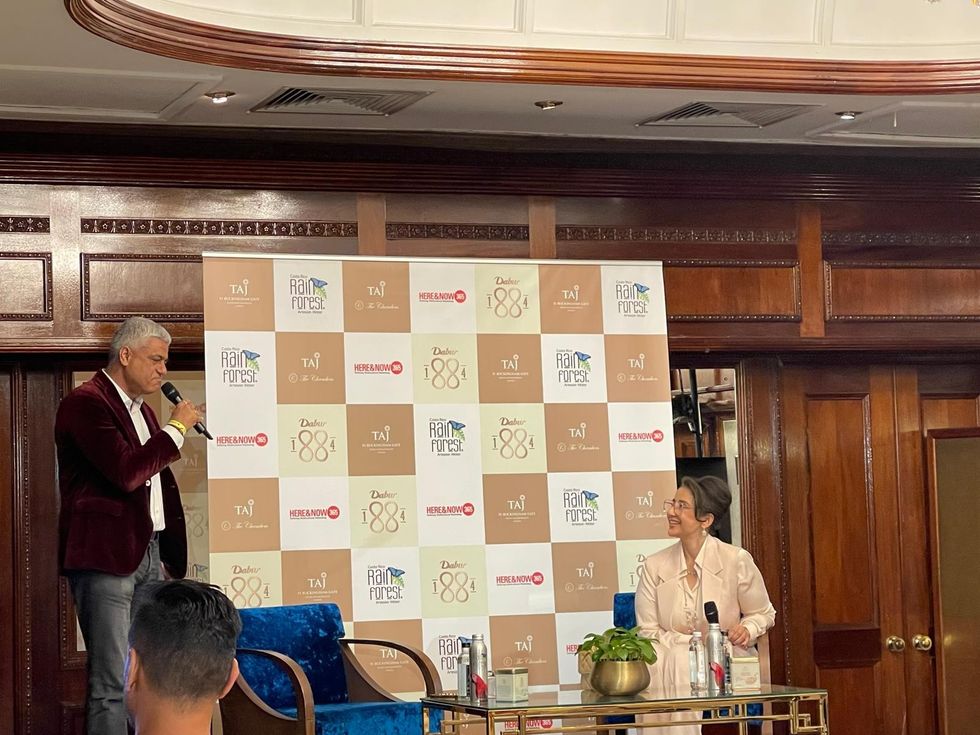
A poignant evening unfolded at The Chambers, Taj 51 Buckingham Gate, where storytelling met soul-searching in an unforgettable conversation between Bollywood icon Manisha Koirala and creative visionary Manish Tiwari. Hosted by Here & Now 365, the event wasn't just a rendezvous of film lovers and cultural figures; it was a moment of collective pause, reflection, and renewed strength.
Actress, activist, and cancer survivor Manisha Koirala’s presence radiated both dignity and depth. Her journey, marked by painful valleys and soaring recoveries, became a guiding light for everyone in the room.
“Resilience isn’t a heroic burst,” Manisha said softly, “it’s a series of small choices, made moment by moment.”
These words captured the essence of a woman who had once faced death and emerged with more life than ever before. Her candid recounting of her diagnosis, treatment, and emotional tumult was far from a scripted memoir; it was raw, real, and quietly transformative. “When the doctor told me I had ovarian cancer, I thought, ‘This is it. I’m going to die.” The room fell into an uneasy silence, broken only by her own calm voice. “But by the grace of God, I didn’t. I learned to live again.”
Now cancer-free for over a decade, Manisha wears her scars not as symbols of suffering, but of survival. “Cancer taught me how fragile life is, and how full of grace it can still be.” Her message to the community was loud and clear: take nothing for granted, guard your health, value your people, and embrace life… not with fear, but with fullness.
A life shaped by legacy and loss
Manish Tiwari opened the conversation by tracing her journey from Nepal, born into the influential Koirala family, known for producing four Prime Ministers, to the dazzling heights of Indian cinema. Raised partly in Banaras, partly in Kathmandu, Manisha’s early life was woven with politics, activism, and cultural richness. But the cinematic leap came unexpectedly. “I hadn’t even finished Class 12,” she laughed, “and suddenly I was standing next to Dilip Kumar and Raj Kumar on a film set!”
She described her debut with wide-eyed wonder, calling it “Alice in Wonderland… but scarier.” Though she had no background in acting, her performances quickly earned critical and commercial success. Yet fame, she said, was only one layer of the journey. “I burned out. I was working 18 to 19 hours a day… no holidays, no boundaries. Slowly, I started making bad films. I lost direction.”
When stardom faded, the soul spoke louder
And then came her diagnosis. “It shattered my world,” she admitted. From being the darling of millions to lying in a New York hospital, confronting her mortality, the fall was brutal. But the rise was even more beautiful. Her account of choosing life again of surrendering, healing, and seeking purpose, brought moist eyes and standing applause.
Throughout the talk, she emphasised how the real journey began after her illness. “I’m a Koirala woman — strong, stubborn, a little rebellious. Our women worked the fields and shaped history. That fire is in my blood.” She spoke about feminism, finding meaning in the roles she played, and how her heart sought characters that carried purpose.
“Even if the film didn’t do well, it didn’t matter. If the script opened my eyes, if it moved something in me, that’s what I lived for.”
For the soul, not the spotlight
She admitted to hitting rock bottom, professionally and personally, and spoke of rebuilding her identity from “minus and zero”. But never once did she sound bitter. Instead, there was acceptance. Grace.
Manisha also touched on Nepal’s political instability with cautious honesty. “I love my country deeply. But I worry- there’s a longing for dignity, for stability. We need to rebuild institutions, not just governments.”
A masterclass in living
The audience, a mix of diaspora professionals, art lovers, and well-wishers, sat rapt. They didn’t just meet a film star that evening. They met a truth-teller, a woman who had faced darkness and brought back light.
Her final takeaway? “Life is here today and gone tomorrow. So live it — fully, bravely, kindly.”