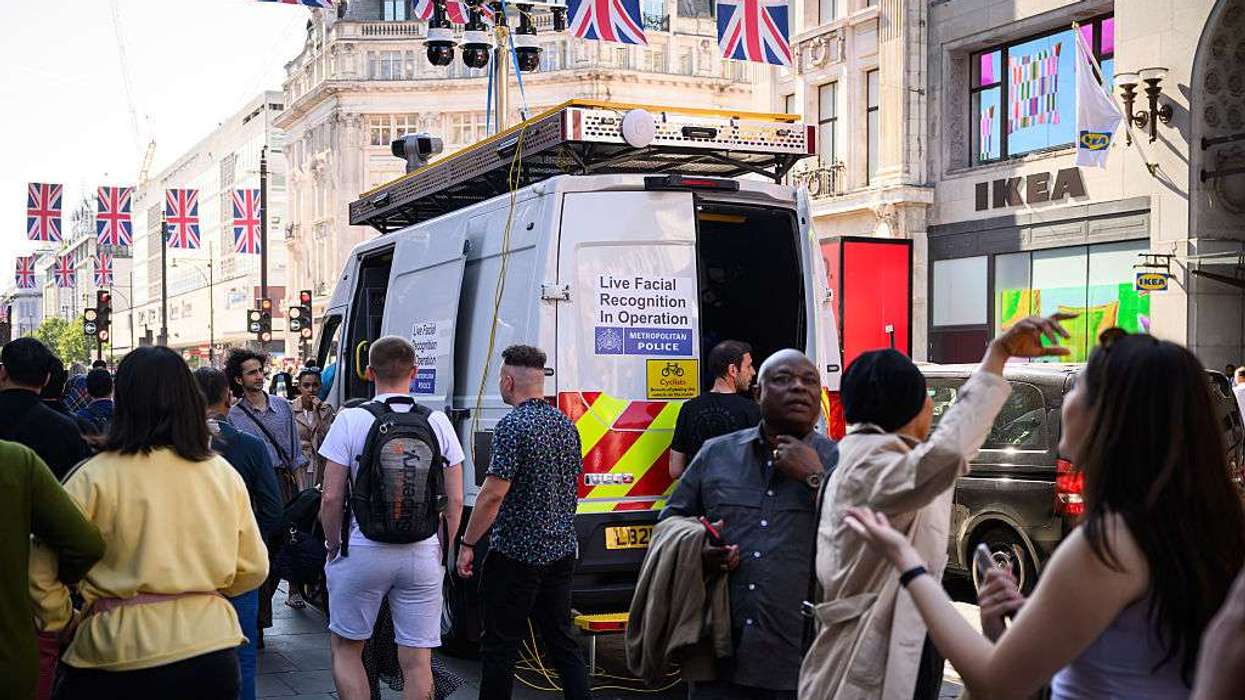

- The Met has made over 2,100 arrests using facial recognition since the start of 2024
- The UK is the only European country to deploy the technology at large scale
- The government plans to expand camera vans from 10 to 50 across England and Wales
A MAN falsely identified as a suspect by London police's live facial recognition cameras lost a legal action on Tuesday (21) over its adoption, in a setback for opponents of the technology.
Shaun Thompson, a volunteer who helps young people affected by street crime, launched the lawsuit alongside Silkie Carlo, director of civil liberties campaigning organisation Big Brother Watch.
But the High Court in London sided with the Metropolitan Police, concluding it had "adequate safeguards against abuse" and was not breaching human rights legislation.
The Met scans the faces of passers-by and compares their biometrics with thousands on a watchlist, under its usage policy. The UK is the only European country to deploy the technology on a large scale.
After High Court hearings earlier this year, a two-judge panel rejected various arguments against it, including that officers were free to deploy the technology "wherever they choose" and without constraints.
"The court concluded that the policy does not authorise arbitrary decision-making," a summary of their ruling said.
It added the Met's use has "sufficient clarity and foreseeability, and provides adequate safeguards against abuse" and does not contravene various European Convention on Human Rights (ECHR) articles.
Thompson said in a statement he would appeal the decision "to protect Londoners from facial recognition being used for mass surveillance and leading to situations like mine, where I was misidentified, detained and threatened with arrest".
Carlo called the ruling "disappointing" but also insisted "the fight against live facial recognition mass surveillance is far from over".
Met commissioner Mark Rowley hailed the court decision as "a significant and important victory for public safety", calling the technology "one of the biggest breakthroughs for policing".He insisted the force was "acting lawfully to use the best modern technology to reduce crime and keep pace with the evolving threats we face".
Thompson brought the legal challenge in the wake of being questioned by police in 2023 after the technology wrongly identified him as on a watchlist.
The Met's lawyer argued in court that the technology only "minimally" intrudes into the privacy of the public, in part because it is required to be clearly signposted.
The force's framework policy allows officers to deploy the cameras in crime hotspots and at critical national infrastructure such as key roads and transport networks.
Since the start of 2024, more than 2,100 arrests have been made through the use of the technology, with more than 1,400 individuals charged or cautioned, according to the Met.
"Last year alone, more than three million faces walked past the cameras, resulting in just 12 false alerts, none of which led to an arrest," Rowley said in his statement.
The government set out plans in January to increase the number of vans with cameras from 10 to 50 and make them available to police across England and Wales.
Policing minister Sarah Jones welcomed the court ruling, saying the technology "only locates specifically wanted people" and that "law abiding citizens have nothing to fear".
(AFP)