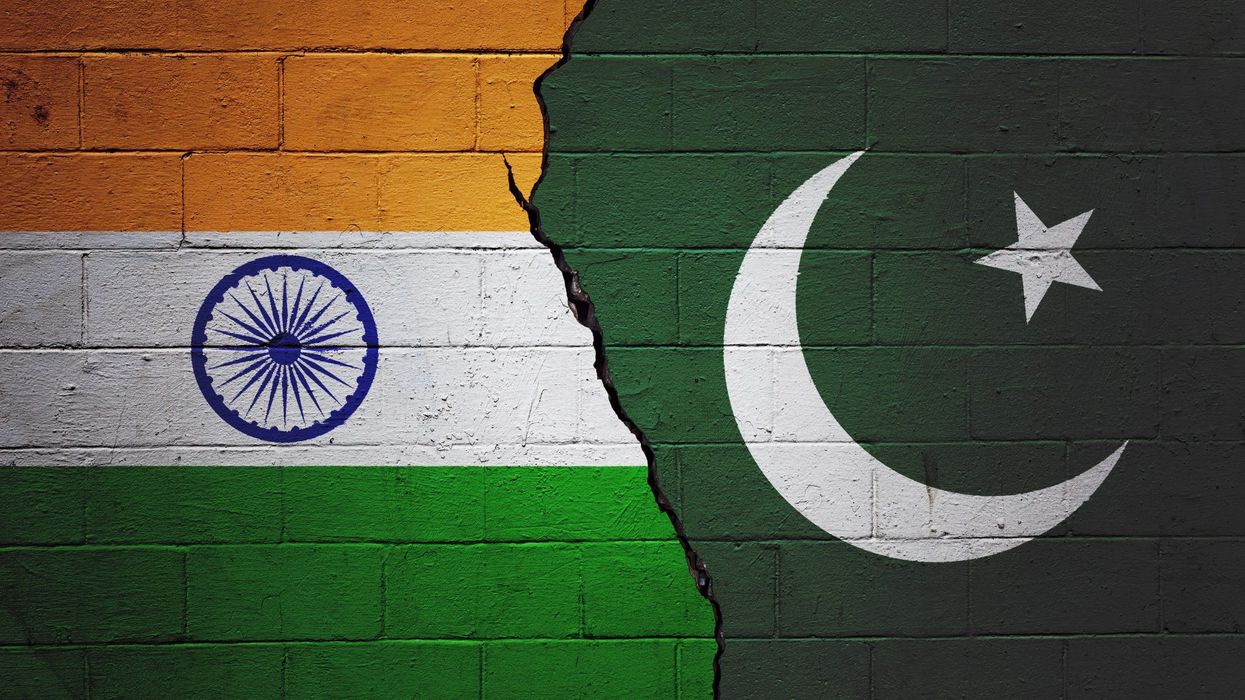

China on Thursday said India and Pakistan should resolve the Kashmir issue through dialogue and consultations and avoid taking “unilateral actions” that could further complicate the situation.
Replying to a question on the Kashmir issue raised by a Pakistani journalist, Chinese Foreign Ministry spokesperson Mao Ning during a media briefing here said that China’s position on the issue of Kashmir has been “consistent and clear”.
“This is an issue left over from history between India and Pakistan and should be properly managed in a peaceful way in accordance with the UN charter, relevant Security Council resolutions and relevant bilateral agreements,” Mao said.
“Relevant parties should avoid taking unilateral actions that could further complicate the situation but rather engage in dialogue and consultations to resolve the dispute and maintain peace and stability in the region,” she said.
India has previously rejected third-party intervention on the Kashmir issue, saying that matters related to the Union Territory of Jammu & Kashmir are entirely its internal affairs.
“Other countries including China have no locus standi to comment. They should note that India refrains from the public judgment of their internal issues,” the Ministry of External Affairs had said in March this year.
Relations between India and Pakistan have been strained over the Kashmir issue and cross-border terrorism emanating from Pakistan.
Bilateral ties nosedived after India abrogated Article 370 of the Constitution, revoking the special status of Jammu and Kashmir and bifurcating the state into two Union Territories on August 5, 2019.
Following India’s decision, Pakistan downgraded diplomatic ties with New Delhi and expelled the Indian envoy. Trade ties between Pakistan and India have largely been frozen since then.
India has repeatedly told Pakistan that Jammu and Kashmir “was, is and shall forever” remain an integral part of the country. India has said it desires normal neighbourly relations with Pakistan in an environment free of terror, hostility, and violence.






 Curator Emma Slocombe with ikat robes and arabachi coats in the Peter the Great Room in Blickling Hall Amit Roy
 View of the entrance to Blickling Hall on a rainy autumn dayAmit Roy
 Kente cloth from Ghana in the Long Gallery in Blickling Hall
 Decoration in the Great Hall at Blickling Hall Amit Roy
 Palampore fragment made in coastal south-east India in the Brown Room in Blickling Hall Amit Roy
 Bed valance dating from early 1700s in the Italian Print Room at Blickling Hall Amit Roy
 Indian inspired fabric draped on sofas in the South Drawing Room in Blickling Hall Amit Roy
 Indian inspired fabric draped on sofas in the South Drawing Room with Indian carpet in Blickling Hall Amit Roy
 Karun Thakar has picked out the geometric patterns in the bookcase and the Kente cloth in the Long Gallery in Blickling Hall Amit Roy
 Large tapestry depicting Peter the Great defeating the Swedish army at the Battle of Poltava in 1709 Amit Roy
 ikat robes and arabachi coats in the Peter the Great Room in Blickling Hall Amit Roy
 Baghs and kanthas made by women provide contrast to the men only portraits in the Great Hall at Blickling Hall Amit Roy
 Baghs and kanthas in the entrance Great Hall at Blickling Hall Amit Roy
 Baghs and Kanthas in the Great Hall in harmony with stained glass window at Blickling Hall Amit Roy
 Kimonos reflect Japanese influence in Upper Ante Room in Blickling Hall Amit Roy
 Kimono in Upper Ante Room in Blickling Hall
 A view of the Palace and fort at Agra shows romantic side of India Amit Roy
 Blickling Hall Amit Roy
 Table carpet, European 1670-1680 Amit Roy
 Unfinished 17th century Italian embroidery in the Print Room at Blickling Hall Amit Roy
 Picture of Kashmir shows a romantic view of India Amit Roy
 A panel of Ashburnham bed hangings made in Gujarat for sale in Europe in the Brown Room in Blickling Hall Amit Roy
 Colcha made in the 1600s by women in Bengal for the Portuguese market in the Long Gallery at Blickling Hall Amit Roy




