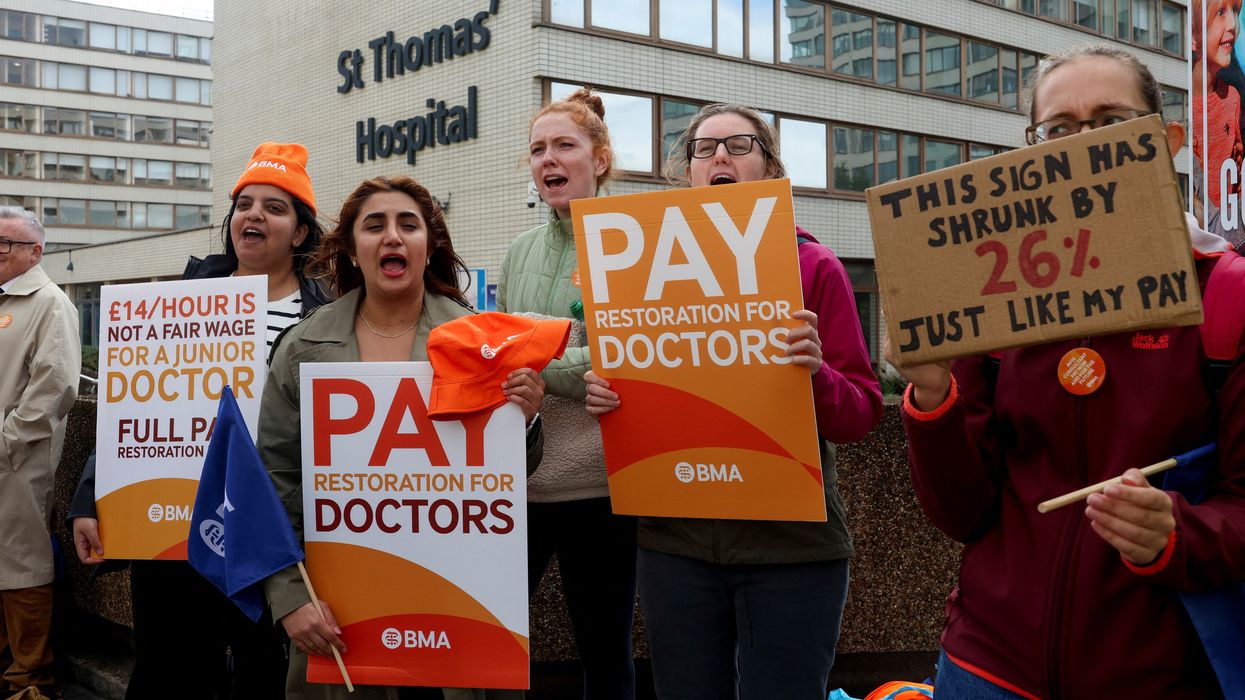
THOUSANDS of junior doctors across the UK began a five-day strike on Friday after talks with the Labour government failed to reach a new agreement on pay.
Doctors were seen on picket lines outside hospitals early in the morning, following negotiations that continued late into Thursday night but ended without a deal.
The strike comes despite junior doctors having accepted a pay offer of 22.3 per cent over two years in September, shortly after prime minister Keir Starmer's Labour government came to power.
Junior doctors — those below consultant level — said they felt they had "no choice" but to walk out again in an effort to address what they call "pay erosion" since 2008.
Starmer urged the doctors to reconsider, warning that the strike would put patients at risk and worsen pressure on the National Health Service (NHS).
"Launching a strike will mean everyone loses," Starmer wrote in The Times. He added that the action would place further strain on the NHS and appealed to doctors not to follow the British Medical Association (BMA) "down this damaging road. Our NHS and your patients need you."
"Lives will be blighted by this decision," Starmer said.
The junior doctors argue that their pay has declined in real terms by over 21 per cent in the past two decades.
"We're not working 21 per cent less hard so why should our pay suffer?" said Melissa Ryan and Ross Nieuwoudt, co-chairs of the BMA’s junior doctors committee, in a statement.
Last year’s strikes by doctors led to the cancellation of tens of thousands of appointments and delays in treatment. These were part of a wave of public and private sector strikes over pay and working conditions amid high inflation.
Health minister Wes Streeting also urged doctors to reconsider, stating in a letter published in The Telegraph that the government "cannot afford to go further on pay this year".
The previous Conservative government had rejected the BMA’s call for a 35 per cent pay restoration to account for inflation over the past decade.
Since taking office, Labour has settled several public sector disputes, including reaching pay deals with teachers and train drivers. One of these was a 15 per cent pay agreement over three years for train drivers, which was criticised by the Conservative opposition.
(With inputs from agencies)