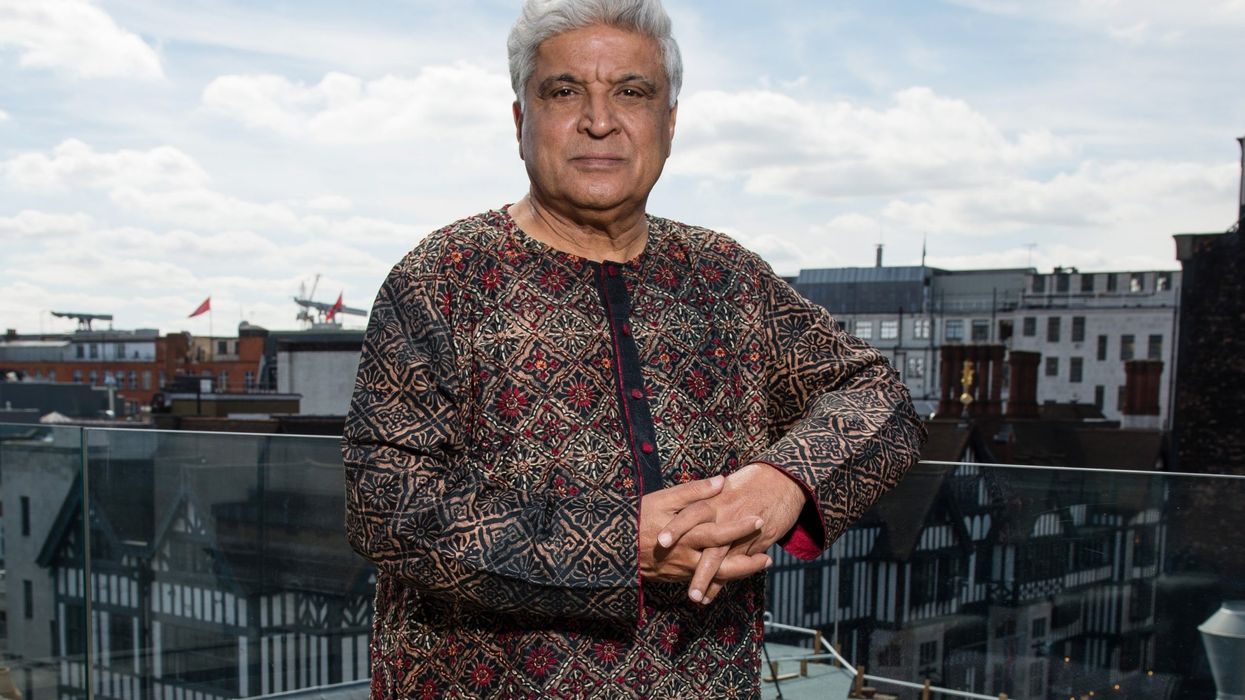

Veteran screenwriter and lyricist Javed Akhtar on Thursday said that he fails to understand how a section of people took offence over the name of clothing brand FabIndia’s latest collection 'Jashn-e-Riwaaz' as the Urdu phrase simply meant “a celebration of tradition”.
The brand was accused of “defacing” the Hindu festival of Diwali by naming its festive collection 'Jashn-e-Riwaaz'. It eventually withdrew the promo after backlash from right-wing groups. In a tweet, Akhtar wondered what the point of conflict was.
“I failed to understand why some people have any problem with FabIndia's 'Jashn-e-Riwaaz'. Which in English means nothing but a celebration of tradition. How and why anybody can have a problem with that? It is crazy (sic),” the 76-year-old writer wrote.
After the brand posted about the 'Jashn-e-Riwaaz' collection on October 9 on Twitter, FabIndia was trolled on social media for what some said was “unnecessarily uplifting secularism and Muslim ideologies” in a Hindu festival, claiming it hurt their religious sentiments.
BJP Yuva Morcha President Tejasvi Surya was also among those who targeted the advertisement, calling it “Abrahamisation of Hindu festivals” and tweeted that brands like FabIndia “must face economic costs for such deliberate misadventures”.
The company, however, insisted that it was not its Diwali collection, which will be soon launched under 'Jhilmil Si Diwali' (A sparkling Diwali) promo. Jashn-e-Riwaaz is a phrase in Urdu, a language that was born in India.
The ethnic retail behemoth joins a list of brands that have recently faced the right-wing wrath. An advertisement featuring superstar Aamir Khan for tyre maker Ceat Ltd, where he is seen advising people not to burst crackers on the streets, was objected by Karnataka BJP MP Anantkumar Hegde, who asked the company to also address the problem of blocking roads in the name of Namaz and noise emitted from mosques during Azaan.
Consumer goods giant Dabur also withdrew an advertisement for Karwa Chauth that celebrated inclusivity, equality and a progressive view of marriage featuring a lesbian couple. Tata Group's jewellery brand Tanishq too was forced to withdraw an advertisement that showed an interfaith couple at a baby shower organised for the Hindu bride by her Muslim in-laws. The company withdrew the advertisement after trolling soon graduated to physical threats to company employees and stores. Clothing brand Manyavar found itself at the receiving end of vitriol on social media when its advertisement featuring Bollywood star Alia Bhatt in wedding attire, appeared to question an old tradition.