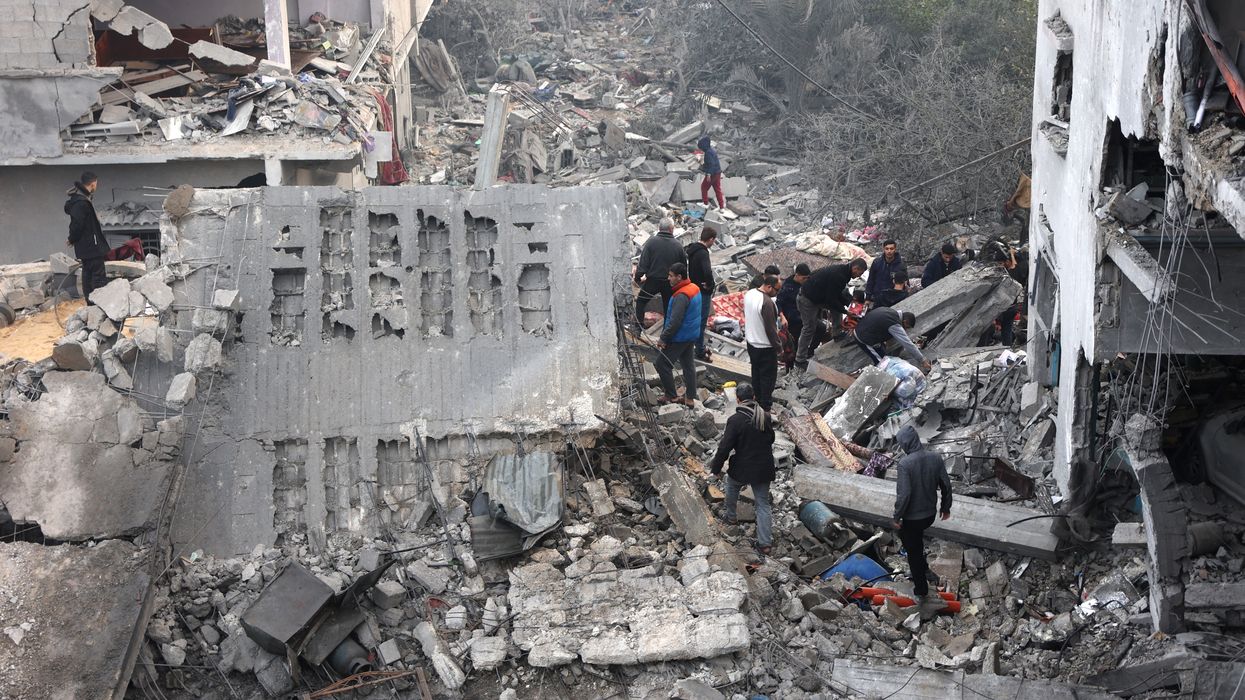

ISRAEL launched fresh airstrikes on Gaza hours after a ceasefire and hostage release deal with Hamas was announced, accusing the group of reneging on parts of the agreement.
The Israeli government has delayed a cabinet vote on the deal until Hamas confirms full acceptance.
Prime minister Benjamin Netanyahu's office stated, "Hamas has reneged on parts of the agreement reached with the mediators and Israel in an effort to extort last-minute concessions," calling it a "last-minute crisis." The statement did not specify which parts of the deal were in dispute.
The ceasefire agreement, brokered by Qatar, Egypt, and the US, aims to end over 15 months of conflict in Gaza. It includes a six-week truce, a phased withdrawal of Israeli forces, and a prisoner exchange involving Israeli hostages and Palestinian detainees.
Qatar’s prime minister Sheikh Mohammed bin Abdulrahman Al Thani confirmed that the ceasefire would begin on Sunday. In the first phase, Hamas is set to release 33 Israeli hostages over 42 days.
Despite the agreement, Israeli airstrikes in Gaza continued, killing at least 46 Palestinians overnight, according to Gaza health officials. In response, Gaza militants fired a rocket into Israel, causing no casualties, the Israeli military reported.
Netanyahu faces internal opposition. Finance minister Bezalel Smotrich and police minister Itamar Ben-Gvir have threatened to withdraw from the government if the ceasefire proceeds without Hamas's full surrender.
Netanyahu defended his government's position, saying, "We will not proceed until Hamas fully accepts all terms. Our priority remains the safety of Israeli citizens and the return of our hostages."
US president Joe Biden welcomed the deal, calling it a step towards halting violence and delivering humanitarian aid. However, Netanyahu warned that Israel would not compromise on national security.
Public reactions in Israel and Gaza have been mixed. In Gaza, news of the ceasefire led to street celebrations, while in Israel, hostage families expressed cautious relief.
The second phase of the deal includes negotiations for a full Israeli withdrawal and the release of more hostages. A third phase focuses on returning bodies and rebuilding Gaza under international supervision.
Israel's military campaign began after Hamas-led gunmen killed 1,200 people and took over 250 hostages during the October 7, 2023, attack.
(With inputs from agencies)