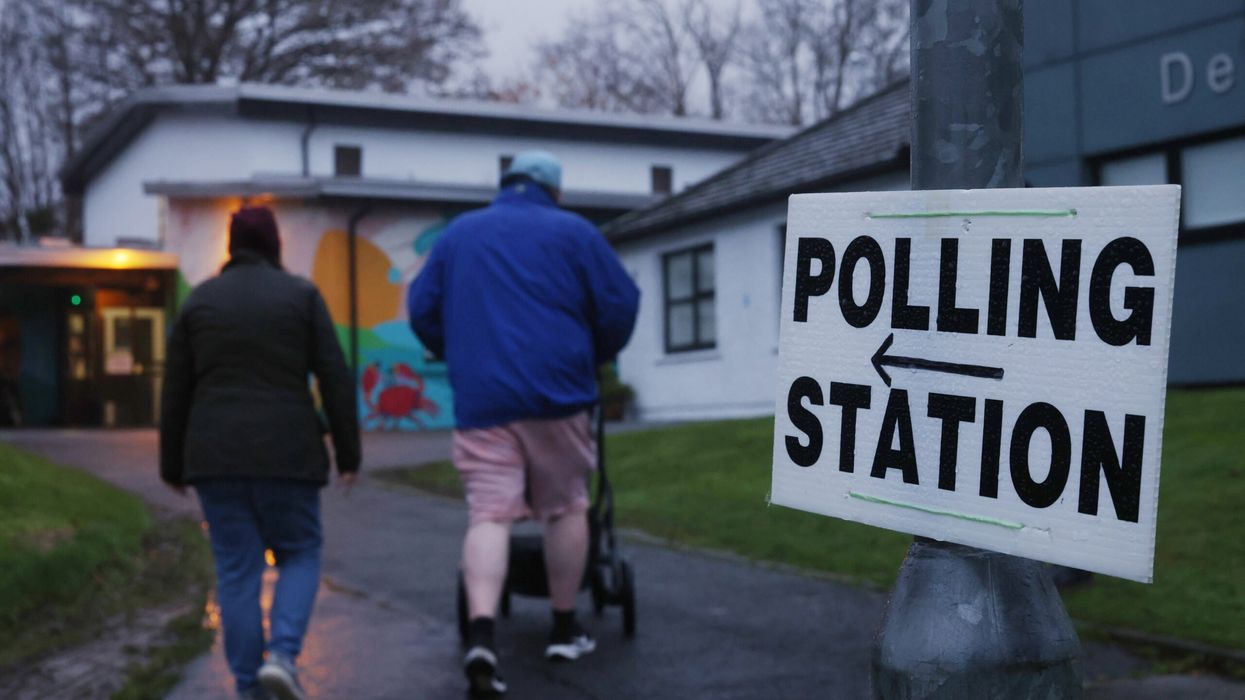

IRELAND began voting on Friday in a general election that is shaping up to be a closely contested battle between the incumbent coalition and opposition party Sinn Fein. The campaign has been dominated by debates over housing and cost-of-living challenges.
Voters are electing members to the 174-seat lower house of parliament, the Dail, in Dublin.
Final opinion polls indicate a tight race among the three major parties—centre-right Fine Gael and Fianna Fail, and leftist-nationalist Sinn Fein—each polling at around 20 per cent.
Counting will begin on Saturday morning, with partial results expected throughout the day. However, due to Ireland's proportional representation system, the final outcome may take days, as votes from eliminated candidates are redistributed in multiple counting rounds.
Fine Gael leader Simon Harris, who called a snap election earlier this month, had entered the campaign with a solid lead. Harris, 38, became Ireland's youngest taoiseach (prime minister) in April 2023, succeeding Leo Varadkar.
Nicknamed the "TikTok Taoiseach" for his social media presence, he initially boosted his party’s appeal but faced backlash over a campaign-trail incident where he appeared dismissive to a care worker in a viral video.
Voter sentiments
Deric Sweeman, a 55-year-old truck driver in north Dublin, was among the first to vote, casting his ballot for Sinn Fein. "It's time for a change. Fine Gael and Fianna Fail have had enough time to fix things, and they haven’t done it," he said, citing housing and infrastructure as critical priorities.
Sinn Fein previously won the popular vote in 2020 but failed to secure coalition partners, leading to Fine Gael and Fianna Fail forming a government with support from the Green Party. The coalition rotated the role of prime minister between the two parties.
Harris has defended his government’s record, highlighting efforts to address housing challenges and manage public spending. A recent budget aimed to tackle issues such as high housing and childcare costs.
Some voters expressed dissatisfaction. Sinead Cashman, a 34-year-old speech therapist, voted for smaller parties, saying, "This is a rich country, but the money isn’t used efficiently. Healthcare, in particular, isn’t working."
Economic concerns and immigration
Economic stability remains a significant concern, with Ireland heavily reliant on foreign investment and corporate tax revenues. Threats of tariffs and tax repatriation from incoming US president Donald Trump have raised fears of economic disruption.
Immigration also emerged as a key election issue, affecting support for Sinn Fein. While it has focused on housing policies and positioned itself as an alternative to Fine Gael and Fianna Fail, its progressive stance on immigration has drawn mixed reactions.
With independents polling around 20 per cent, their support could be pivotal if neither Fine Gael nor Fianna Fail achieves a majority. An exit poll is expected late on Friday after polling closes.
(With inputs from AFP)







Netanyahu faces backlash for calling Britain ‘Islamic Republic’