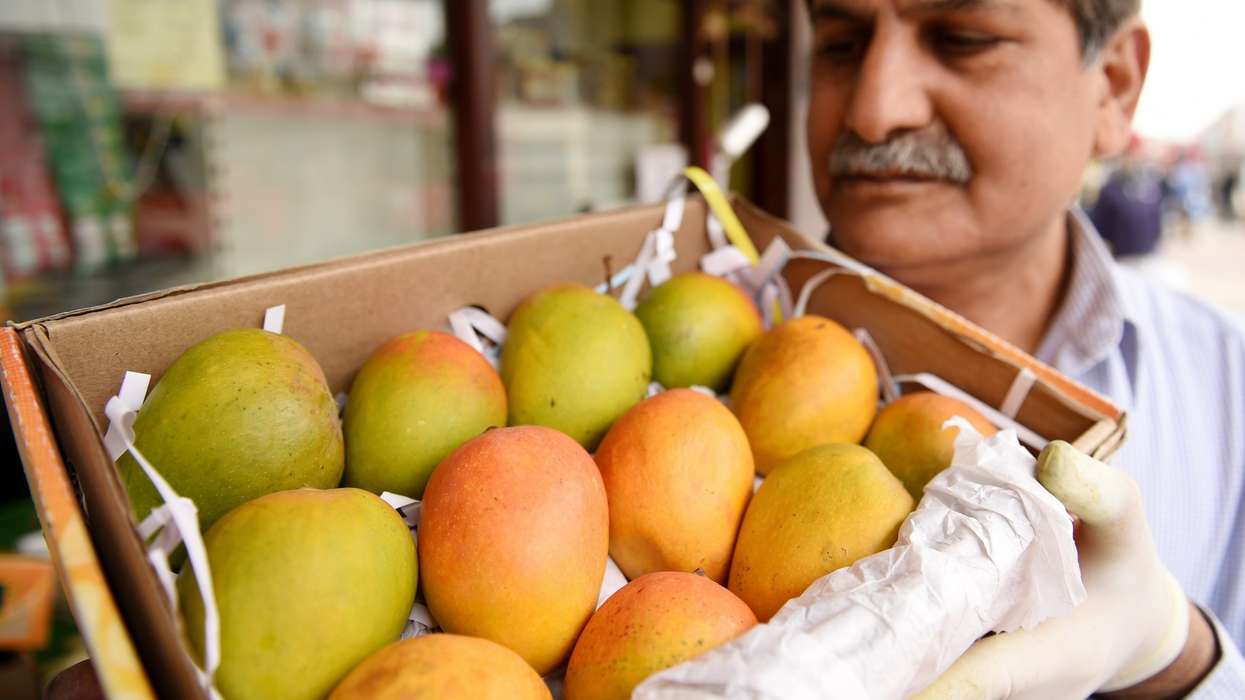

Amidst the sky-high prices of Alphonso mangoes, one trader in Pune in the Indian state of Maharashtra has come up with a unique solution - offering the "king of fruits" on Equated Monthly Instalments or EMI.
Alphonso, also known as 'Hapus', is considered the best variety of mangoes from Devgad and Ratnagiri, and currently, they are being sold at Rs 800 to 1300 per dozen in the retail market.
Gaurav Sanas, from Gurukripa Traders and Fruit Products, asks why mangoes cannot be purchased on instalments if refrigerators and air-conditioners can be.
Sanas told PTI that his family's establishment is the first in the country to sell mangoes on EMI payment plans.
"The prices are always very high at the start of the season. We thought if refrigerators, ACs and other appliances can be bought on EMI, why not mangoes? Everyone can afford mangoes then," he said.
The process of purchasing mangoes at Sanas' store through EMI is like buying a mobile phone on instalments. To participate, customers must use a credit card, and the purchase amount is then converted into EMIs spanning three, six, or 12 months.
However, this initiative is only available for purchases worth a minimum of Rs 5,000 and according to Sanas, four customers have already taken advantage of the scheme.
(With inputs from PTI)