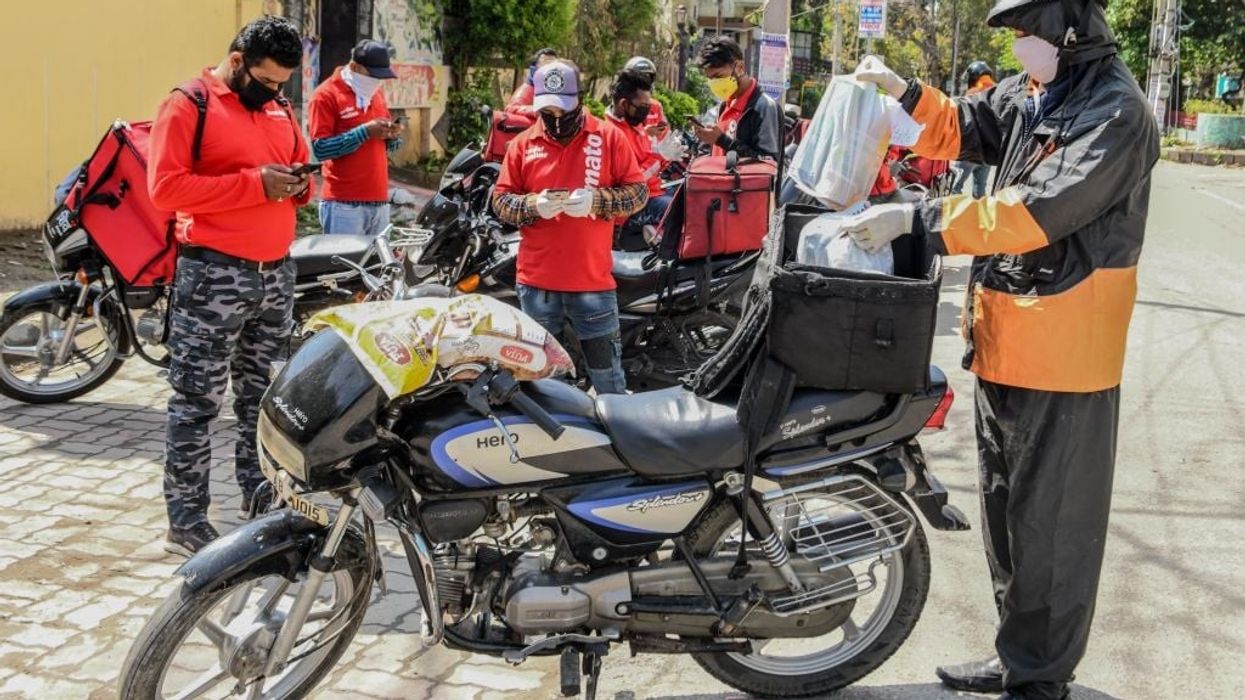

AN investigation by India's antitrust body found food delivery giants Zomato and SoftBank-backed Swiggy breached competition laws, with their business practices favouring select restaurants listed on their platforms, documents show.
Zomato entered into "exclusivity contracts" with partners in return for lower commissions, while Swiggy guaranteed business growth to certain players if they listed exclusively on its platform, according to non-public documents prepared by the Competition Commission of India (CCI).
Exclusivity arrangements between Swiggy, Zomato and their respective restaurant partners "prevent the market from becoming more competitive," the CCI's investigation arm noted in its findings reviewed by Reuters on Friday (8).
The antitrust investigation against Swiggy and its top rival Zomato began in 2022 after a complaint by National Restaurant Association of India about the impact on food outlets of alleged anti-competitive practices of the platforms.
The CCI documents are not public, in line with its confidentiality rules, and were shared with Swiggy, Zomato and the complainant restaurant group in March 2024. Their findings have not been previously reported.
Zomato declined to comment, while Swiggy and the CCI did not respond to queries.
The CCI case is mentioned as one of the "internal risks" in Swiggy's IPO prospectus, which says "any breach of the provisions of Competition Act, may attract substantial monetary penalties."
The CCI report noted that Swiggy told investigators the "Swiggy Exclusive" program was phased out in 2023, but the company "is planning to launch similar program (Swiggy Grow) in non-metropolitan cities."
Food delivery giants Swiggy and Zomato have in recent years reshaped how Indians order food, as hundreds of thousands of outlets listed on their apps just when smartphone use, and online ordering, both grew rapidly.
Swiggy, which on Friday is closing bids for its $1.4 billion (£1.2bn) IPO - India's second biggest this year, and Zomato both in recent years also pushed restaurants to maintain a parity on prices, directly reducing competition in the market by preventing restaurants offering lower prices on other online platforms, the CCI documents stated.
Zomato was found to have imposed pricing and discount restrictions on restaurant partners, and in some cases included a "penal provision" if the outlet failed to comply.
Some of Swiggy's partner restaurants were "threatened that their rankings will be pushed down, if they do not maintain price parity," the CCI's investigation arm noted.
The next, and final phase, of the CCI case is a decision by the CCI leadership which is still reviewing the investigation findings to decide on any penalty or order changes to Swiggy's and Zomato's business practices.
That decision could take several weeks, and the companies still have the option of contesting the investigation findings with the CCI.
Zomato, which listed in 2021, has seen its shares more than triple to a valuation of about £22bn amid rising demand. Swiggy is valuing itself at £9.2bn in its IPO.
Macquarie Capital estimates Swiggy's food order values in 2024-25 will be £2.7bn, roughly 25 per cent below Zomato's.
Both are now diversifying fast into quick commerce where groceries are delivered in as little as 10 minutes.
India's biggest group of retail distributors has asked the antitrust authority to investigate quick commerce businesses of Zomato, Swiggy and another rival Zepto for alleged predatory pricing, Reuters reported last month.
(Reuters)