
INDIA has asked the US to list a Sikh separatist group as a terrorist organisation, an Indian government source said on Tuesday (18).
This comes more than a year after the US announced it had foiled a plot with Indian links to assassinate a leader of the group in the US. Washington went public about the plot in November 2023 and later charged a former Indian spy officer with directing the attempt on Gurpatwant Singh Pannun, a dual US-Canada citizen and the general counsel of Sikhs for Justice (SFJ), in an episode that tested the growing India-US friendship.
India denied any official connection to the plot, set up a panel to probe Washington’s accusations and said in January that the panel had recommended legal action against an unnamed person.
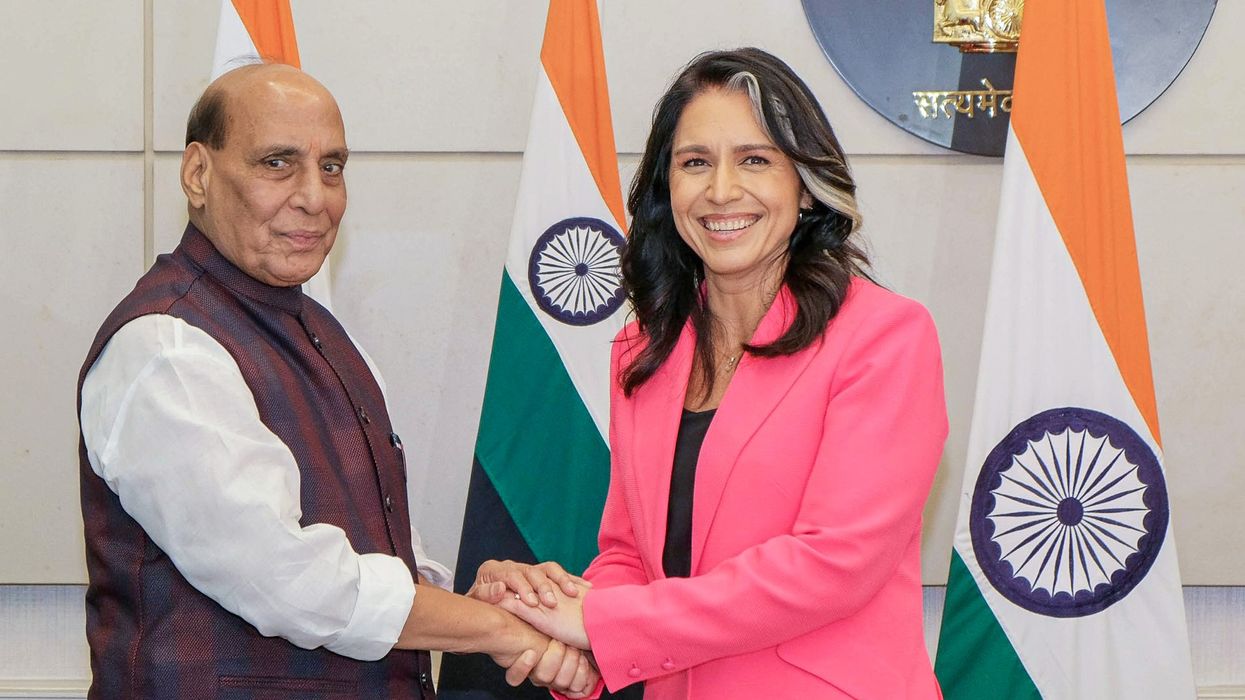
India’s request to the US to list SFJ as a terrorist group came during talks between Indian defence minister Rajnath Singh and visiting US national intelligence chief Tulsi Gabbard, said the Indian government source, who declined to be identified as the discussions were confidential.
Indian media outlets have also reported the request.
Formed in 2007, SFJ holds referendums to advocate for a separate state for Sikhs called Khalistan in Hindu-majority India.
SFJ was labelled an “unlawful association” by India in 2019, citing its support for extremist and secessionist activities, and Pannun was listed as an “individual terrorist” in 2020.
India has had a diplomatic dispute with Canada over the June 2023 killing of another Sikh separatist there. SFJ has rejected New Delhi’s accusations. An Indian defence ministry spokesperson declined to comment.
A US Embassy spokesperson said they did not have anything to add beyond a statement about the talks between Singh and Gabbard issued by India’s defence ministry on Monday (17), which mentioned deepening security ties but made no mention of SFJ.
Gabbard’s team and the Office of the Director of National Intelligence did not immediately respond to emails seeking comment.
At a geopolitics conference in New Delhi on Tuesday, Gabbard said she had heard from her Indian counterparts during her trip “about the very serious concerns you have for your own security interests,” without elaborating.
Gabbard also met India’s external affairs minister, S Jaishankar, who said on social media, “Delighted to meet US DNI @TulsiGabbard this evening. A useful exchange on contemporary global and regional security challenges.”
In their talks, Singh and Gabbard explored ways to boost India-US collaboration in niche defence technologies, information sharing and integration of defence industrial supply chains.
The two leaders also reviewed bilateral strategic cooperation in the maritime domain, according to an official readout.
Both sides also discussed the Indo-Pacific security situation, particularly China’s growing military influence in the region.
The defence ministry stated that Gabbard and Singh emphasised that “strategic security” remains a vital pillar of the comprehensive India-US global strategic cooperation.
Gabbard’s talks with Singh came a day after she met India’s national security advisor Ajit Doval and attended a conclave of global intelligence leaders in New Delhi.