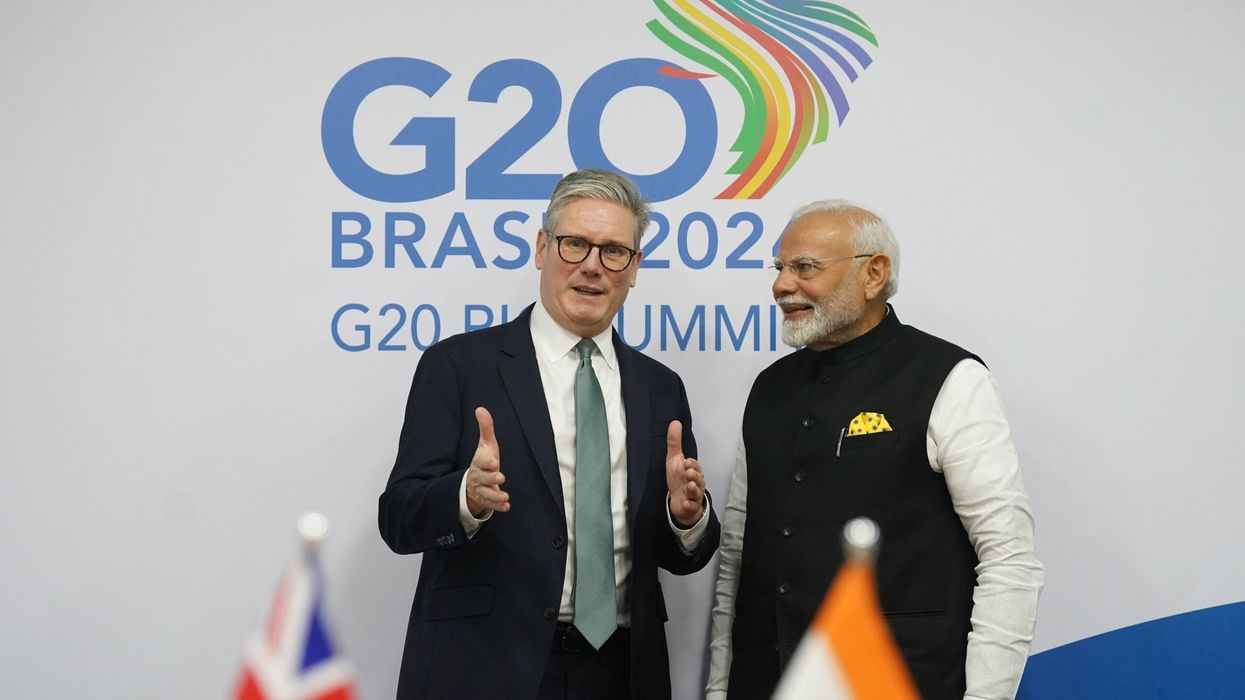

KEIR Starmer has announced that negotiations on a Free Trade Agreement (FTA) with India will resume in the new year. The announcement followed a bilateral meeting with Indian prime minister Narendra Modi on the sidelines of the G20 Summit in Brazil.
According to Downing Street, the UK is aiming to establish a new strategic partnership with India, covering areas such as trade, security, education, technology, and climate change. Starmer emphasised the importance of a trade deal with India, describing it as a step toward supporting jobs and boosting economic growth in the UK. "A new trade deal with India will support jobs and prosperity in the UK — and represent a step forward in our mission to deliver growth and opportunity across our country," Starmer said in a statement from 10 Downing Street.
Modi described the meeting as "extremely productive" in a post on X, formerly Twitter. "For India, the Comprehensive Strategic Partnership with the UK is of immense priority. In the coming years, we are eager to work closely in areas such as technology, green energy, security, innovation, and technology," he wrote, adding that strengthening trade and cultural ties was also a priority.
India's Ministry of External Affairs (MEA) said the meeting provided "fresh impetus" to the India-UK Comprehensive Strategic Partnership. "Prime Minister Narendra Modi met Prime Minister Keir Starmer of the UK on the sidelines of the G20 Brazil Summit in Rio. The leaders discussed various facets of the India-UK Comprehensive Strategic Partnership. They also acknowledged the need for a balanced and mutually beneficial FTA," the MEA said in its post on X.
Downing Street highlighted that Starmer’s visit to the G20 Summit was part of efforts to deepen ties with major global economies. The meeting with Modi followed Starmer’s engagements with Chinese president Xi Jinping, Japanese prime minister Shigeru Ishiba, and Australian prime minister Anthony Albanese.
On the trade front, the Department for Business and Trade (DBT) plans to unveil a new strategy aligned with the UK’s industrial goals. The strategy aims to inform trade negotiations and achieve long-term sustainable growth. Business and Trade Secretary Jonathan Reynolds noted India’s importance as a trading partner, stating, "India is the fifth largest economy in the world and a vital trading partner for the UK. We believe there is a good deal to be done here that works for both nations."
India and the UK have been negotiating an FTA since January 2022, with talks paused during general elections in both countries earlier this year. According to official data, bilateral trade was worth £42 billion in the 12 months to June. A successful FTA is expected to significantly increase this figure.
The UK’s Labour Party government has expressed a strong commitment to resuming and expanding trade partnerships. The DBT had announced plans to relaunch talks with FTA partners after Labour’s victory in the July general elections, with negotiations underway with the Gulf Cooperation Council, Switzerland, and South Korea. The UK is also set to join the Comprehensive and Progressive Agreement for Trans-Pacific Partnership on December 15.
Officials on the Indian side had earlier indicated their readiness to resume negotiations from the stalled fourteenth round. The UK’s confirmation of a new year start marks the first clear signal of a timeline for the talks.
(With inputs from PTI)