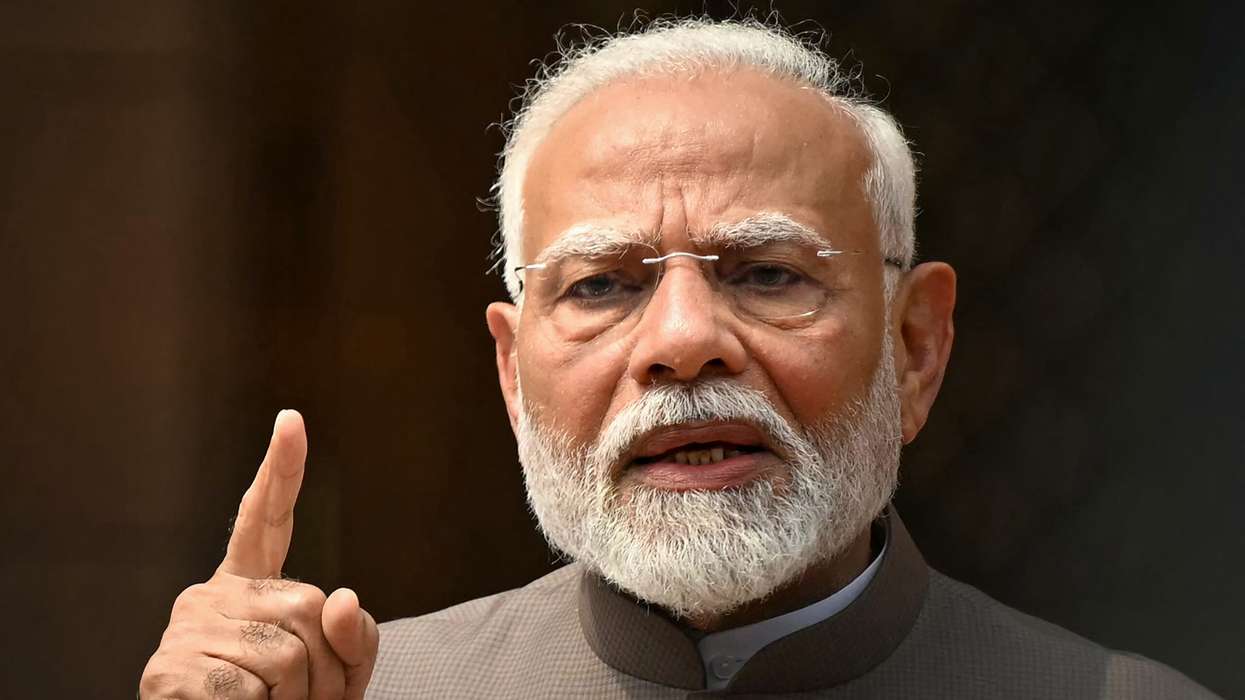

INDIAN prime minister Narendra Modi on Thursday announced that fast-track courts would be set up to prosecute those involved in exam paper leaks, his first public response after weeks of protests demanding the resignation of education minister Dharmendra Pradhan.
The announcement came hours after protesters clashed with police in New Delhi late on Wednesday. Police used tear gas and canes to push back demonstrators.
The protests, led by the self-named Cockroach Janta Party (CJP), have become the biggest youth challenge to Modi since he came to power in 2014 and the biggest political crisis of his third term, which began in 2024. Opposition parties have backed the protesters’ demands and have disrupted the monsoon session of parliament.
India's top judge declines CJP protest plea
“Nothing is more important than the welfare and future of our youth!”, Modi posted on X.
“We have decided to set up fast-track courts to ensure swift and stringent punishment for those involved in paper leaks,” he said.
“This continues our series of steps for safeguarding the interests of students. Those who try to harm the future of our youth will not be spared.”
Fast-track courts are special courts set up to hear cases more quickly and reduce delays in India's justice system. They have previously been used for cases involving sex crimes against women and children, terrorism, money laundering and crimes involving lawmakers.
The CJP, which launched protests last month over exam paper leaks affecting about two million students and linked to several suicides, rejected the announcement.
Replying to Modi’s post on X, the group said: “Dharmendra Pradhan Must Resign”.
Leader of the main opposition Congress party, Rahul Gandhi, also responded by quoting Modi’s post and said it was the prime minister who had harmed the future of young people the most.
“You allowed and encouraged the total capture and destruction of our education system - and protected every person responsible for it,” Gandhi said.
He repeated his demands that Pradhan be removed, Modi apologise to students, and those who assaulted protesters be punished.
More than 10,000 people gathered at the Jantar Mantar protest site in central New Delhi on Wednesday night, according to local media, as CJP leaders said they would continue their protest until Pradhan resigned.
Some protesters threw stones and plastic bottles at police, injuring several officers who were taken to hospital, news agency ANI quoted Delhi Police as saying.
On Monday, tens of thousands of protesters marched towards parliament. Police fired tear gas and used canes to stop them after clashes broke out in some areas.
The protests began as an online satire involving only a few hundred young people.
CJP founder Abhijeet Dipke said the campaign would continue until the education minister resigned.
"It has been 25 days so far. Even if it takes 25 months, that is acceptable, but we will not move from here," Dipke told protesters on Wednesday night.
Delhi Metro Rail Corp. said it had closed 16 stations in and around central New Delhi on Thursday until further notice because of security concerns. It was the second large-scale closure this week.
Under pressure from the protests, Modi's government has held one round of talks with CJP leaders and said their demands would be considered. It has also offered to debate the issue in parliament and introduce reforms to the examination system.
Opposition parties led by Congress have backed the protesters. Gandhi has led demonstrations outside Modi's residence and outside parliament.
The CJP has widened its campaign beyond exam paper leaks to include concerns over unemployment, opportunities for young people and what it describes as Modi's increasingly authoritarian style of governance.
The movement first emerged in May as an online satire after Chief Justice Surya Kant reportedly compared young people to "cockroaches" and "parasites" during a court hearing.
A series of exam controversies has weakened confidence in India's examination system, including the leak of a medical entrance examination paper that forced more than two million candidates to retake the test. Another dispute over the online marking of examinations taken by nearly two million high school students has added to public anger.
The protests have also given opposition parties an opportunity to increase pressure on Modi and his Bharatiya Janata Party (BJP), which has relied on young voters as a key support base and has continued to win state elections since the 2024 general election, when Modi did not secure an outright parliamentary majority.

 Lord Tariq AhmadEastern Eye
 Lord Krish Raval Lord Krish Raval
  Pavita CooperEastern Eye
 Seema MalhotraUK Parliament
 Herman Narula