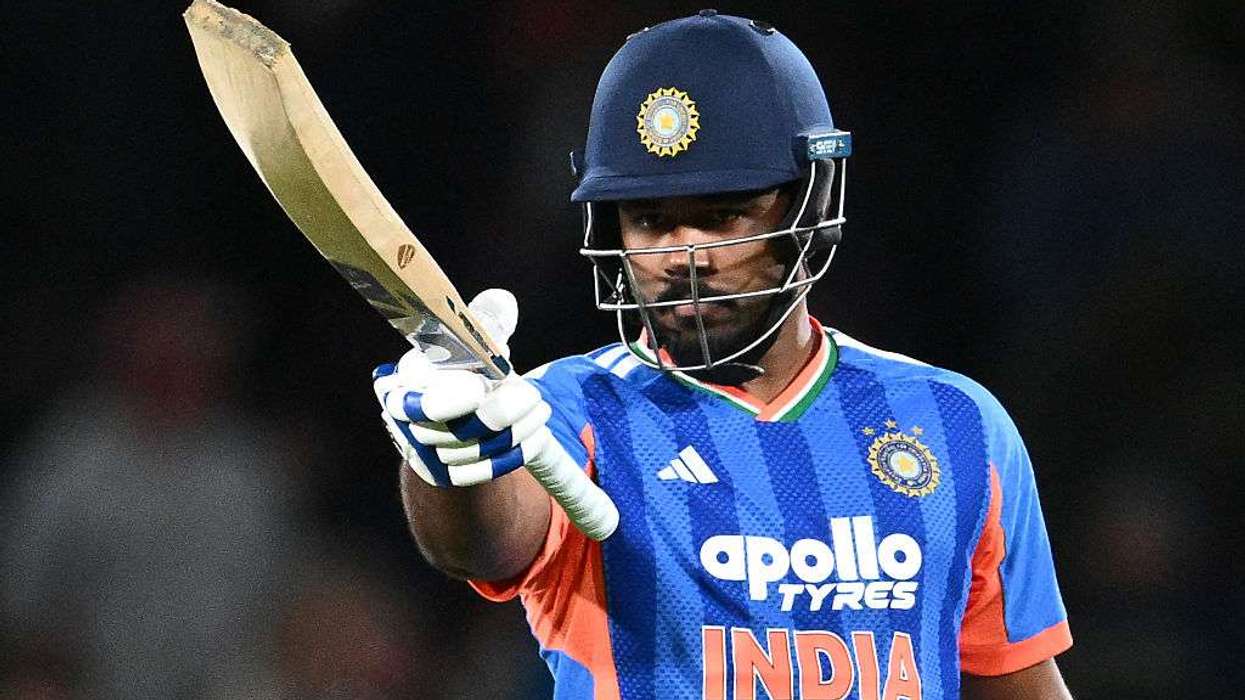
Indian captain Virat Kohli was unsparing in his analysis after India's streak of nine successive series wins was ended in emphatic fashion by South Africa on Wednesday.
"We need to be hard on ourselves," said Kohli after India were blown away by debutant fast bowler Lungi Ngidi on the fifth day of the second Test at SuperSport Park.
The 21-year-old took six for 39 as South Africa clinched the three-match series with a 135-run win.
"We need to ask ourselves if we are giving 120 percent for the team every time we play a ball, bowl a ball or field a ball," said Kohli.
"As a team we will definitely lay out these things in the open and ask the guys to be honest about what they were thinking about at particular stages of the game."
Kohli acknowledged that South Africa had outplayed India on a slow pitch.
"These conditions are something we are used to," he said. "South Africa collectively were a much better team than us."
South African captain Faf du Plessis said the win was "extremely special".
"The last five days took a lot of hard work," Du Plessis said. "The previous game at Newlands (where South Africa won by 72 runs) was almost on fast forward.
"This was completely different. It was a game of grinding, hard work and pushing ourselves for longer and longer.
"I take a lot of pleasure in winning games like this where the team needs a lot of heart, character and fight to get across the line."
India remain the number one team in the Test rankings but second-placed South Africa can draw level with them on points if they complete a clean sweep with a win in the third Test in Johannesburg, starting on January 24.
Kohli dismissed suggestions that India were no longer worthy of their top ranking after the two defeats.
"We have to believe we are the best side. We have had opportunities to win in both games so that is the positive we can take out of it," he said.
- 'Foot on the gas' -
Du Plessis made it clear he was going for a clean sweep in the third Test and would resist temptation to give fringe players an opportunity with the series already won.
"I favour being ruthless," he said. "You don't get many opportunities to beat big teams 3-0. For me it's about putting your foot on the gas."
The South African captain said that although his team had prevailed on an unusually slow Centurion pitch, he was unhappy about the conditions.
"We don't want something ridiculous but we want pitches with pace and bounce. We are not getting it right and it is not the first time it has happened, so I will be taking it up."
But Du Plessis said he did not believe his quest for pace-friendly pitches could be compared to conditions in India when South Africa were beaten 3-0 in 2015-2016 on pitches which gave plenty of help to India's spin bowlers.
"Our win rate away from home is the best in the world," he said. "The last time we went there (India) the conditions were touching on extreme. Even the Indian batting line-up struggled.
"In this series there have been times when it's looked tough but there have been guys scoring runs and taking wickets. I feel there is always a battle between bat and ball, so for me that is a good Test wicket."
Du Plessis admitted that the 2015-2016 series "was tough" and had been seeking revenge in this series.
"Mentally it took a toll, even after that series. The guys were extremely motivated to put that right."