
The publication of Great and Unfortunate Things will go ahead this Thursday (27), though its author, the late Jason Arday, is no longer here to see it. "I can promise you've never read a story like this. Even the viral news headlines don't do it justice", Kris Doyle, non-fiction director of Simon & Schuster told the Bookseller in April, unaware of the destruction the ever-intensifying headlines would bring in August.
The publisher chose to stick to the schedule, once the author resigned his Cambridge professorship just days before its US publication, and even after he took his own life a week later, rather than withdrawing the book, or reissuing it with new material explaining its role in the tragic saga that it leaves half untold.
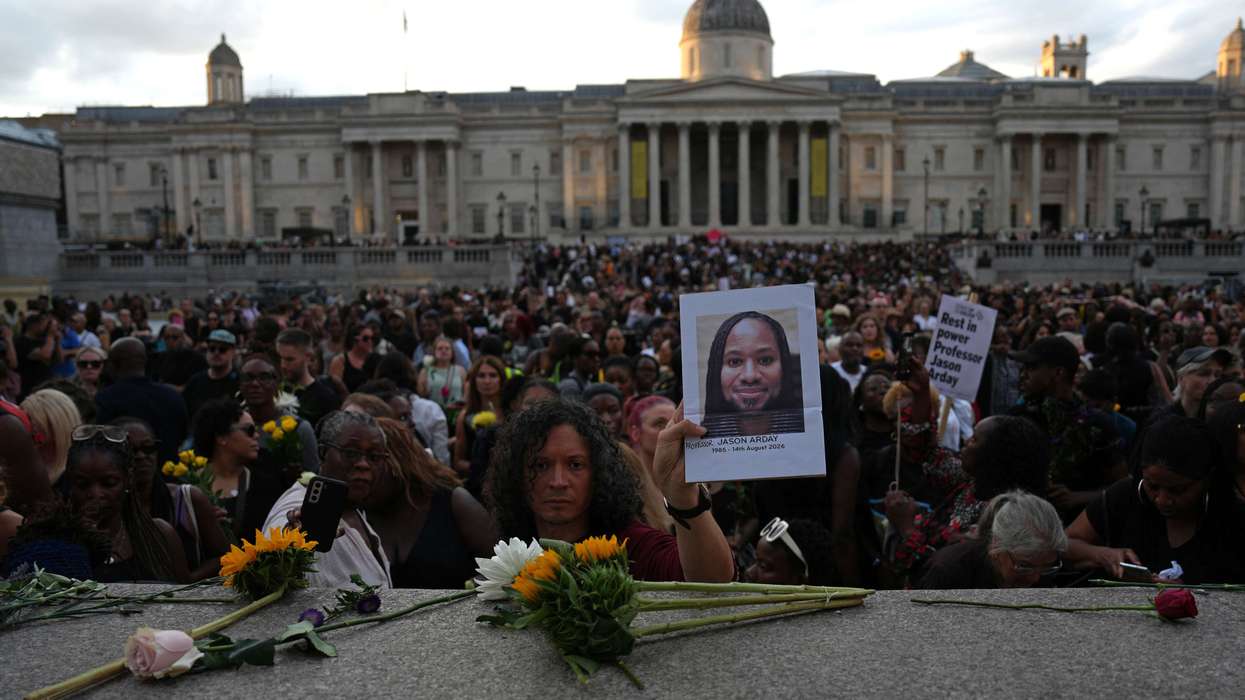
What are the lessons of this human tragedy? Before the coroner’s post-mortem, a public argument rages. Did Arday face legitimate or deeply disproportionate scrutiny? More than 10,000 people last week attended a Trafalgar Square vigil in London for Arday, hearing much anger at the intensity of media coverage.
The difficult truth is that the scrutiny was both legitimate and disproportionate, all at once. With hindsight, many things could have been done differently to prevent professional scrutiny becoming personal tragedy.
That this was Cambridge made the scrutiny legitimate and disproportionate. Arday was among the youngest academic superstars at one of the world’s most prestigious universities. There were real questions inside the academy, yet Cambridge’s responses ricocheted around like a pinball after every headline. It declared plagiarism allegations a vicious smear, before announcing it would investigate them. The vice-chancellor empathised with the anger and anxiety after the resignation, proposing a new inquiry into academic appointments, then committed to racially sensitive support to staff and students shaken by the death. The university now intends “thorough and thoughtful” independent reflection on this whole sorry affair.
The media coverage felt disproportionate. Being black often made Arday more of a symbol than a person – for critics, but supporters, too. Critics of ‘woke’ EDI were certain Arday’s appointment was without merit and must be the mere tip of the iceberg of such ‘diversity hires’. Professor Paul Gilroy, the most eminent sociologist of race, suggested that “impact-chasing” administrators and Arday’s “unthinking culture warrior” supporters had co-produced this crisis with the racist critics, in comments published prior to Arday’s death.
The notion that Cambridge has a sweeping bias in favour of black academics fails the simplest fact-check. There are just five black people among 795 professors at Cambridge - and only 75 among over 6,000 academic staff. What may be less known is that Cambridge, like Oxford, has made strong progress on diversity – when it comes to the students. The intake was 95 per cent white for my generation of students three decades ago – but more than a third of Oxbridge British undergraduates are ethnic minorities now. The ratio of black students at Cambridge is close to the five per cent of black sixth formers nationally. Diversifying the academic staff – about 85 per cent white – is harder and slower.
So Cambridge was evidently delighted when Arday was appointed professor three years ago – its press release focusing on his back-story in the style of his publisher. The nine-person Cambridge panel knew its role was to appoint the best candidate – but no conspiracy theory is needed to understand how they could have been swayed by a younger charismatic candidate’s potential to deliver “impact” beyond the academy.
Once Arday resigned, the media coverage should have scaled back – shifting to institutions, not individuals. But the media campaign for the million-dollar memoir was a catastrophic invitation to scrutinise the story of self, sure to be seized on both sides of the Atlantic. Some questions – exactly how many marathons Arday ran for charity – seem trivial now. The core fairytale of an autistic boy, mute at eleven and still illiterate at eighteen, was hard to reconcile with his top academic post being in the sociology of education.
Jolyon Maugham KC of the Good Law Project published a lengthy critique of the Guardian, detailing his own unsuccessful effort to persuade the newspaper to spike reporter Lanre Bakare’s investigative work. Bakare, approached by Arday himself, had diligently interrogated the claims and counter-claims, rather than simply picking a side. Maugham acknowledged the reporting was fair, but regretted how this revealed the legitimate story beneath the culture clash, influencing Arday’s decision to resign.
Yet Maugham’s bizarre objection is that too many Guardian staff covering the story were black. “Why were black and brown journalists doing so much of the heavy lifting?” he asked. He even advocated a special responsibility of white people “to help clear up a mess that white people have made”, appearing oblivious to the regressive implications of this objection to ethnic minority agency.
Many institutions have lessons to learn. Yet the talented, troubled professor Arday had surely been an author of his own rise and legend too, before sadly succumbing to its unbearable pressures.