A PAKISTANI court in the eastern city of Lahore on Thursday (25) handed 16 civilians over to the military for trial over their suspected involvement in violent protests following the arrest of former Prime Minister Imran Khan this month.
The military said after the violence that the suspects would be tried in military courts, used primarily to try enemies of the state.
Khan was arrested on May 9. Two days later, the Supreme Court ruled that the arrest was unlawful.
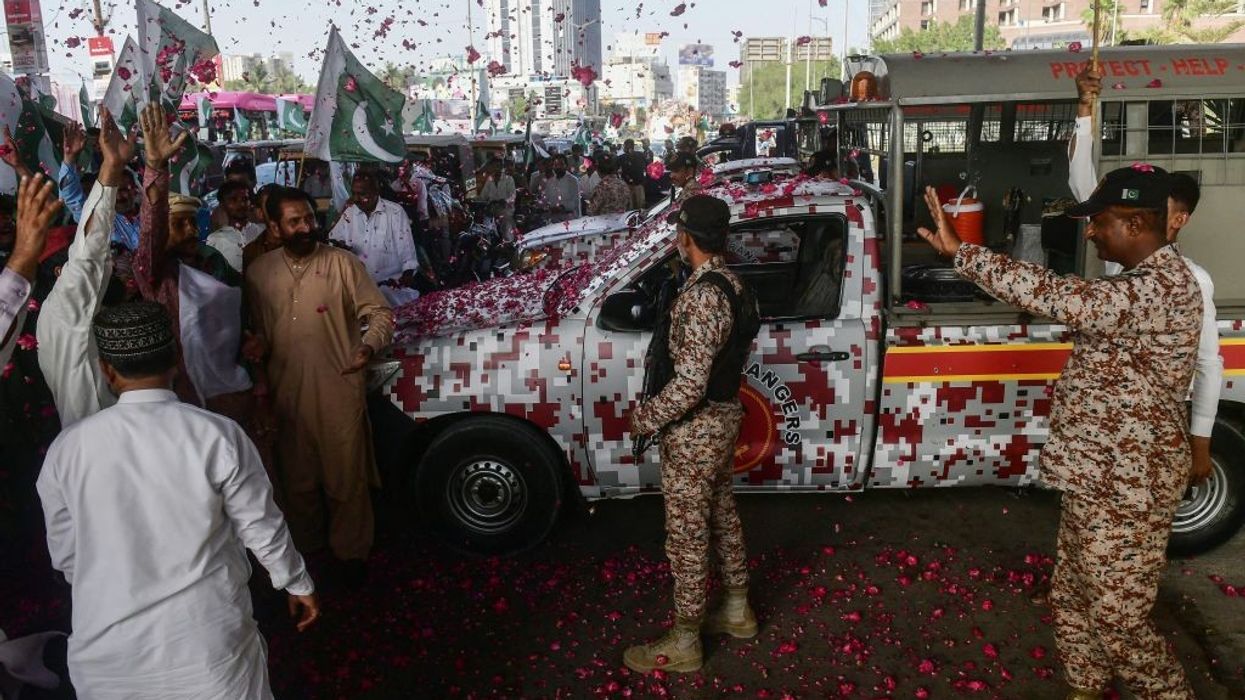
The protests following Khan's arrest by the anti-graft agency included people storming military installations, including the house of a top general in Lahore, which was set ablaze.
Thousands of people, mostly supporters of former cricket hero Khan, have been rounded up since.
One of the 16 suspects is a member of Khan's political party, the Pakistan Tehreek-e-Insaf (PTI), and had been chosen by Khan to run in the next provincial elections, a senior member of Khan's legal team, Azhar Siddique, said.
"The 16 will be investigated by the military and tried in military courts," he said.
Military courts operate under a separate system from the civilian legal system. Trials are closed to outsiders, and no media is allowed. Rights groups have criticised the secretive nature of the process.
The protests coincided with Pakistan's worst economic crisis in decades, with record high inflation, anaemic growth and IMF funding delayed for months, prompting concerns that the country could default on its external payment obligations.
The military has ruled the South Asian nation for almost half its history through three coups.
(Reuters)
Imran Khan’s arrest: Lawyer says 16 suspects to face military trial for violence