
Skip to content
Search

Latest Stories

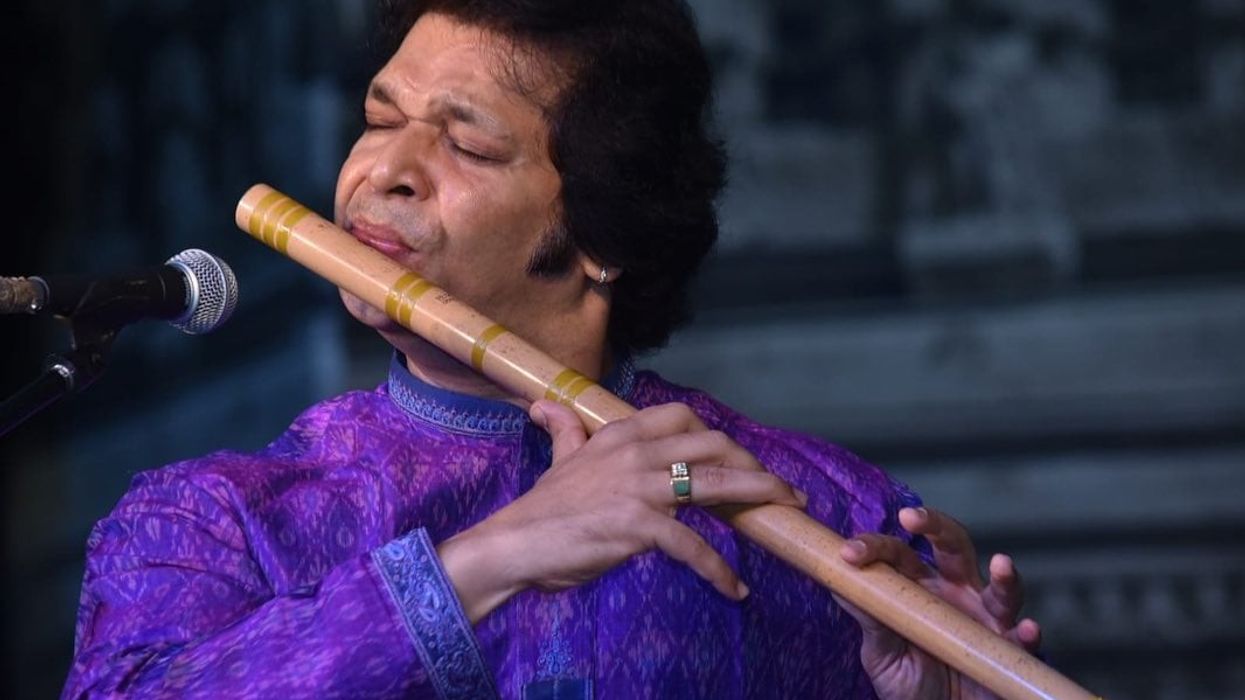
Happy and honoured to bring two Grammys home: Rakesh Chaurasia

Chaurasia said Zakir Hussain has been an inspiration since he started playing the flute.

Happy and honoured to bring two Grammys home: Rakesh Chaurasia

It's surreal and overwhelming, says flautist Rakesh Chaurasia on his double Grammy win for "Pashto" and "As We Speak" with other musicians, including tabla maestro Zakir Hussain.

"As We Speak", also featuring Béla Fleck and Edgar Meyer, won in the best contemporary instrumental album category. The musicians also registered a win for "Pashto" in the best global music performance category.


"Happy and honoured to bring two Grammys home to India for 'As We Speak' with my inspiration, the maestros, Ustad Zakir Hussain, Bela Fleck and Edgar Meyer. A surreal and overwhelming feeling. More than the joy I felt for myself, the pride of winning it as an Indian musician ranks higher," the flautist told PTI.

Chaurasia said Hussain has been an inspiration since he started playing the flute.

"I would often do the Sangat (accompaniment) with my uncle, the legendary flute maestro Padma Vibhushan Pt Hariprasad Chaurasia ji. Ustad ji (Hussain) would be on the tabla... Every concert with both the maestros would be a learning experience for me. To be able to share the stage with Ustad Ji is an honour and it was he who introduced me to maestros Bela Fleck and Edgar Meyer," he said, adding that he was looking forward to more such collaborations in the future.

It was a big day for India at the Grammys. Hussain registered a third win for "This Moment" for Shakti in the best global music album category alongside Shankar Mahadevan, violinist Ganesh Rajagopalan and percussionist Selvaganesh Vinayakram as well as British guitarist John McLaughlin.

Chaurasia, Hussain, Meyer and Fleck were also nominated in the best instrumental composition category for "Motion" but lost out to "Helena's Theme".


More For You

Samir Zaidi

Two Sinners marks Samir Zaidi’s striking directorial debut

Samir Zaidi, director of 'Two Sinners', emerges as a powerful new voice in Indian film

Indian cinema has a long tradition of discovering new storytellers in unexpected places, and one recent voice that has attracted quiet, steady attention is Samir Zaidi. His debut short film Two Sinners has been travelling across international festivals, earning strong praise for its emotional depth and moral complexity. But what makes Zaidi’s trajectory especially compelling is how organically it has unfolded — grounded not in film school training, but in lived observation, patient apprenticeships and a deep belief in the poetry of everyday life.

Zaidi’s relationship with creativity began well before he ever stepped onto a set. “As a child, I was fascinated by small, fleeting things — the way people spoke, the silences between arguments, the patterns of light on the walls,” he reflects. He didn’t yet have the vocabulary for what he was absorbing, but the instinct was already in place. At 13, he turned to poetry, sensing that the act of shaping emotions into words offered a kind of clarity he couldn’t find elsewhere. “I realised creativity wasn’t something external I had to chase; it was a way of processing the world,” he says. “Whether it was writing or filmmaking, it came from the same impulse: to make sense of what I didn’t fully understand.”

Keep ReadingShow less