
Highlights
- “Bhagavad Gita changed my direction completely” says Italian artist on spiritual shift
- Built his visual language through Mahabharata and Srimad Bhagavatam illustrations in Florence
- Drawn to Karna and Bhishma for their moral complexity and emotional depth
- Holi Varanasi painting presented in Rome as part of cultural exchange linked to India
- Says Krishna leela remains central to his artistic philosophy and worldview
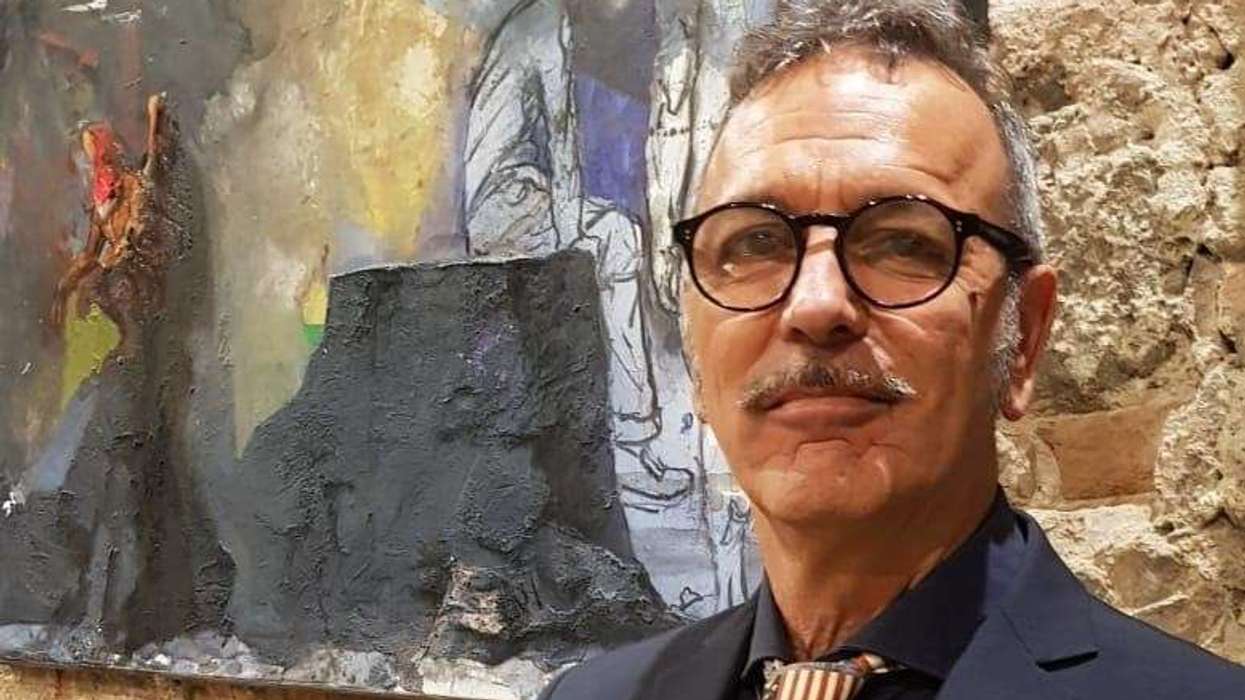
Italian artist Giampaolo Tomassetti traces the beginning of his creative journey to a period of inner questioning in his early years, when he was studying in a scientific school but increasingly searching for something beyond formal education.
“It was very important. I was always talented in art, but I took it for granted. I never cultivated it,” he says, recalling how his artistic inclination remained dormant during that phase.
The shift, he explains, came with his encounter with the Bhagavad Gita, particularly the translation by A.C. Bhaktivedanta Swami Prabhupada. What followed was a prolonged engagement with questions of identity and existence.
“I wanted to understand more than myself,” he says. “Who I am, where I am coming from, where I am going… these questions became very intense.”
He describes this period as an existential crisis that ultimately redirected him towards a more spiritual and artistic path.
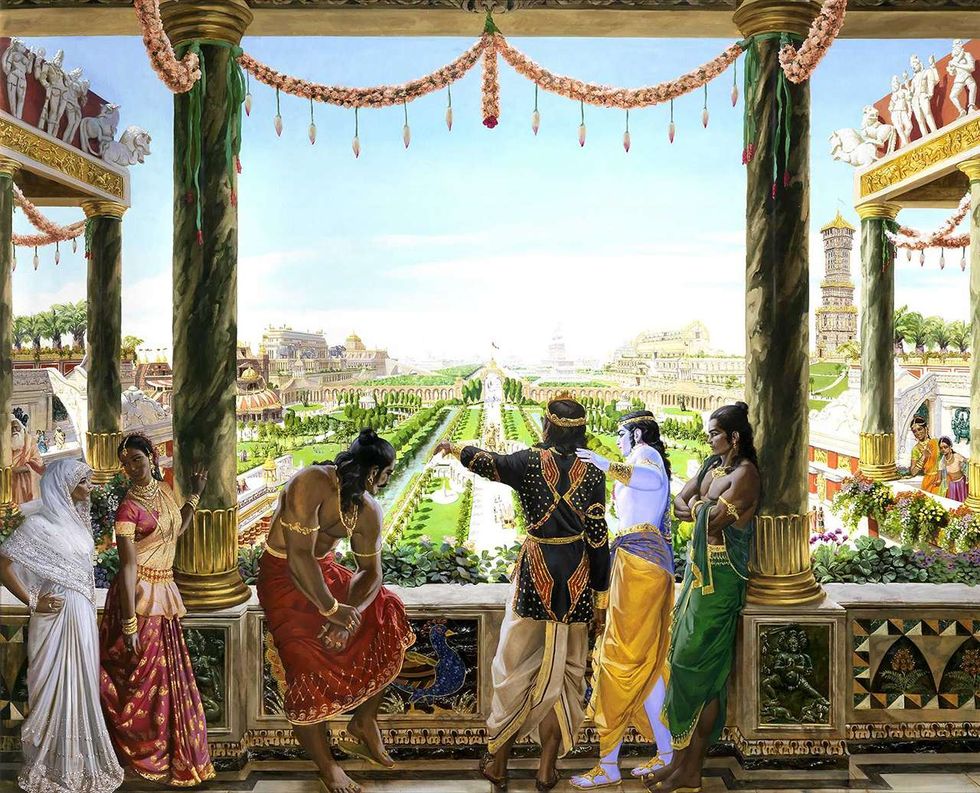 Krishna in IndraprasthaGiampaolo Tomassetti
Florence, ISKCON and the making of an artistic language
Tomassetti’s artistic practice took shape in Florence, where he became involved with ISKCON artists working on devotional illustrations of Indian scriptures, including the Bhagavad Gita and Srimad Bhagavatam.
“So I met the Bhagavad Gita… I studied it for about four years,” he says, describing how the text became central to his intellectual and creative development.
In Florence, a city shaped by Renaissance heritage, he began merging Western classical realism with Indian narrative and devotional aesthetics.
“It was a match between Western and Eastern world culture,” he says. “I applied the artistic Western experience to the contents of Indian scriptures.”
This exchange laid the foundation for his later Mahabharata-inspired paintings, where narrative detail and symbolic density became central to his visual style.
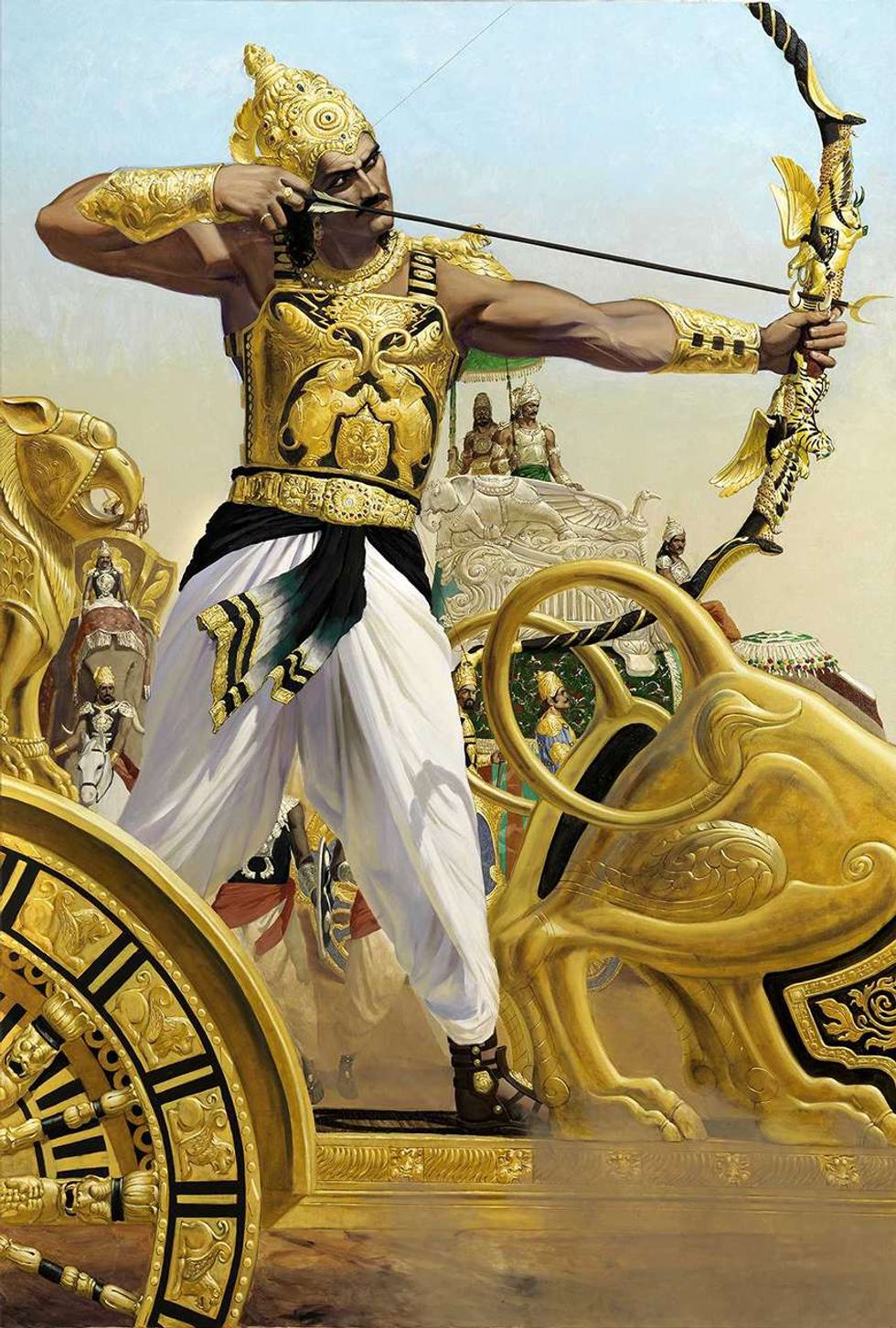 "Shoot Him Now" Giampaolo Tomassetti
Karna, Bhishma and the complexity of the Mahabharata
For Tomassetti, the Mahabharata’s enduring strength lies in its layered characters, especially those who resist simple moral classification.
He is particularly drawn to Karna, whom he describes as a tragic and conflicted figure.
“Karna is kind of an anti-hero… a real hero,” he says. “He was a victim of circumstances.”
He reflects on Karna’s struggle between identity, destiny and loyalty, shaped by rejection and moral ambiguity.
Bhishma also stands out for him as a figure of wisdom and restraint.
“He seems to know more than anybody else,” he says, describing Bhishma as a symbol of discipline, sacrifice and accumulated knowledge.
Rather than clear heroes and villains, he sees the Mahabharata as a study of human contradiction and emotional depth.
Holi Varanasi and Krishna leela in contemporary interpretation
His painting Holi Varanasi, presented in Rome in a cultural exchange context linked to India, reflects his attempt to capture the layered identity of the city in a single visual frame.
“It was a view of Varanasi… there is all India in that painting,” he says, describing it as a synthesis of architecture, ritual, river life and spiritual presence.
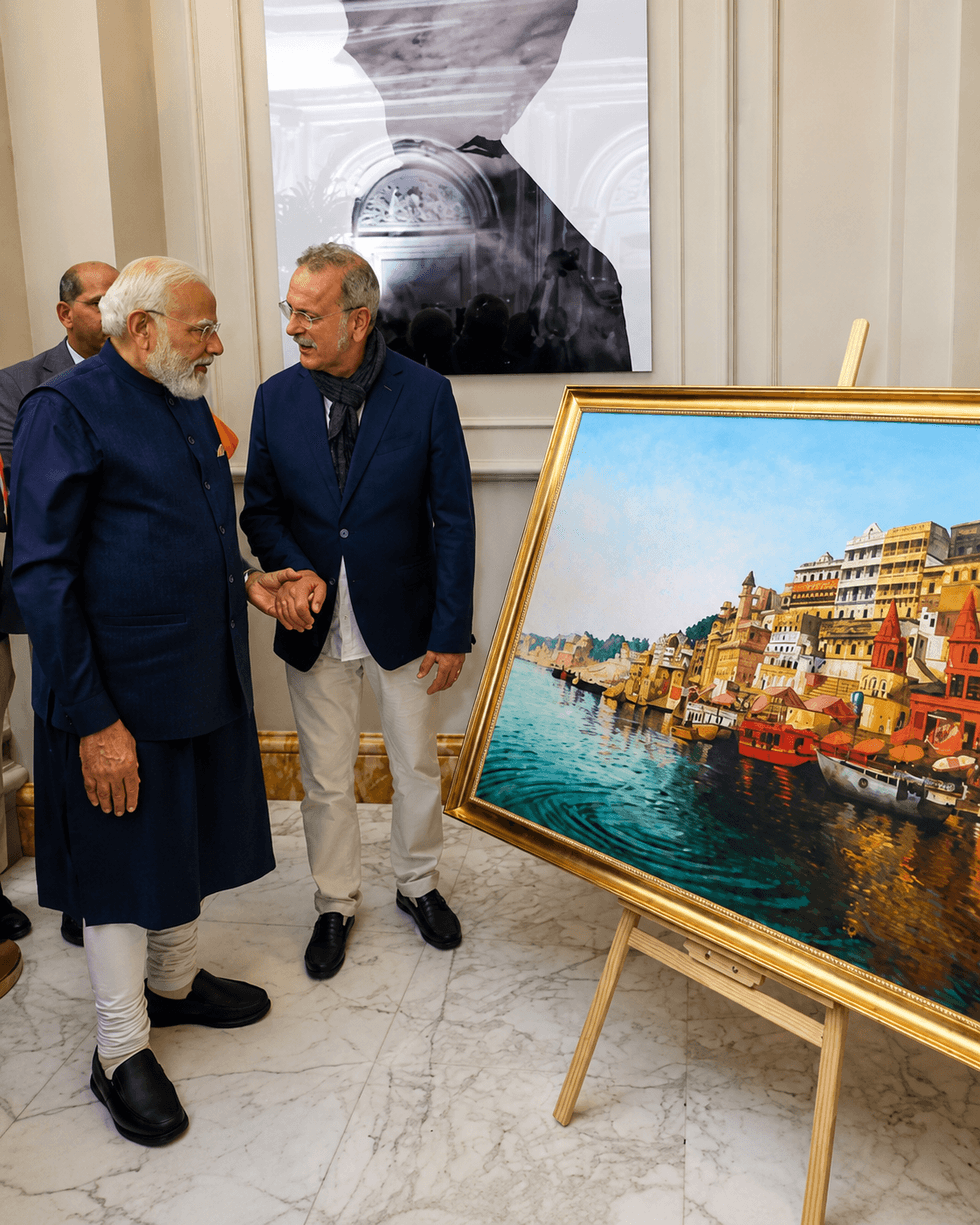 Giampaolo Tomassetti with Indian prime minister Narendra ModiGiampaolo Tomassetti
Tomassetti also places Krishna leela at the centre of his artistic philosophy, describing Krishna as a figure beyond conventional moral or social constraints.
“He is the only completely free person,” he says. “What he desires is already reality.”
In recent years, his Mahabharata works have gained renewed attention online, particularly among younger audiences revisiting Indian epics through digital platforms. He sees this as a continuation of cultural dialogue between traditions, where ancient narratives are reinterpreted through contemporary visual language.
Readers interested in Giampaolo Tomassetti’s Mahabharata-inspired artworks can also view and acquire selected pieces from his existing collection. The paintings are accessible for those wishing to explore or purchase his work, and enquiries can be made directly for availability and details.
For further background, Giampaolo's website can be viewed at:
Readers may contact Giampaolo directly at giampaolot@yahoo.com





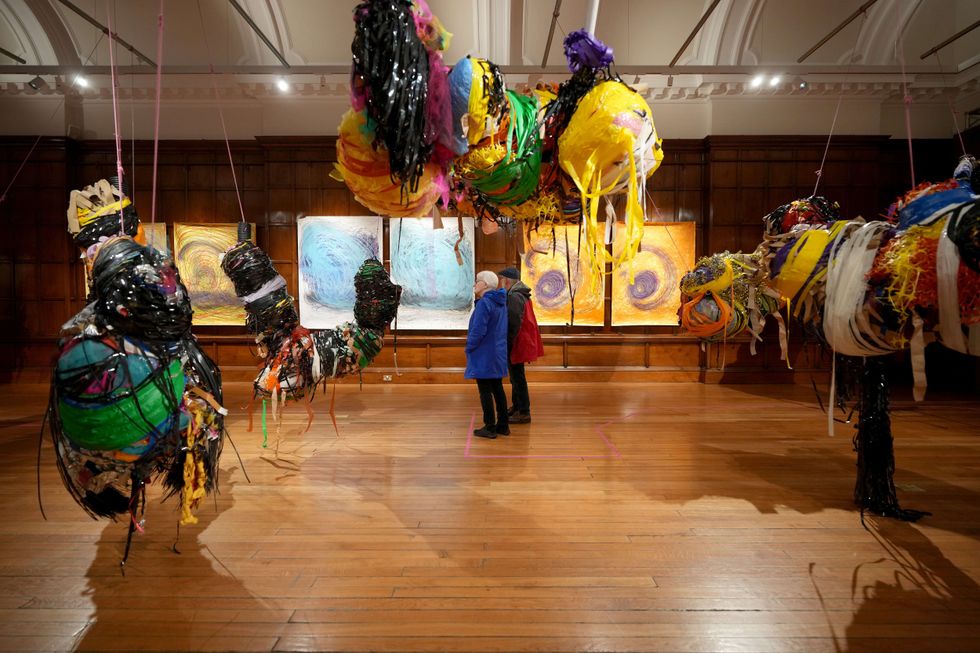 Nnena Kalu’s art installation at the Cartwright Hall Art Gallery in Bradford Christopher Furlong/Getty Images
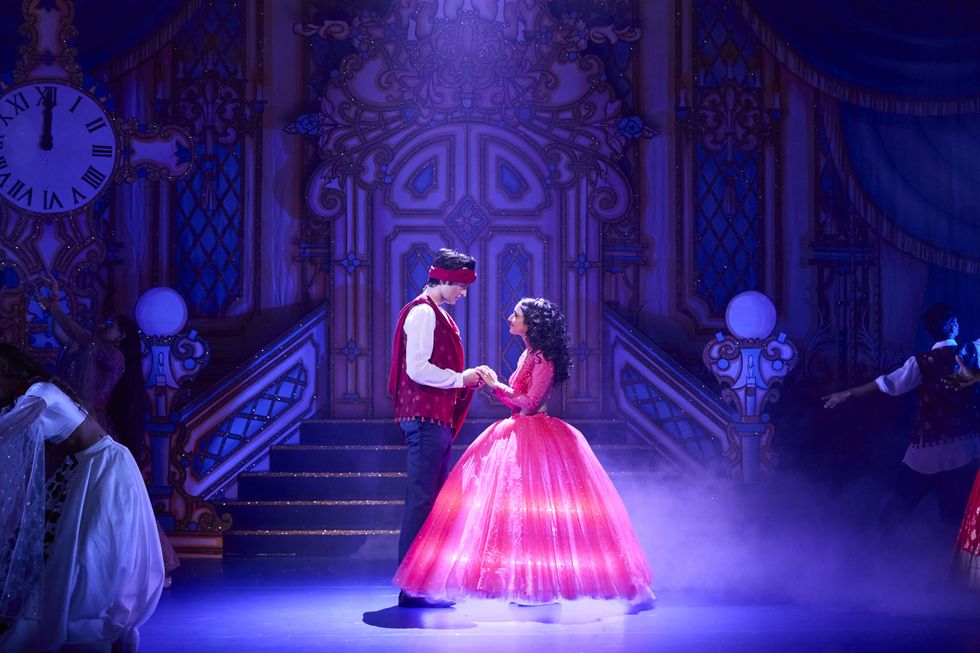 A scene from SurinderellaEastern Eye
 The covers of Henley’s books The Arts DividendEastern Eye
 Separated, but not divorcedEastern Eye
 A scene from Mrs Kapoor’s Daughter’s Wedding 3 at Curve TheatreCurve Theatre
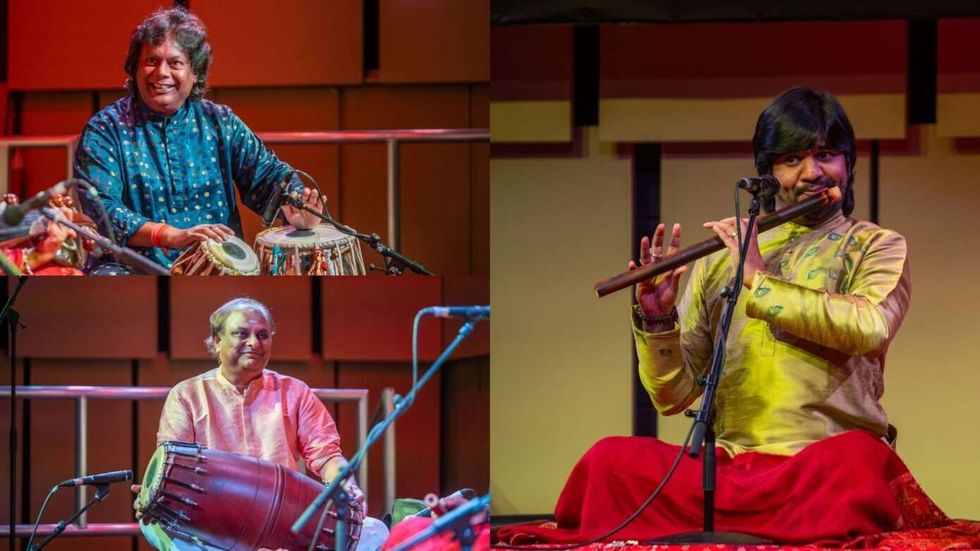 Musicians perform at MilapEastern Eye
  Queen Camilla watches a performance by children in FebruaryKate Green/Getty Images

