
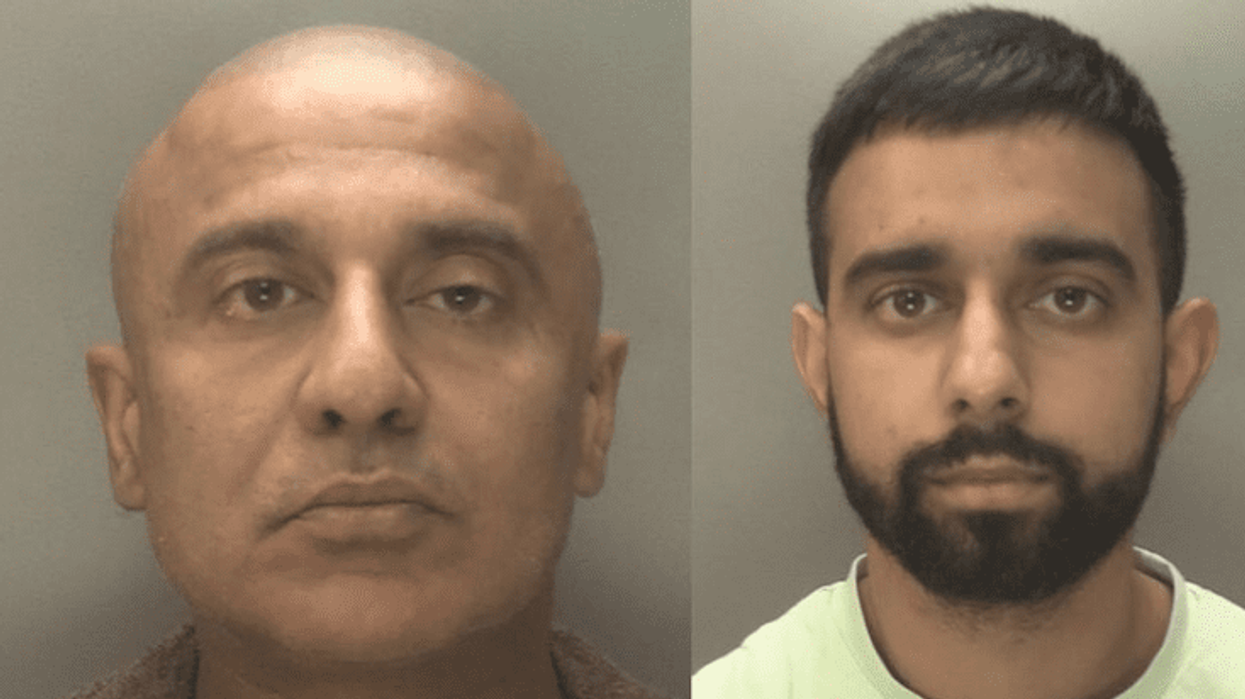
A WEST BROMWICH crime group which abused government-backed Covid loans to run a drugs empire during pandemic lockdowns has been jailed.
The 10-member gang, led by Kamaljit Singh Chahal and his nephew Bhipon Chahal, used a ‘Thank You NHS’ van to transport heroin and cocaine across the West Midlands to avoid being detected.
Leicester Crown Court on Friday (23) sentenced Kamaljit Singh, from Sutton Coldfield, to 18 years in prison and Bhipon, from Great Barr, to 14 years behind bars.
Matthias Tulloch has been jailed for 12 years, Sandeep Johal and Miquel Lewin-Miller for 11 years, Aaron Williams for 10 years and six months and Robert Wesley for nine years.
Alan Moore-Caswell will have to serve a jail term of four years and two months while Sandeep Singh and Hitesh Salhotra have been jailed for three years and nine months each.
West Midlands Police said Kamaljit Singh and Wesley had been granted ‘Covid loans’ which they “reinvested into the drugs trade” and the gang used encrypted devices to supply cocaine on a “commercial scale” during the height of the pandemic.
They used a network of couriers while Lewin-Miller and Tulloch worked as facilitators.
Tulloch used an NHS-emblazoned van to carry out the criminal activities, taking advantage of the Covid pandemic, the force said.
But the drug empire crumbled when detectives caught the gang after launching a covert investigation named Op Igneous.
They seized chat messages exchanged between 26 March and 5 June 2020 to discuss the management and delivery of the Class A drugs.
The West Midlands Regional Organised Crime Unit’s chief inspector Peter Cooke said the fact that the men would spend nearly 100 years behind bars in total for the crime would send out a warning that the police force “simply won’t tolerate it.”
Gang who used 'Thank you NHS' van to transport drugs jailed
West Midlands Police said Kamaljit Singh and Wesley had been granted ‘Covid loans' which they “reinvested into the drugs trade�






 Curator Emma Slocombe with ikat robes and arabachi coats in the Peter the Great Room in Blickling Hall Amit Roy
 View of the entrance to Blickling Hall on a rainy autumn dayAmit Roy
 Kente cloth from Ghana in the Long Gallery in Blickling Hall
 Decoration in the Great Hall at Blickling Hall Amit Roy
 Palampore fragment made in coastal south-east India in the Brown Room in Blickling Hall Amit Roy
 Bed valance dating from early 1700s in the Italian Print Room at Blickling Hall Amit Roy
 Indian inspired fabric draped on sofas in the South Drawing Room in Blickling Hall Amit Roy
 Indian inspired fabric draped on sofas in the South Drawing Room with Indian carpet in Blickling Hall Amit Roy
 Karun Thakar has picked out the geometric patterns in the bookcase and the Kente cloth in the Long Gallery in Blickling Hall Amit Roy
 Large tapestry depicting Peter the Great defeating the Swedish army at the Battle of Poltava in 1709 Amit Roy
 ikat robes and arabachi coats in the Peter the Great Room in Blickling Hall Amit Roy
 Baghs and kanthas made by women provide contrast to the men only portraits in the Great Hall at Blickling Hall Amit Roy
 Baghs and kanthas in the entrance Great Hall at Blickling Hall Amit Roy
 Baghs and Kanthas in the Great Hall in harmony with stained glass window at Blickling Hall Amit Roy
 Kimonos reflect Japanese influence in Upper Ante Room in Blickling Hall Amit Roy
 Kimono in Upper Ante Room in Blickling Hall
 A view of the Palace and fort at Agra shows romantic side of India Amit Roy
 Blickling Hall Amit Roy
 Table carpet, European 1670-1680 Amit Roy
 Unfinished 17th century Italian embroidery in the Print Room at Blickling Hall Amit Roy
 Picture of Kashmir shows a romantic view of India Amit Roy
 A panel of Ashburnham bed hangings made in Gujarat for sale in Europe in the Brown Room in Blickling Hall Amit Roy
 Colcha made in the 1600s by women in Bengal for the Portuguese market in the Long Gallery at Blickling Hall Amit Roy




