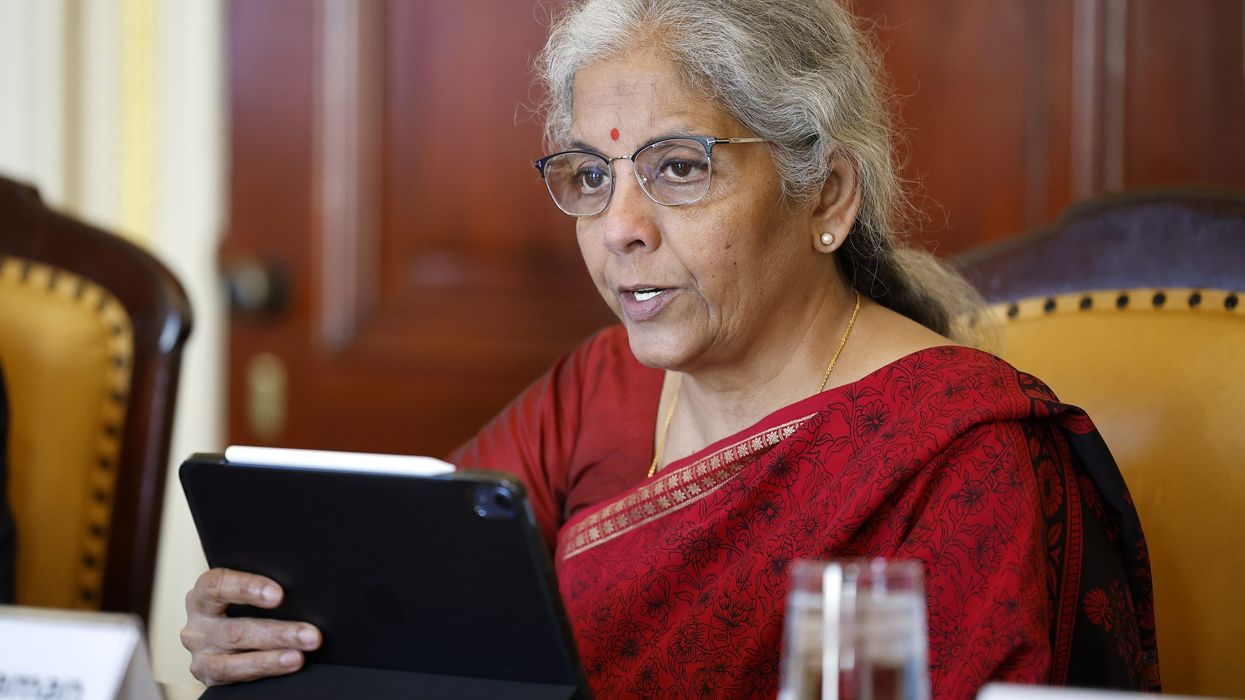

Indian Finance Minister Nirmala Sitharaman has reported that the G20 bloc has actively engaged with and provided strong support for many of India's proposals, following a series of meetings with her counterparts from the influential grouping.
As the current presidency of the G20, India intends to host a leaders' summit in New Delhi in early September. The G20, consisting of the world's 20 major developed and developing economies, is a critical forum. Sitharaman held discussions with her G20 counterparts on the sidelines of the annual spring meetings of the International Monetary Fund and the World Bank in Washington on Thursday (13).
“We were very happy to see that most of India's proposals have been well supported and there has been an active engagement,” she said.
According to the minister, the second meeting of G20 finance ministers and central bank governors during India's presidency covered several topics across three sessions, including the global economy, international financial architecture, sustainable finance, financial sector, financial inclusion, and international taxation.
The discussions were highly productive, with members contributing a wealth of substantive insights.
The meetings were attended by approximately 350 delegates, including 13 invitee countries and numerous international and regional organisations.
Sitharaman identified six key takeaways from the G20 meetings. Firstly, she reported that there was successful discussion on debt restructuring and debt vulnerabilities, including the hosting of the Global Sovereign Debt Roundtable.
Secondly, the issue of reforming multilateral development banks, an Indian initiative, was well-received, and an expert group with two co-conveners has been established to strengthen the issue. The group is currently working towards presenting their findings by July.
Thirdly, climate finance and sustainable financing of climate and climate-related issues were also discussed.
"Bringing in private finance and ensuring Sustainable Development Goals are also met up.
This discussion on climate finance is also moving in a very positive direction. Not just the current flow, but also the quantum that is required for meeting current climate challenges and also looking at transitional costs, the technology that is so required,” she said.
The fourth major takeaway from the G20 meetings, as reported by Sitharaman, was the global partnership for financial inclusion, with a particular emphasis on the potential of digital public infrastructure (DPI).
Discussions regarding leveraging DPI to achieve greater financial inclusion have been ongoing, with interest expressed by multiple countries. The minister noted that the use of technology to promote financial inclusion is a subject that has received a great deal of attention and interest.
Sitharaman expressed gratitude to Singapore for bringing attention to the agreement between India and Singapore on cross-border payments. She highlighted that cross-border payments are a crucial instrument that can gain widespread acceptance across all countries.
The fifth significant takeaway from the G20 meetings, according to the minister, was the discussion on international taxation. The members engaged in talks regarding achieving a fair, sustainable, and modern international tax system.
Further, Sitharaman reported that all G20 members called for swift implementation of the two-pillar international tax package agreed upon in October 2021. The progress made in this area is aimed at bringing greater transparency to international tax reforms.
The sixth and final takeaway from the meetings, she said was the general consensus on regulations related to crypto assets. The minister noted that the discussion on crypto highlighted the potential impact on both developed and emerging market economies, emphasising the need to take into account the implications for developing economies as well.
(With inputs from PTI)