
Highlights
- Flipkart and Amazon are expanding quick commerce services in India, focusing on smaller cities
- Domestic firms such as Blinkit and Instamart currently lead the fast-growing market
- Flipkart plans to increase its quick commerce stores from 1,000 to 1,500 in the coming months
- Amazon said its ultra-fast delivery service will expand to 300 cities
WALMART's Flipkart and Amazon said on Wednesday (24) they are speeding up expansion of their "quick commerce" business in India with a focus on smaller cities, as the two global giants compete in the $11 billion (£8.7bn) sector dominated by domestic players.
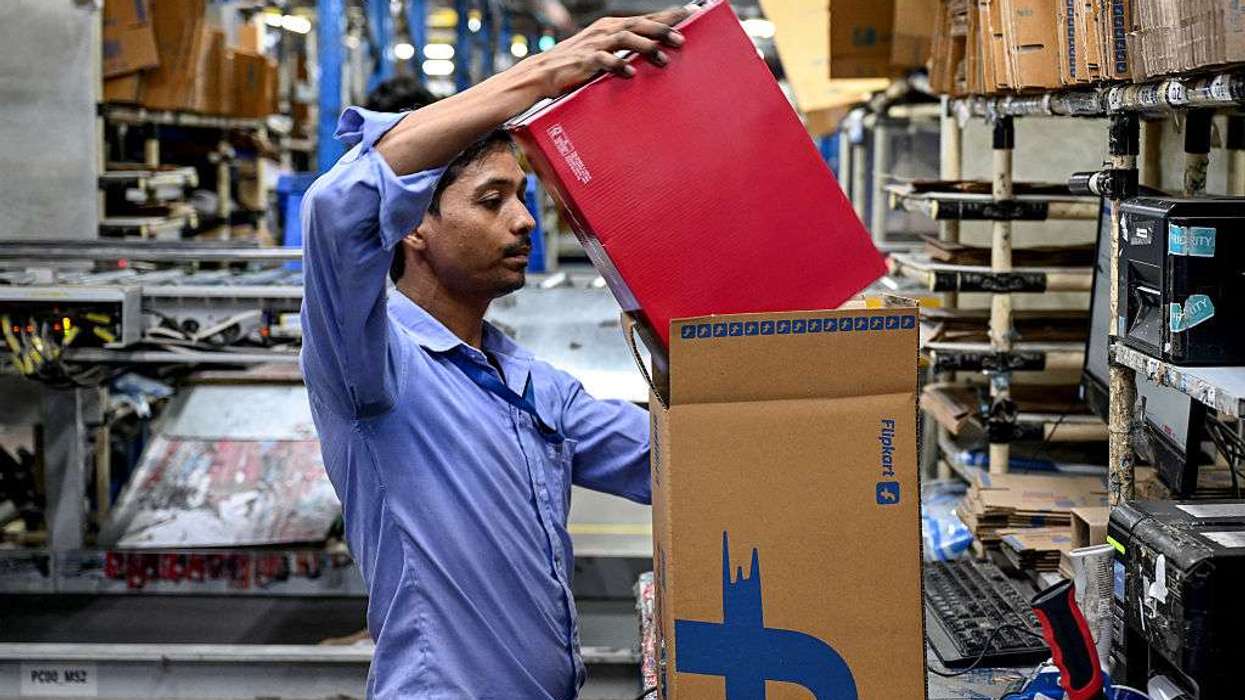
Flipkart and Amazon are late entrants to the space that has boomed in India and sees companies home delivering everything from iPhones to milk within 10 to 30 minutes from neighbourhood warehouses - a phenomenon that has reshaped shopping patterns in the world's most populous nation.
While Eternal's Blinkit has over 2,200 stores in India, and Swiggy's Instamart has more than 1,100, Amazon has around 500, data from Datum Intelligence shows.
Flipkart said its store count has touched 1,000, but it plans to take it to 1,500 within months.
Preparing for its Mumbai listing, Flipkart is focusing more on smaller towns and cities, which make up 70 per cent of its footprint of more than 130 cities, Kunal Gupta, head of Flipkart "Minutes", said in an interview.
People in smaller cities "build a slightly larger" average order value basket as they are value conscious, Gupta added, saying it has expanded aggressively in the eastern state of Bihar - one of the nation's poorest regions.
In a statement, Amazon said it was expanding its ultra-fast delivery service "Now" to 300 Indian cities, from more than 15 now.
Chief Executive Andy Jassy, who is on an India tour, visited one of its quick commerce warehouses and posed for a photograph posted on the company website.
India's popular shopping medium
E-commerce is a popular shopping medium in India, but quick commerce is fast catching up. However, India's government in January ordered companies to stop promoting their grocery deliveries as a "10-minute" service amid rider safety concerns.
While Flipkart didn't disclose numbers, it said in a press statement its orders have grown five times in the past one year, with smaller towns and cities recording 42 times higher sales.
In Bengaluru, Flipkart's offerings now extend to five types of avocado to cater to evolving urban tastes, while in smaller cities the focus remains on staples and essentials, Gupta said.
Datum Intelligence data showed Blinkit was already servicing three million orders per day and Swiggy was doing 1.25 million. Flipkart lags with 820,000 daily orders, while Amazon Now clocks 470,000 a day.
The average order value of Flipkart service was however highest at Rs 700 ($7.39), the data added.
Datum's founder Satish Meena said it would be difficult for Flipkart to take share from Blinkit, where customers look for convenience and are from high income households.
(Reuters)