
- Ferrari’s first electric car sold for £29.5m at RM Sotheby’s in California.
- The Luce was initially estimated at more than £800,000 before bidding pushed it to a record £29.5m.
- The entire sale proceeds will go towards educational initiatives through the Ferrari Foundation.
Ferrari’s first electric car has gone from being one of the marque’s most debated launches to the centre of a record-breaking auction.
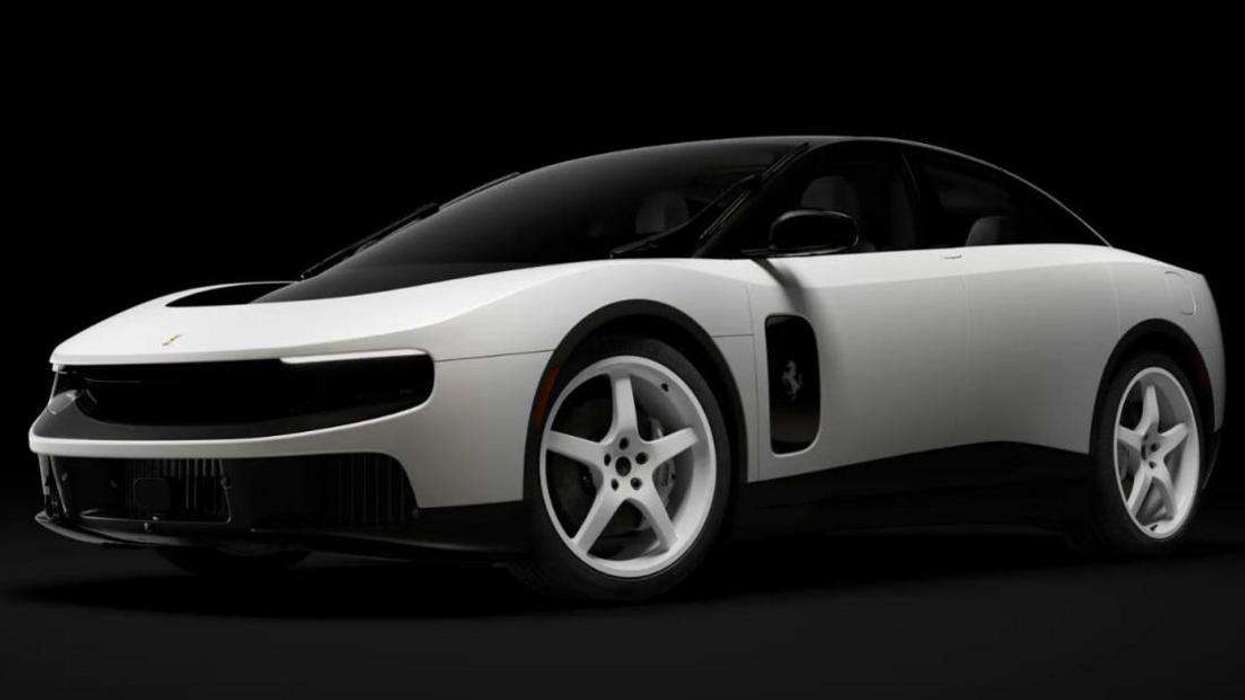
A bespoke version of the Ferrari Luce, known as “Chassis 0”, sold for $40m (£29.5m) at an RM Sotheby’s charity auction during Monterey Car Week in California. The sale makes it the most expensive new production car ever sold at auction, according to Ferrari and RM Sotheby’s.
That figure is a long way from the car’s pre-sale estimate of more than £800,000. The Luce itself starts at around £475,000, based on its €550,000 starting price. The auction price therefore ended up at more than 35 times the estimate and far above the price of a standard production car.
The buyer has not been identified. What makes the sale different from a conventional Ferrari purchase is that the entire £29.5m will go to the Ferrari Foundation, which supports educational initiatives. RM Sotheby’s also waived its buyer’s premium so the full winning bid could be donated.
The previous record for a new car sold at auction was also held by Ferrari. A specially commissioned Daytona SP3 raised $26m (£19.2m) for the company's education initiatives in 2025. The broader auction record remains far higher, with a 1955 Mercedes-Benz 300 SLR Uhlenhaut Coupé selling for $142m (£104.7m) in 2022.
From Ferrari tradition to an electric gamble
The £29.5m result comes at an interesting point for the Luce. When Ferrari unveiled the car in May, its move into electric vehicles was met with criticism from some traditionalists.
The Luce is unlike many Ferraris that came before it. It is a five-seat, four-door electric GT, rather than the low-slung two-seat sports cars most closely associated with the brand. Its design was developed with input from Sir Jony Ive, the British designer best known for his work at Apple, through his LoveFrom collective.
The launch was followed by a fall in Ferrari’s share price, while former Ferrari chairman Luca Cordero di Montezemolo was among those who criticised the direction of the new car. Ferrari’s chief design officer Flavio Manzoni reportedly argued that criticism was part of the innovation process and said he expected the car to gain wider appreciation.
There are signs that the commercial response may be less difficult than the initial reaction suggested. Ferrari reportedly reached its unofficial 2026 sales target of around 500 Luce cars within two months of launch, helped by strong demand from China, according to the Financial Times.
That does not necessarily settle the argument over whether an electric Ferrari can retain the character expected from the brand. But the early sales figures suggest there is a market for it, particularly among wealthy buyers who may be less attached to Ferrari’s traditional petrol-powered models.
The auction car itself was never intended to be an ordinary Luce. Ferrari’s Tailor Made division gave “Chassis 0” a one-off specification built around the theme of light, including a special Madreperla Semi-Gloss finish designed to shift between green and violet depending on the angle and intensity of the light. It also has dedicated white wheels, bespoke brake callipers and a Ferrari badge set against an optical-white background.
Inside, the five-seat cabin uses Perla Le Mans metallic leather and Grigio Corvara trim instead of the usual black elements. A plaque identifies it as “Chassis 0”, marking it as the first production chassis of the Luce programme.
Underneath the custom finish, the Luce is a 1,050hp electric GT with four motors and 990Nm of torque. Ferrari says it can reach 100km/h from rest in 2.5 seconds and has an estimated electric range of 530km.
The £29.5m buyer will have to wait for the car. Following the auction, Chassis 0 is expected to return to Maranello for final preparation before delivery in the first quarter of 2027.
For Ferrari, the sale has therefore done more than raise money for its foundation. It has put a very unusual first chapter of the company’s electric-car story into the auction record books, just months after the same car was prompting questions about how far the brand should move away from its traditional formula.