POLICE had to intervene and break up an early-hours drinking session at the hotel where both the teams were staying.
At the end of the Ashes series in Hobart, England and Australia players got together over drinks which went on until early morning. In a video, England captain Joe Root, Jame Anderson and Australia's Nathan Lyon, Alex carey and Travis Head are being asked by the police to disperse.
England and Wales Cricket Board (ECB) said they will investigate the matter and said "the England party have apologised for any inconvenience."
The ECB also added: "The hotel management received a noise complaint by a hotel guest and, as is commonplace in Australia, the local police attended the scene.
"When asked to leave by hotel management and the Tasmanian police, the players and management in question returned to their respective hotel rooms.
"The ECB will investigate further. Until such times, we will make no further comment."
Reports suggest the ECB investigation will not only focus on the incident but also how the video surfaced in public domain.
According to a report by BBC Sport, four officers are seen ordering the players to disperse from a roof terrace.
The video is believed to be shot by England assistant coach Graham Thorpe who can be heard naming the players and also saying that he was "videoing this for the lawyers".
Thorpe was in charge of the drawn fourth Test when head coach was in isolation after testing positive for Covid.
It was shot by England assistant coach Graham Thorpe, who can be heard naming the players and saying he was "videoing this for the lawyers".
Thorpe took charge of England for the drawn fourth Test in Sydney when head coach Chris Silverwood was in isolation after testing positive for Covid-19.
England's coaching team were already under pressure following England's 4-0 series defeat.
Tasmania police has said no action will be taken after they were called to the Crowne Plaza hotel at 6:00 local time.




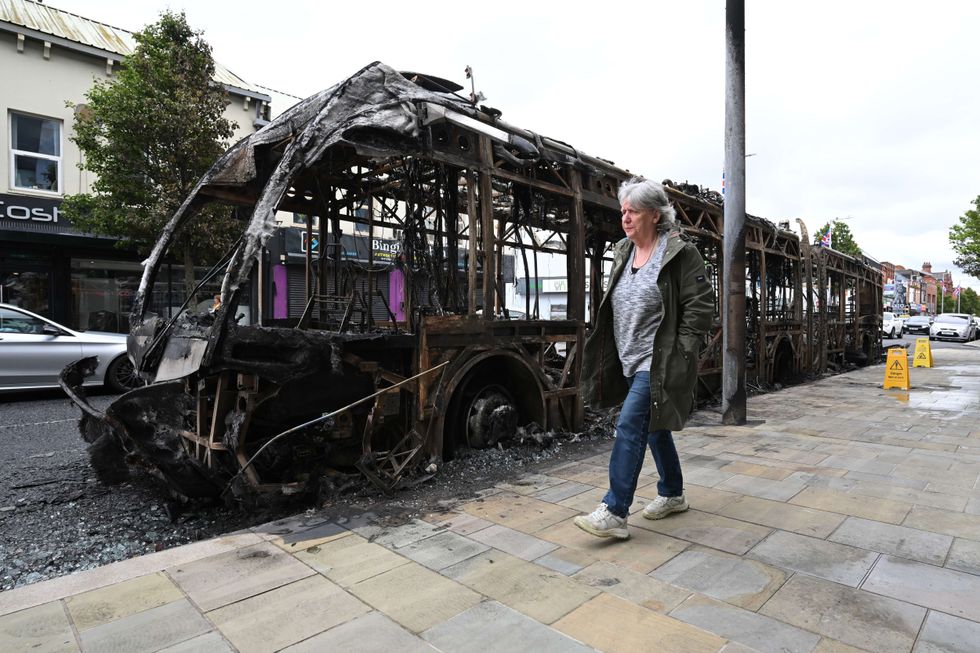 A burnt out bus on Newtownards Road as the clean-up begins following a night of anti-immigrant riots on June 10, 2026 in Belfast, Northern Ireland. Overnight protests in Belfast turned violent in reaction to a knife attack that took place on Monday night, which left a male victim in his 40's with serious injuries. Getty Images