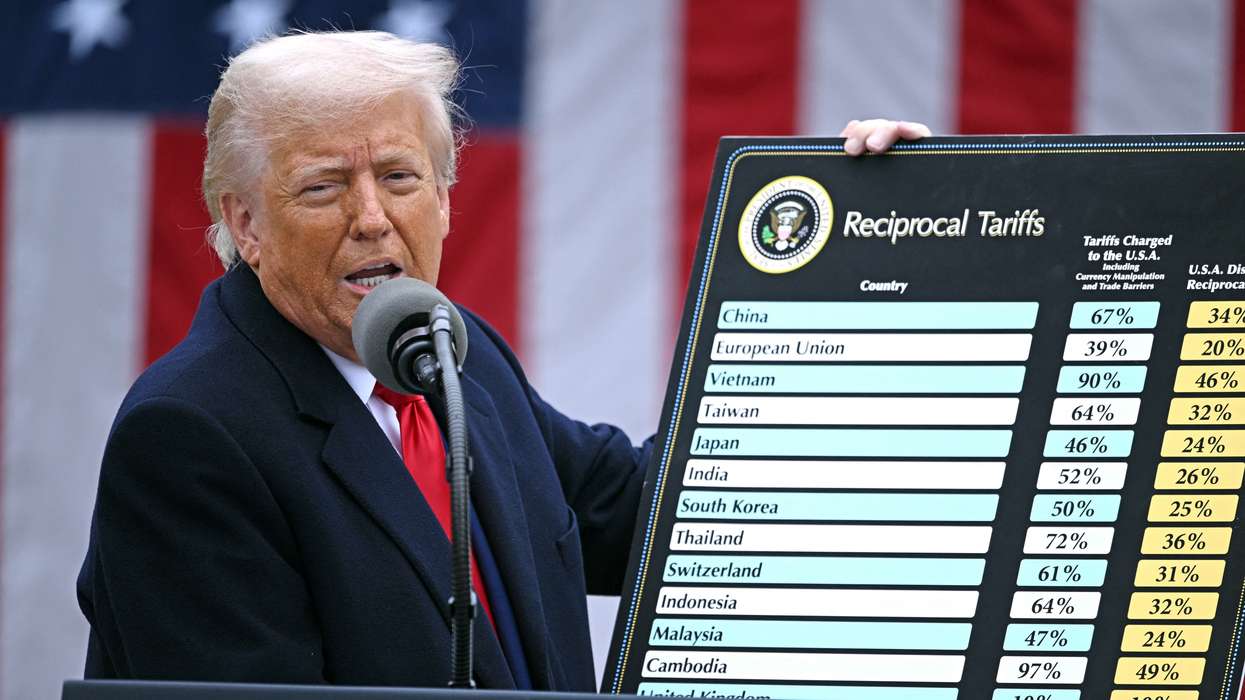

A US federal court on Thursday struck down the 10 per cent global tariffs imposed by President Donald Trump, calling them “invalid” and “unauthorised by law”, in another setback for the White House.
The tariffs had been imposed on all countries, including India, on February 24 for 150 days after a Supreme Court ruling struck down Trump’s earlier sweeping levies.
The Supreme Court had ruled that the International Emergency Economic Powers Act (IEEPA) does not authorise the imposition of duties.
In a split verdict, the Court of International Trade said the provisions of the Trade Act of 1974 used by Trump to impose the 10 per cent tariffs could apply only in cases involving a balance-of-payments crisis.
Judges Mark A Barnett and Claire R Kelly said in the ruling that if the president has the ability to select among sub-accounts to identify a balance-of-payments deficit, unless every sub-account is balanced, the president would always be able to identify such a deficit.
“Such an expansive reading of the statute” would give Trump unlimited tariff powers that belong to Congress, the two judges said, adding that the government’s preferred interpretation of the statute should be disfavoured.
“This case turns on the meaning of Section 122 and whether the president asserted the existence of the conditions required by the statute in order to lawfully proclaim the import surcharges. ... As discussed further below, the President’s Proclamation fails to assert that those required conditions have been satisfied,” the majority judges said in the ruling.
Judge Timothy C Stanceu disagreed with the two other judges.
The US administration is expected to appeal against Thursday’s ruling.
The court’s decision directly applied only to three plaintiffs — the state of Washington, spice company Burlap & Barrel, and toy company Basic Fun!
India and the US had announced the framework for an interim bilateral trade agreement in February, which is now being renegotiated following the Supreme Court order.
Apart from the 10 per cent tariffs imposed under the Trade Act of 1974, the Office of the US Trade Representative is also investigating 60 countries, including India, over whether they are taking enough measures to stop trade in products created by forced labour.
(With inputs from agencies)