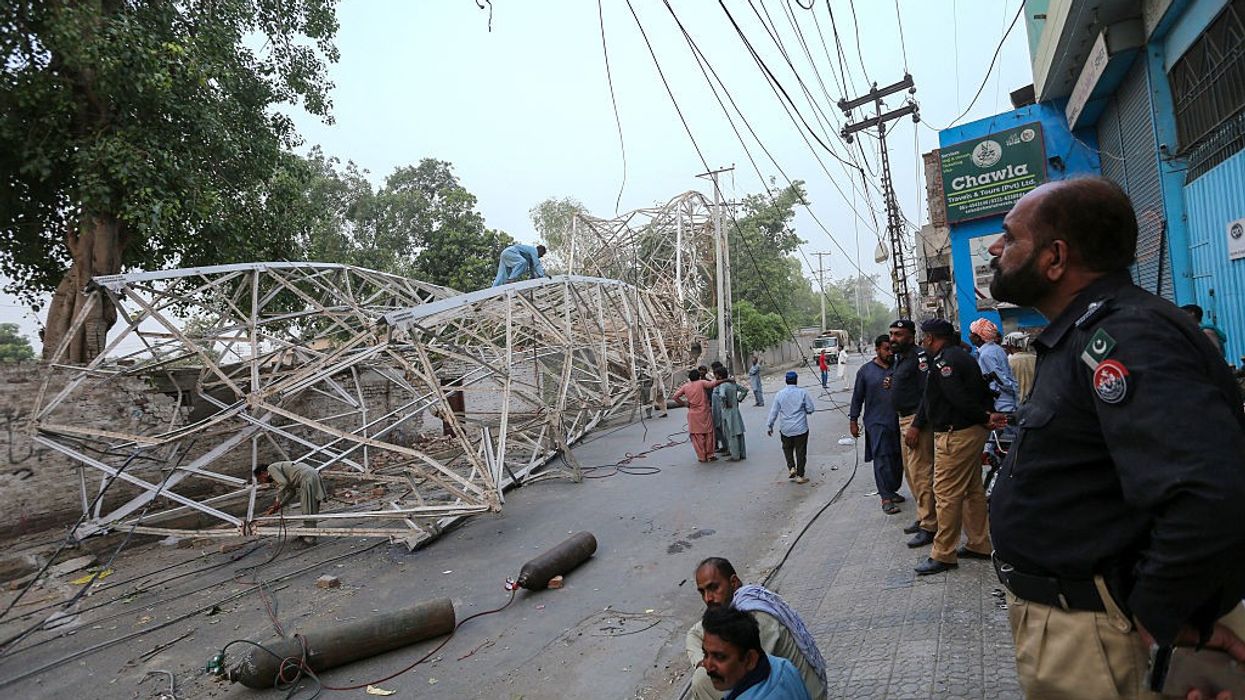

AT LEAST ten people have been killed and 43 others injured as violent storms unleashed flash floods and destructive winds across Pakistan's central and northern regions, officials confirmed on Wednesday (28).
The latest fatalities occurred in Pakistani Kashmir, where four women and one man lost their lives, while three people died in the northwestern Khyber Pakhtunkhwa province. Two additional deaths were reported in Punjab province, according to the state disaster management authority.
"One person is still missing," said Haroon Rasheed, a senior government official in Pakistani Kashmir, adding that 12 houses and a mosque were completely destroyed in a single village during the storms.
The extreme weather caused widespread devastation, with collapsing walls and roofs accounting for the majority of casualties. In Attock district, a passenger van overturned due to rain and dust storms on the Ghazi-Lawrencepur Road, killing one passenger.
Four children were injured when their house wall collapsed in Rehmo village following powerful windstorms.
This latest bout of severe weather follows last Saturday's (24) deadly storms, which claimed at least 14 lives and injured over 100 people across the country.
The National Disaster Management Authority has warned that stormy conditions are expected to persist in northern and central Pakistan until Saturday (31). The Provincial Disaster Management Authority (PDMA) indicated that extreme weather may continue through May 31, with upper and central Punjab districts - including Rawalpindi, Lahore, Gujranwala, and Faisalabad - facing the highest risk.
Pakistan is experiencing an alarming pattern of extreme temperatures arriving earlier than usual. Traditionally, summer begins in early June, but soaring temperatures in April and May have become increasingly common. In April, temperature reached near-record levels of 46.5 degrees Celsius (116 degrees Fahrenheit) in parts of Punjab province.
The unprecedented heat has forced educational authorities to take preventive measures. Schools in Punjab and southwestern Balochistan provinces have closed early for summer holidays due to the dangerous temperatures, disrupting the academic calendar.
Pakistan has been grappling with a succession of natural disasters in recent years, from devastating floods to prolonged droughts and heatwaves, which have collectively affected millions of people and caused billions of dollars in damage.
Emergency services and disaster management authorities are working to provide relief to affected areas, though the scale of destruction has stretched resources thin. Rescue operations continue in the worst-hit regions, where infrastructure damage has complicated access to remote communities.
The storms have also caused significant damage to transportation networks, with railway infrastructure suffering particularly heavy losses. Pakistani police and workers were photographed removing fallen railway towers in Multan following the severe weather.
Weather forecasters warn that the current weather pattern reflects broader climatic shifts affecting the region. The early onset of extreme heat, combined with increasingly volatile storm systems, presents mounting challenges for a country already struggling with economic difficulties and limited disaster preparedness resources.
As Pakistan braces for continued severe weather through the weekend, authorities have urged residents in vulnerable areas to remain vigilant and follow safety guidelines.
(with inputs from agencies)