
Skip to content
Search

Latest Stories

Submit Guest Post

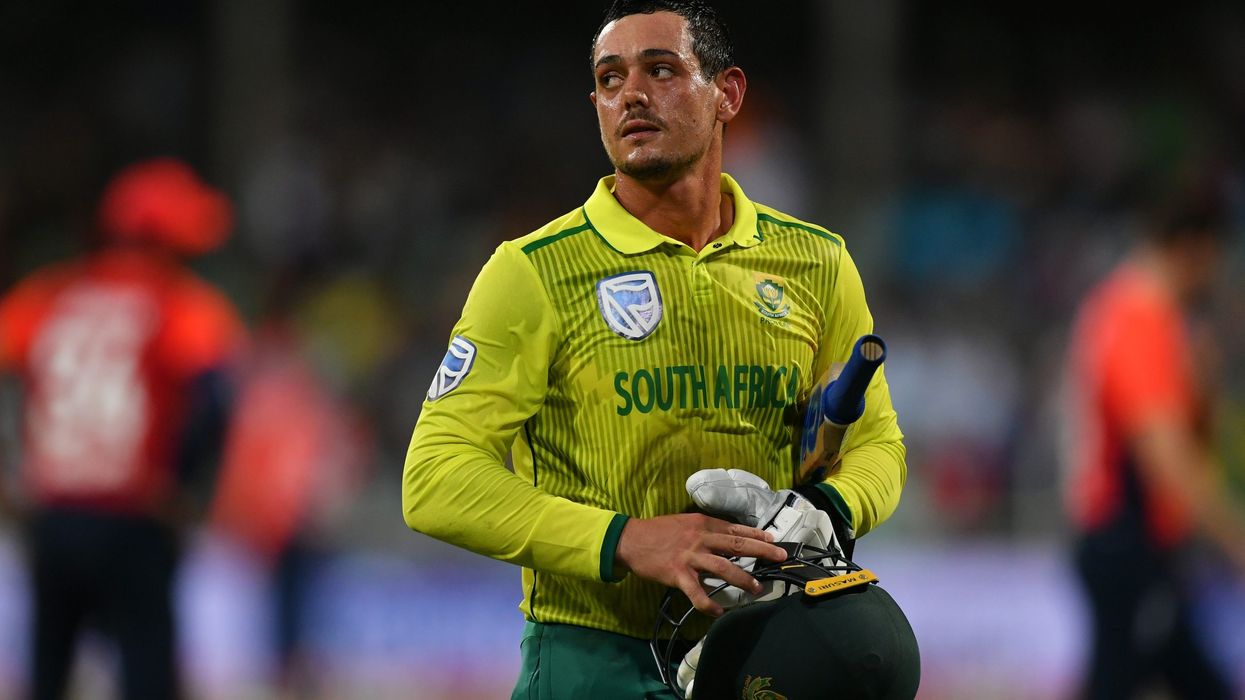
Conway, De Kock sign for Southern Brave in cricket's Hundred

Conway, De Kock sign for Southern Brave in cricket's Hundred

New Zealand's Devon Conway and South Africa's Quinton de Kock have been signed as overseas replacements by the Southern Brave for English cricket's inaugural edition of the Hundred, it was announced on Wednesday.

The Hampshire-based franchise were in the market for top-order batsmen after Australia's David Warner and Marcus Stoinis withdrew citing Covid-19 travel complications.


Opening batsman Conway hit a double century on Test debut against England earlier this month and top-scored in the first innings of the ongoing World Test Championship final in Southampton.

The South Africa-born left-hander averages 75 in one-day internationals and 59 in Twenty20 internationals.

"I'm really excited to have joined Southern Brave," Conway said. "I have really enjoyed my time playing in the UK so far, and I'm looking forward to getting stuck in with the team and taking part in the first season of the Hundred."

De Kock, a dynamic wicketkeeper-batsman, has long been a multi-format star of the world game and will be reunited with coach Mahela Jayawardene, having worked with the Sri Lanka great at Mumbai Indians in the Indian Premier League.

"I'm also really excited to be working with Mahela again," he said. "Hopefully we can have plenty of fans in to support us and we can give them something to cheer about."

The Hundred is a pioneering 100 balls-per-side tournament, which is even shorter than a T20 match, featuring eight franchises, all fielding men's and women's teams.


Add EasternEye As Your Trusted Source
preferred source on google news

More For You

Tackling hostility against Muslims matters for everyone

Anti immigration protesters attend the 'Glasgow Reclaims The Streets From Far-right Hatred And Violence' anti-racism protest on June 13, 2026 in Glasgow, Scotland.

Getty Images

Tackling hostility against Muslims matters for everyone

Sunder Katwala

Born in the mid-1970s I felt part of a lucky generation, which gained from pushing back the overt racism of that era. When we talk about stronger “social norms”, what we mean is that few people thought that monkey chants at the football or racist jokes on the telly were normal anymore – while more had Asian and black colleagues, neighbours and friends.

That past progress is put to the test today. A terrible crime in Belfast saw organised efforts at indiscriminate racist attacks on migrants and ethnic minorities, whose only connection to the crime was the colour of their skin. Those seeking to make racism fashionable again have the online megaphone of the world’s richest man, Elon Musk, on their side.

Past progress could be experienced unevenly, too. Being of mixed Indian and Irish Catholic parentage, I saw both identities rise in status once the BBC comedy Goodness Gracious Me inverted who could tell the jokes, and peace broke out in Northern Ireland. Yet, British Muslims of my generation felt under more intense scrutiny after the 9/11 terrorist attacks.

Efforts to tackle anti-Muslim hatred risked being stalled by arguments over what to call it and how to define it. The government’s new definition of anti-Muslim hostility seeks to transcend the confusion that the term “Islamophobia” could generate. But the challenge is not just to define the prejudice – but to find effective ways to shrink it.

There are sobering findings on the starting points in new research from British Future and the British Muslim Trust. More than half of British Muslims report experiencing prejudice based on their religion last year – a quarter in person and over a third online. A third of the public hold mostly negative views. One in six endorse sweeping and often indiscriminate hostility. Anti-Muslim hostility can have about twice the social reach as prejudice against other faith or ethnic minorities.

Tackling this hostility cannot be the responsibility of Muslims alone. It will take a whole-of-society effort. After all, this is foundationally about the attitudes towards a six per cent minority group, held among the 94 per cent of us who are not Muslim.

Keep ReadingShow less