
- Police detain ‘cockroach’ movement founder Abhijeet Dipke on his flight
- More than 200 protesters detained as Delhi shuts metro and internet
- Protesters demand election chief Gyanesh Kumar’s resignation
- About 130 million names deleted in voter-list revision
INDIAN police detained the founder of the satirical “cockroach” youth movement and scores of protesters in New Delhi on Saturday, as authorities locked down parts of the capital to stop a major rally against the Election Commission.
Cockroach Janta Party (CJP) founder Abhijeet Dipke and senior leaders Saurav Das and Ashutosh Ranka were detained on board their flight from Mumbai as it arrived in Delhi, the group said. Television footage showed uniformed police on the plane.
“I have come to be arrested, arrest me ... I am not afraid of you guys,” Dipke told officers.
“No, this is not an arrest,” one officer replied. “Please cooperate.”
The CJP condemned what it called the “authoritarian detention” of its leaders and demanded their release.
CJP takes on India's election chief
More than 200 protesters have been detained, local media reported. Several digital media outlets, including Scroll and Newslaundry, said their journalists had been held while covering the protest. Police did not immediately comment on the detentions.
City under lockdown
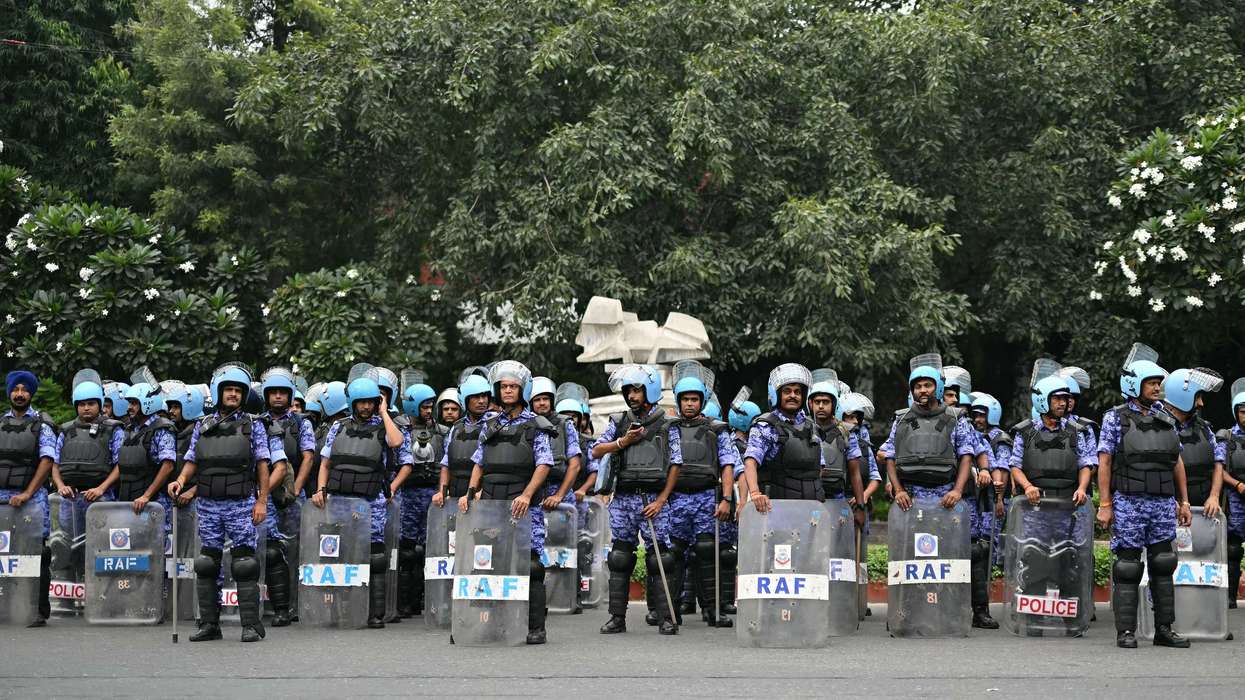
Tens of thousands of police and paramilitary personnel have been deployed across the city since Friday. Authorities shut 45 metro stations and several markets, cancelled some trains into Delhi and suspended mobile internet around the protest site at Jantar Mantar.
Police checked buses and cars at entry points to the city, while barricades and anti-riot vehicles were stationed on key routes.
“The state is choking the entire city to prevent people from expressing their opinion,” said Sanjeev Takshak, a 42-year-old lawyer who reached close to the protest site. “It is absolutely not fair.”
Delhi Police said the measures were needed to maintain law and order, and that it had not given permission for the protest.
“People should be able to raise their concerns peacefully,” the force said. “Our responsibility is to create the conditions in which they can do that safely, while keeping the city functioning.”
'Cockroach' Movement Vows to Continue Protests
Amnesty International criticised the “lockdown-like restrictions”, saying peaceful protesters must be able to demand accountability “without facing intimidation, arbitrary detention, or sweeping restrictions on their freedoms”.
Opposition leader Arvind Kejriwal of the Aam Aadmi Party said the detentions showed “an unprecedented level of fear”.
Why protesters are angry
The protesters are demanding the resignation of Chief Election Commissioner Gyanesh Kumar over a nationwide revision of voter lists that began in 2025.
Election Commission data shows about 130 million names have been deleted, including 63 million people who had moved, 30 million who could not be traced and 28 million who had died. The commission says the figures reflect entries flagged at the draft stage, and that voters wrongly removed can re-register.
The commission says the exercise aims to remove duplicate and ineligible voters, including “foreign illegal immigrants”. Critics say it has disproportionately affected marginalised and minority communities, and opposition parties say it favours Modi’s Bharatiya Janata Party (BJP).
Rahul Gandhi Detained in Protest Against Election Chief
The row escalated last month when the Indian Express reported that key decisions on the revision were likely taken without the approval of two of the three election commissioners. The commission says all its decisions were unanimous and legally valid. Kumar has not commented.
The BJP denies the allegations and says Modi’s popularity and India’s economic growth explain its electoral success.
A fresh challenge for Modi
The protests are a new challenge for Modi, 76, in his third term, months after a similar “cockroach” mobilisation in July led to the education minister’s resignation over an exam paper leak scandal.
They also come ahead of a series of key state elections beginning in early 2027.
(With inputs from agencies)