
Highlights:
- Over 7,000 chikungunya cases reported in southern China, mainly Guangdong province
- Virus spread rapidly after an imported case was detected in Foshan on 8 July
- Authorities enforcing hospital quarantine and door-to-door inspections
- Chikungunya is mosquito-borne and not transmitted person to person
- CDC issues travel alert; UK yet to release guidance
A mosquito-borne virus is spreading rapidly in China, with more than 7,000 people infected across at least 13 cities in Guangdong province. Authorities are introducing containment measures reminiscent of the Covid pandemic in an effort to stop the virus’s spread—even though chikungunya cannot be transmitted between people.
The outbreak began in Foshan, north of Hong Kong, where an imported case was confirmed on 8 July. The city has since recorded nearly 3,000 cases in just one week, according to Chinese media and international reporting.
What is chikungunya?
Chikungunya is a virus transmitted by mosquitoes. It is rarely fatal but can cause high fever, rash, fatigue, nausea, and intense joint pain that may last for months or even years. The World Health Organization describes it as a “debilitating” illness due to the prolonged joint pain it can cause.
The disease was first recorded in southern Tanzania in the 1950s. The name “chikungunya” comes from the Kimakonde language and translates as “that which bends up,” describing the posture of sufferers experiencing severe pain.
How does it spread?
Chikungunya is not contagious between people. It spreads only via mosquito bites. A mosquito becomes infected by biting a person who already has the virus, and then passes it on to others through subsequent bites.
What measures are being taken in China?
In Guangdong, authorities have mandated hospital quarantine for confirmed cases, requiring patients to remain under mosquito nets until they test negative.
Additional actions include:
- Door-to-door inspections to eliminate mosquito breeding grounds
- Penalties, including fines or charges, for residents who refuse access
- Release of mosquito-eating fish into ponds
- Use of large “elephant mosquitoes” whose larvae prey on disease-carrying species
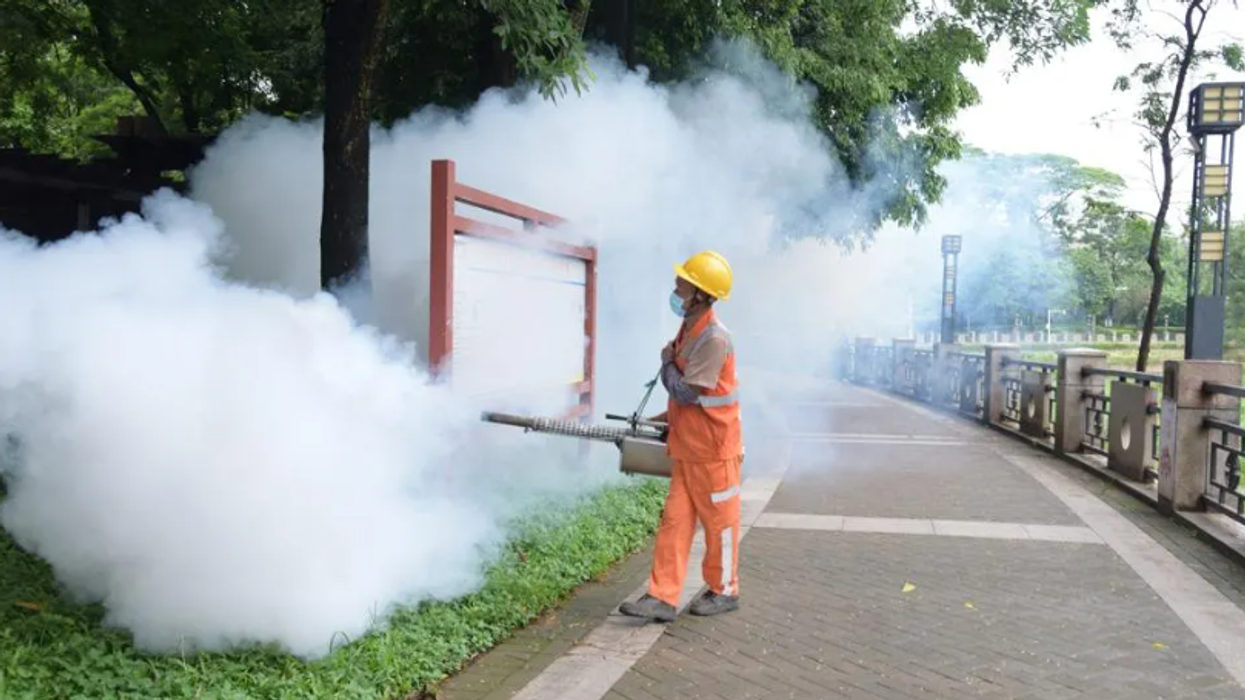
- Drone surveillance and widespread pesticide spraying
In one district, five households reportedly had their electricity cut off after failing to cooperate with inspections, according to The New York Times.
Is there a vaccine?
Yes. Two vaccines are approved in the United States:
- IXCHIQ – a live-attenuated vaccine for adults aged 18 and over
- VIMKUNYA – a virus-like particle vaccine for people aged 12 and older
The US CDC recommends the vaccine only for people travelling to outbreak zones.
Is chikungunya present in the UK or US?
Chikungunya is not currently circulating in the UK. In the US, most cases are linked to international travel. No locally acquired infections have been reported since 2019, though travel-related cases are rising. In 2024, 199 cases were reported in the US, and 46 have been recorded so far this year.
Where is the virus most commonly found?
The CDC lists Brazil, Colombia, India, Mexico, Nigeria, Pakistan, Thailand and the Philippines as higher-risk countries. Foshan has been placed under a Level 2 travel alert, with advice to be vaccinated before travel and to take mosquito precautions such as using insect repellent and wearing long clothing.
Pregnant women are advised to avoid travelling to affected areas.
What to expect next
Infections are expected to continue rising in southern China. On Monday, Hong Kong reported its first case—a 12-year-old boy who had recently travelled from mainland China.
Health authorities globally are monitoring the situation, although the UK government has not issued any formal warning so far.